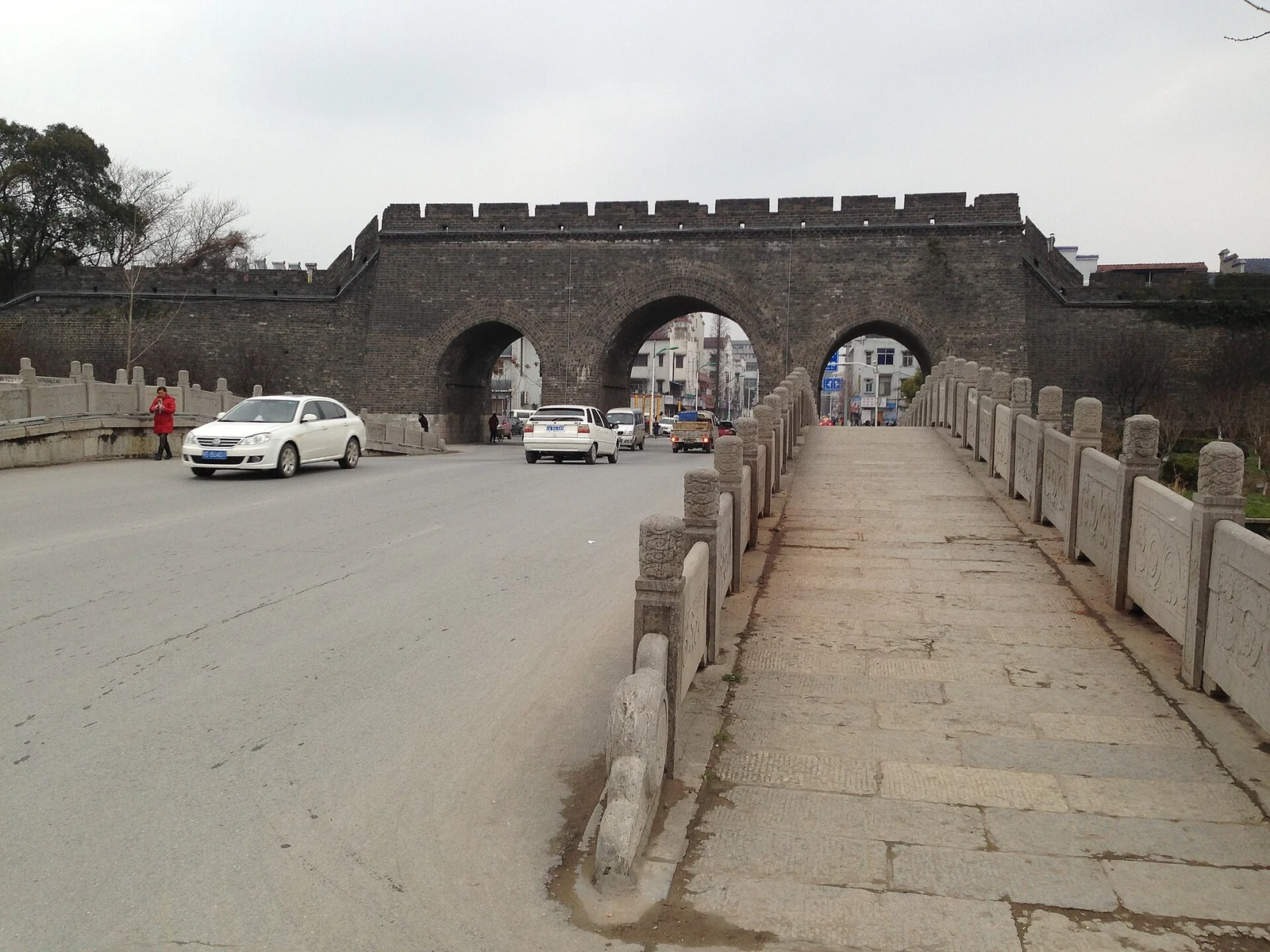
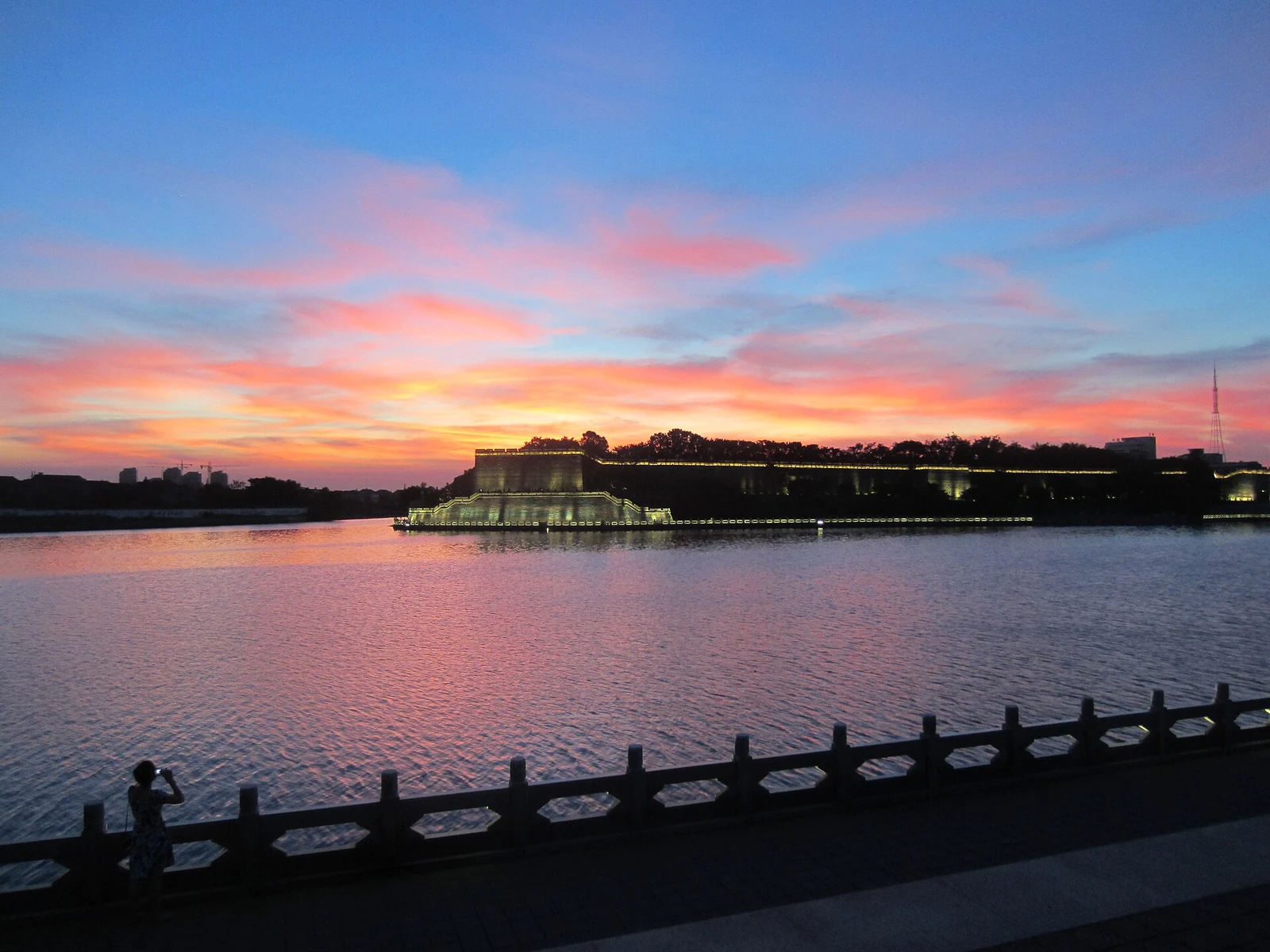
Jingzhou’s old city is enclosed by substantial surviving walls, gates and a moat. The visible brickwork carries a history of rebuilding, including major work in the Ming and Qing periods. Gates mark passages between the enclosed streets and the city outside, while the moat gives the defences another visible edge. The ancient Chu capital and its archaeological remains form an earlier layer of history elsewhere in the Jingzhou area.
From the journal
Jingzhou: A City Wall and a General’s Memory
Jingzhou’s surviving city wall and its remembrance of Guan Yu bring built defences and Three Kingdoms storytelling into different layers of one city.
In the same city · Jingzhou, Hubei ↗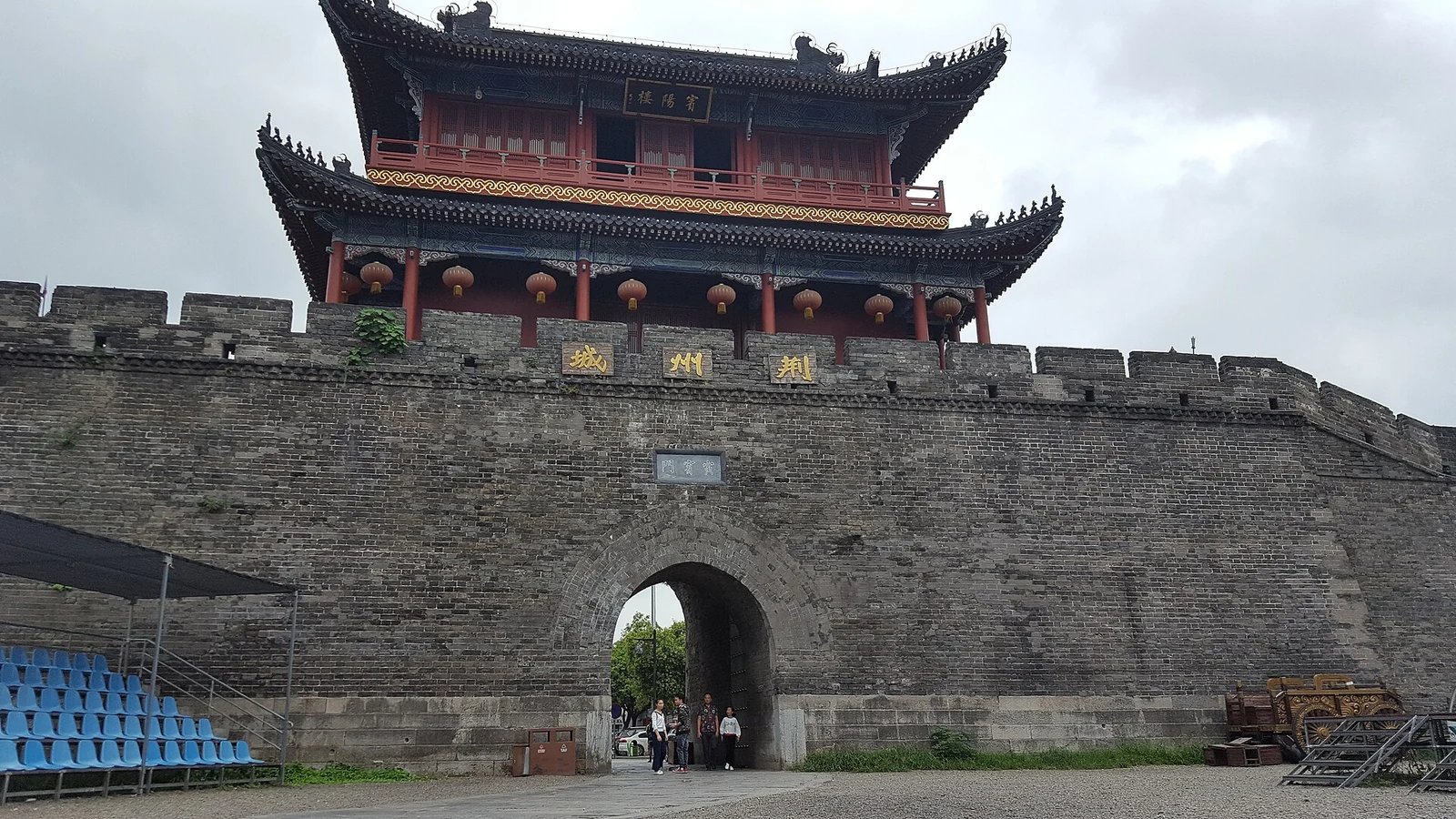
Brick around a living city
The general remembered
Guan Yu served Liu Bei and is closely associated with the struggle for Jingzhou in the Three Kingdoms period. Later worship and storytelling transformed the military figure into a symbol of loyalty and righteousness. Temples and local commemorations belong to that long afterlife. Their presence should not be presented as proof that a later statue or rebuilt shrine stood in Guan Yu’s own day.
A monument at a different scale
The enormous modern Guan Yu statue once installed in Jingzhou became the subject of relocation and heritage debate. Its history is separate from that of the old wall and earlier shrines. The city holds all these layers: defensive construction, religious remembrance and contemporary decisions about monuments. Keeping their dates distinct makes the landscape easier to understand.