The Harbin Archives dates Central Street to 1898 and says it was first called China Street. As Harbin grew, the street became one of the city’s busiest commercial routes; in 1925 it took the name Central Street. Today the route still links the Songhua River flood-control monument with Jingwei Street, carrying a long commercial frontage through the old city. Its history can be read in two scales at once: the name that changed with the city and the stone surface that remains underfoot.
From the journal
Harbin Central Street and its stone-block carriageway
A stone carriageway and a 1925 street name trace Central Street from its early origins to its life as a pedestrian landmark.
In the same city · Harbin ↗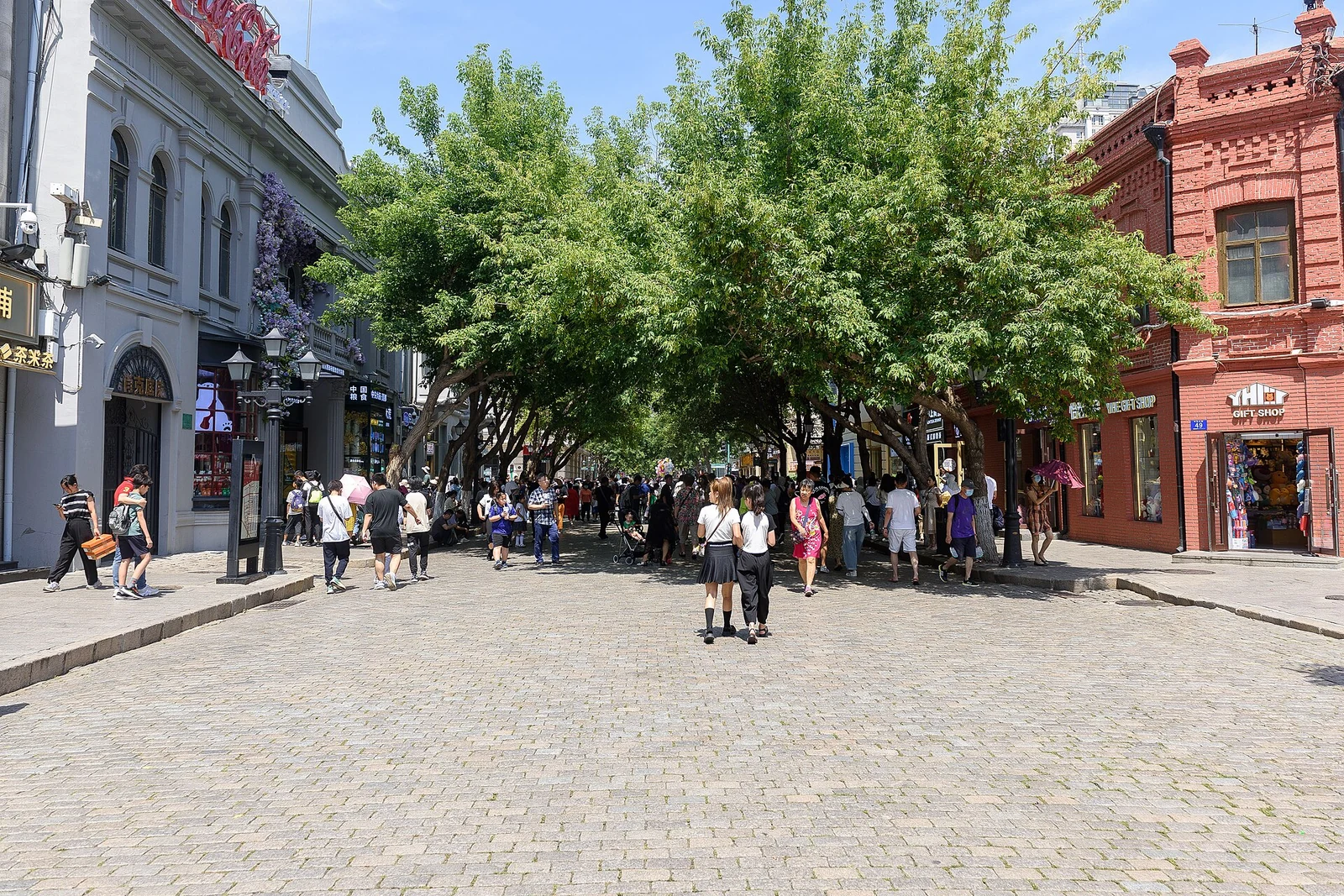
From railway road to China Street
Why the pavement matters
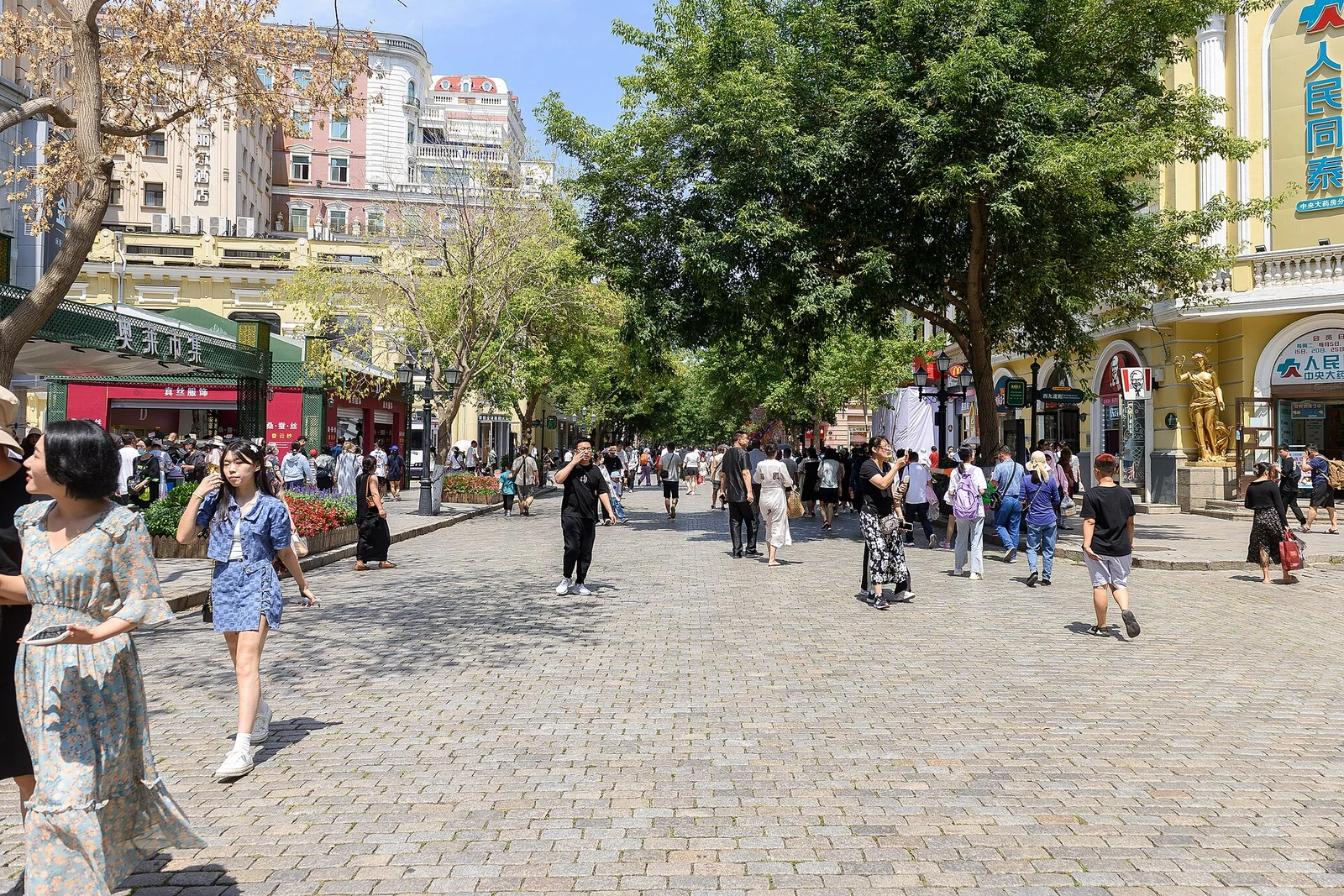
The Harbin Archives records the stone-block carriageway as 10.8 metres wide within a 21.34-metre street. Underfoot, the repeating blocks join one storefront to the next and make the street feel continuous even as the buildings shift in age and style. A provincial architectural inventory describes European, Russian and Japanese influences on the main street and its side streets; the stone surface gives those different fronts a shared ground.
A street remade for walking
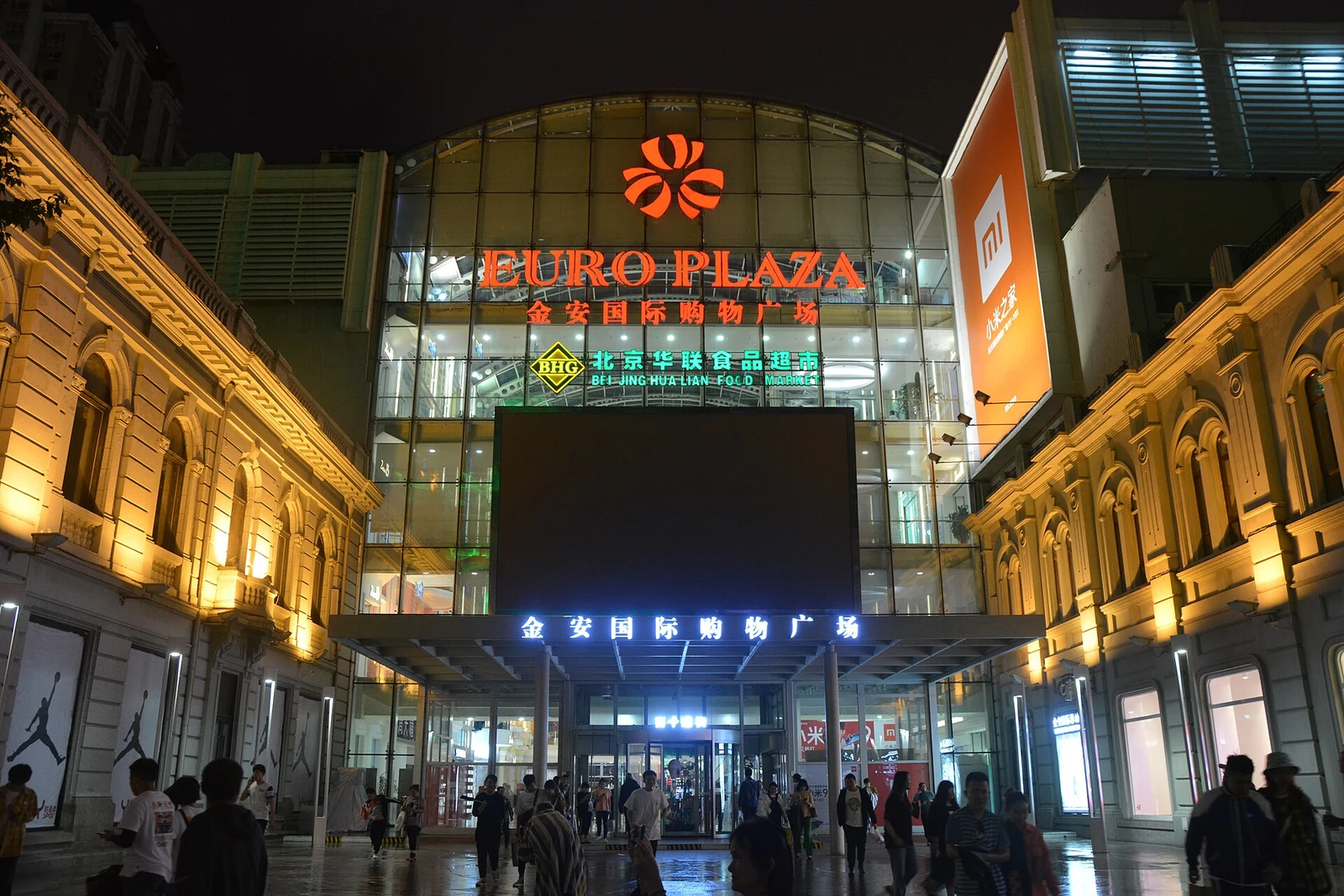
Harbin designated Central Street a protected road in 1986. After a ten-month reconstruction, it reopened as a pedestrian street in June 1997. The change gave an old commercial route a new public rhythm: instead of watching the block pass from a vehicle, visitors move at the speed of its doors, windows and stone surface. Walk the full length and the paving becomes a timeline, carrying a route that has repeatedly changed purpose while remaining part of the city.