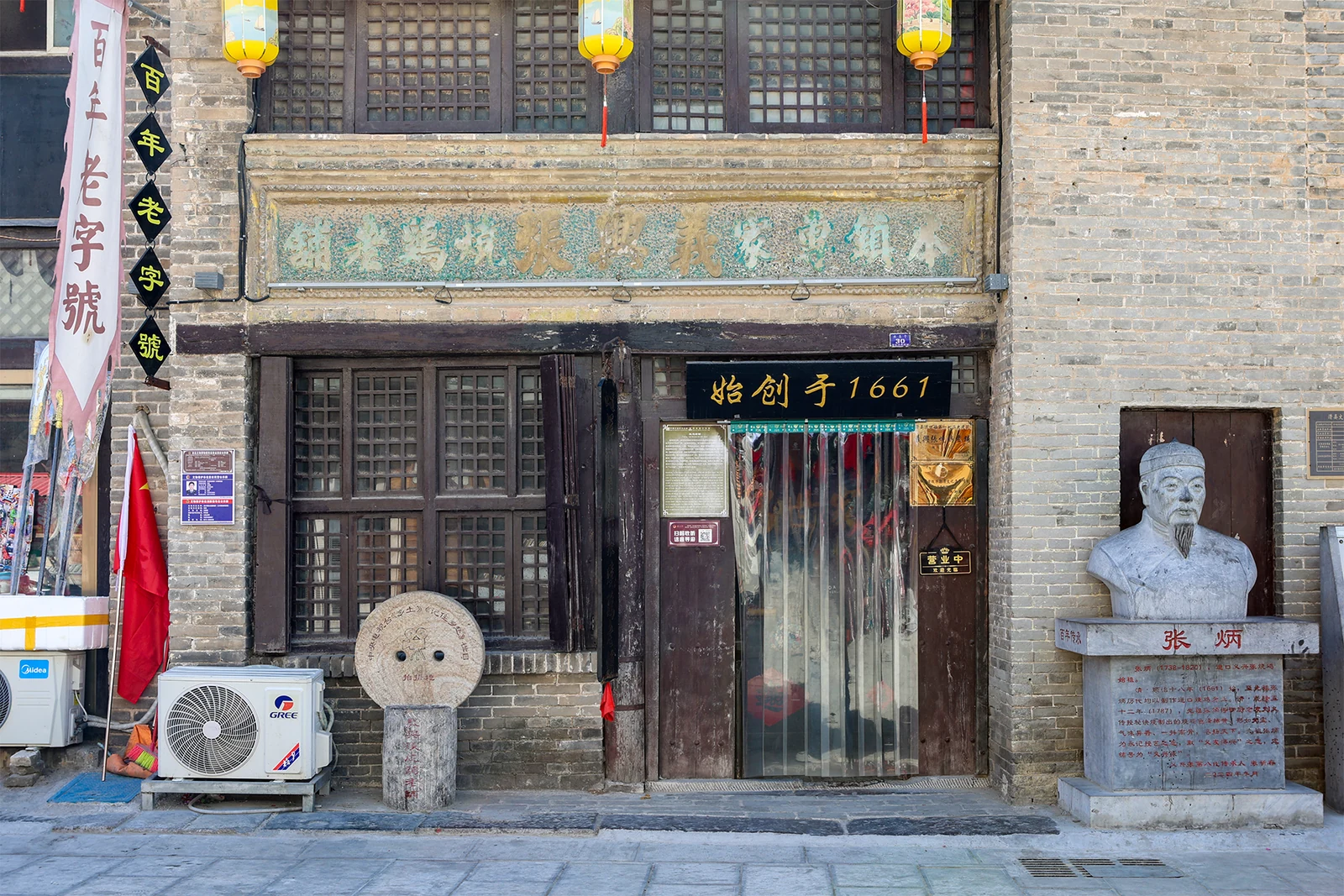
Daokou is a town in Hua county, at the southern edge of Anyang, and the bird sold there has a date. Reports that record the dish put its beginning in 1661, the eighteenth year of the Shunzhi reign, which makes it more than three centuries old, and they call the town a hometown of roast chicken known across the country. The Chinese name is shaoji, and the method is usually compressed into five characters: eight flavours and an old broth. The reports that use the phrase do not name the eight spices, and the gap is part of the dish's standing. A recipe can be famous for three hundred years and still keep part of itself off the page.
From the journal
Eight Spices and an Old Broth
Daokou roast chicken has been made in a town in Hua county since 1661, shaped like a silver ingot and cooked in an old broth that is kept and renewed.
Sixteen Sixty-One
The Shape of an Ingot
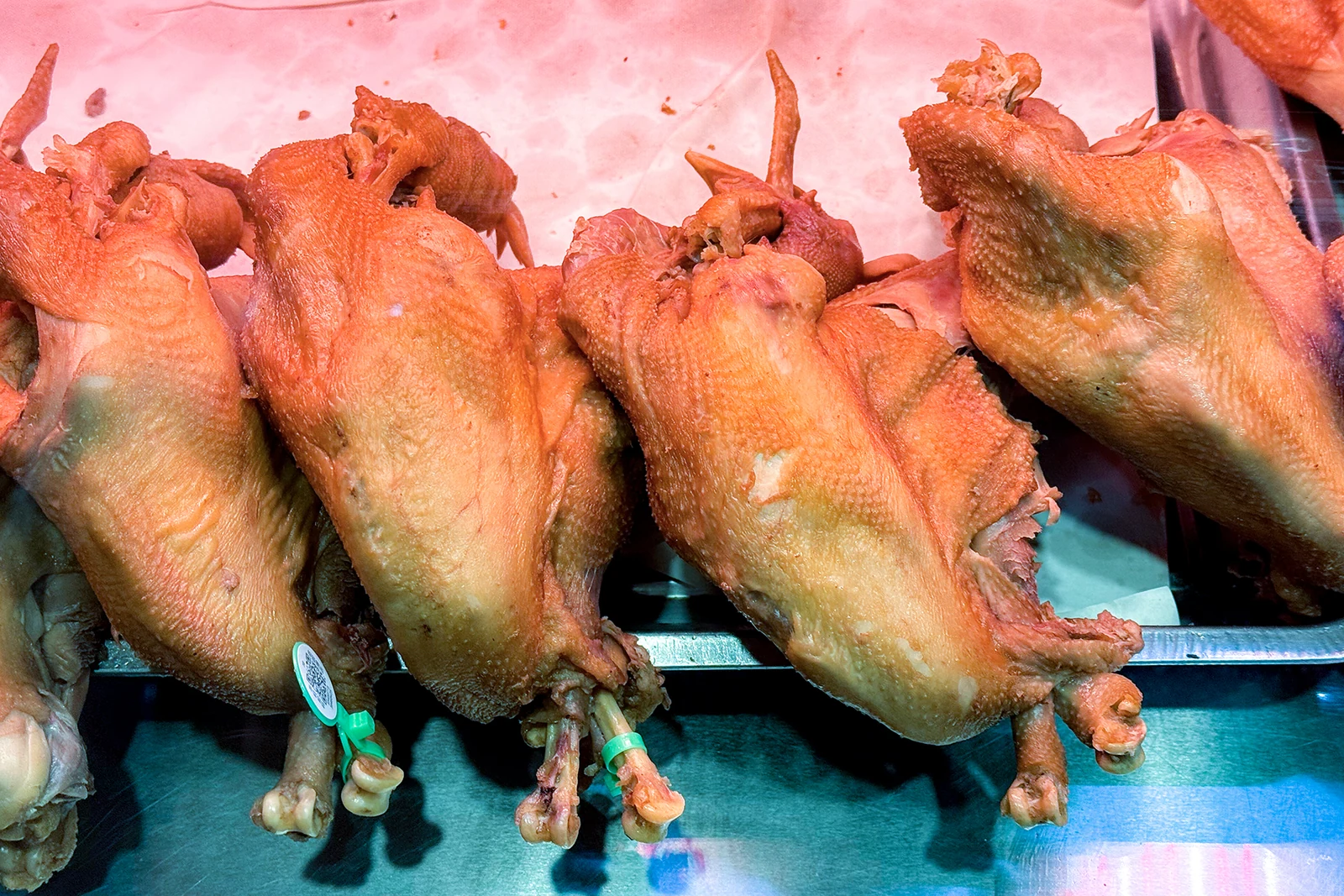
What a buyer sees first is a shape. The finished chicken is described as resembling a yuanbao, the silver ingot that circulated in imperial China, and its skin as bright and lustrous. Beneath it the texture is given in a set phrase: crisp-fragrant, soft and tender, rich but not greasy. The last of those is doing quiet work, because the dish is made from a whole bird and its fat is part of the point. None of this is a recipe. It is the result by which the maker is judged, and it is what a customer recognises on a counter before tasting anything. A shape repeated for three and a half centuries is a shape that has been agreed on, and the agreement is the brand.
A Craft on a List
In 2009 the making of Daokou roast chicken was entered in the second batch of Henan's provincial intangible cultural heritage list, and the trade now has named inheritors. A report on the dish quotes Zhang Zhonghai, a provincial representative inheritor of the technique, saying that as an inheritor he feels a duty to make the traditional handwork understood by more people. That sentence is the heritage system's argument in miniature: an old broth is kept, handwork is passed on, and the value sits in a pair of hands rather than on a production line. What the list protects is not the taste of one bird but the continuity of a method, which is why the inheritor speaks about transmission rather than flavour.