Two Threads, Two Jobs: The Structure of Tu Panxiu Embroidery
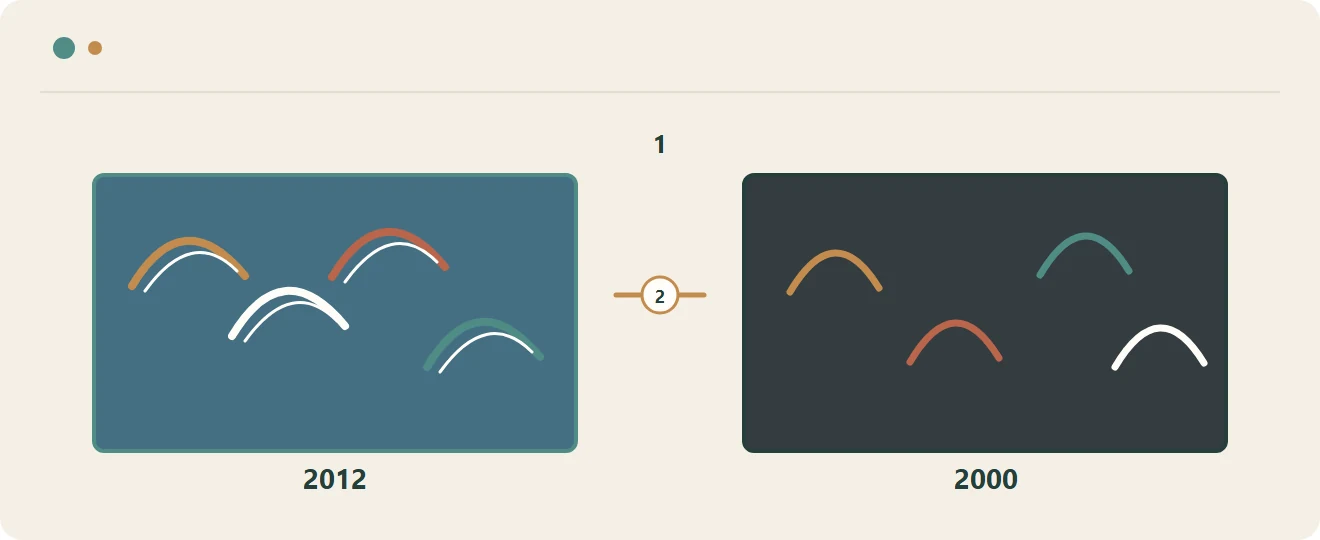
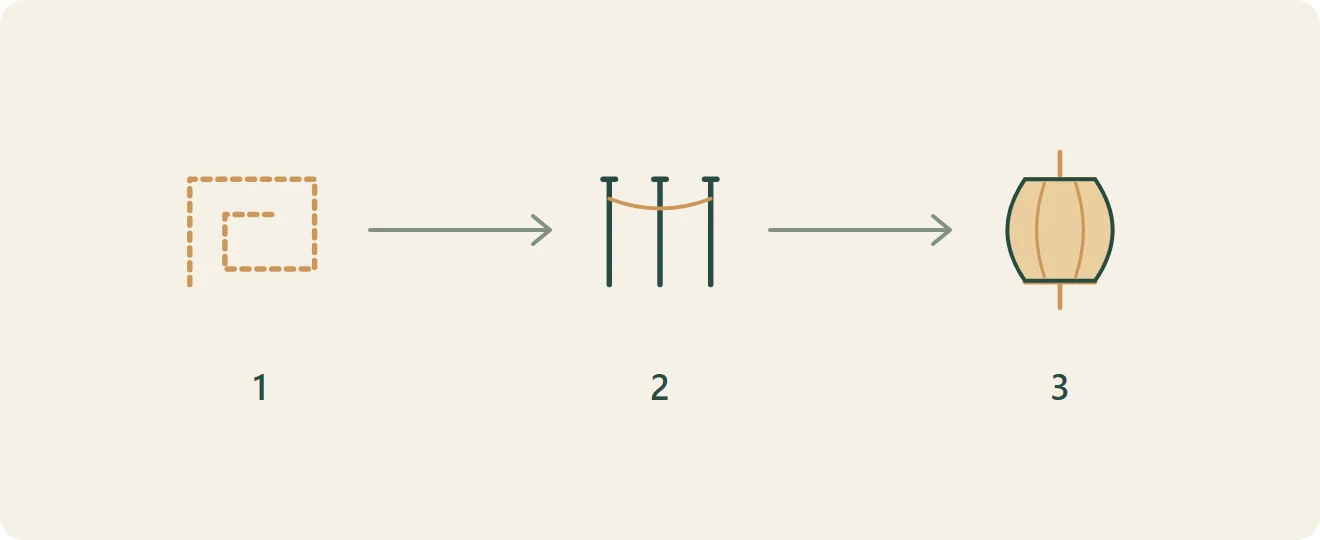
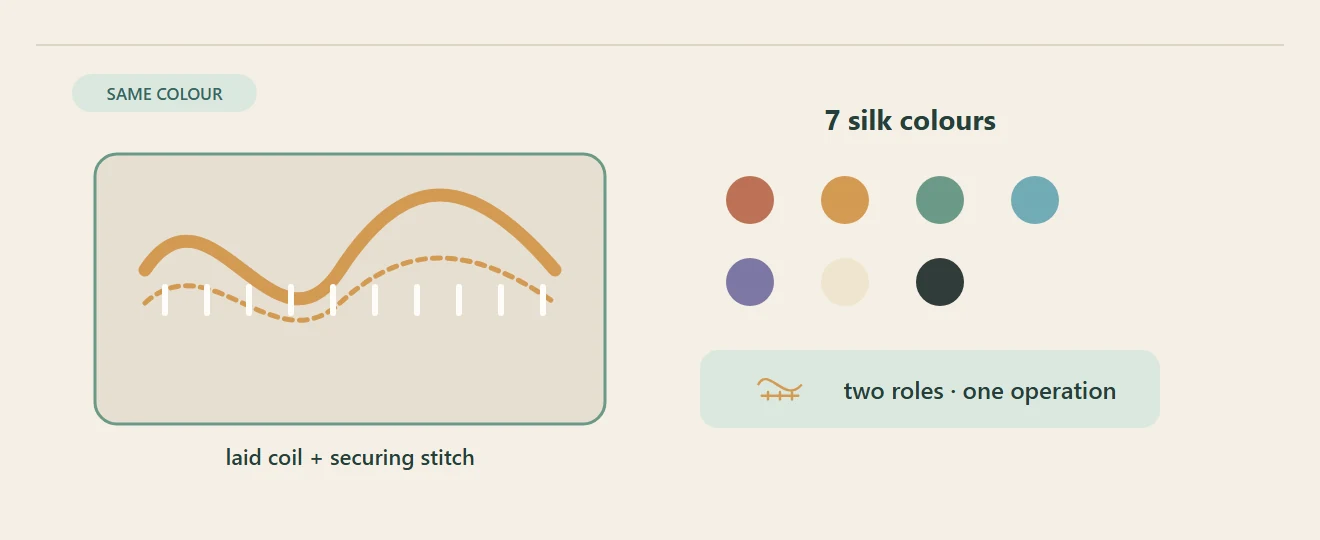
In Huzhu Tu embroidery, two same-colored threads work together: one coils along the pattern while the other secures it. The technique makes the stitch thick, tactile and durable.
The Hehuang valleys bring several kinds of making close together. At Liuwan, painted pottery carries patterns from prehistoric burials. At Qutan Monastery, halls, inscriptions and mural corridors give stone, timber and paint different jobs. Huzhu’s embroidery and household meals belong to living communities, while Salar stories follow a separate line through Xunhua’s streets and food.
In Huzhu Tu embroidery, two same-colored threads work together: one coils along the pattern while the other secures it. The technique makes the stitch thick, tactile and durable.
A 2017 Huzhu profile shows how embroiderer Li Faxiu combined panxiu with other stitches in named works, then explored new designs and product forms.
Read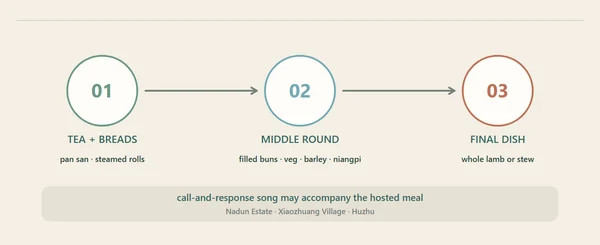
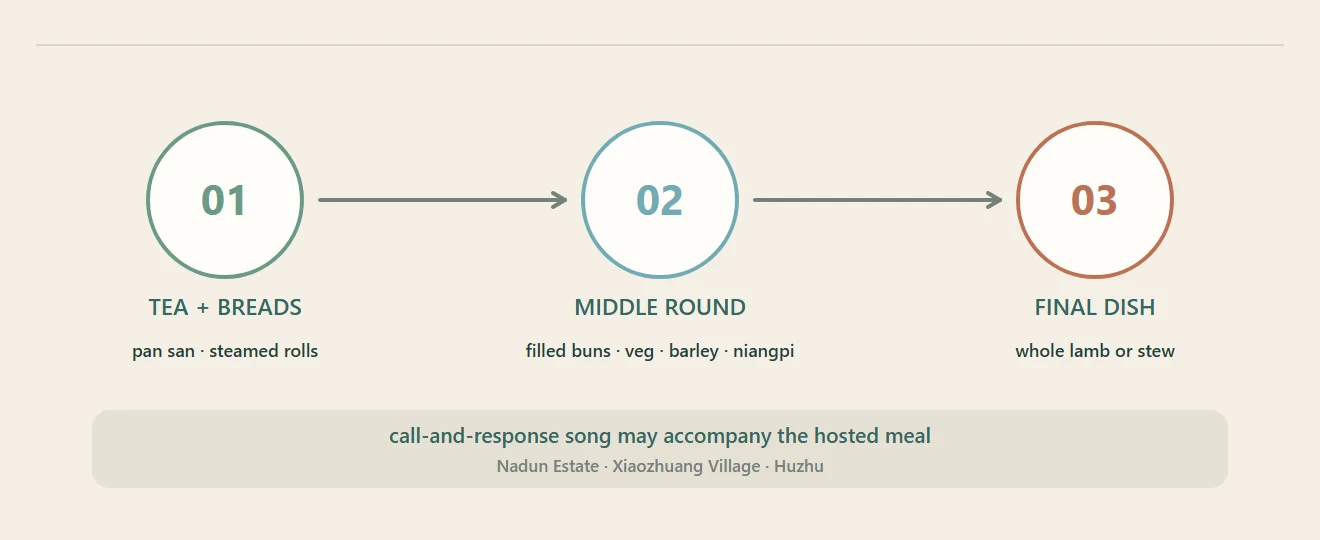
Huzhu County’s Nadun Estate page presents a three-part circle banquet as part of its visitor offer, listing breads and milk tea, filled buns and noodles, then whole lamb or a stew.
Read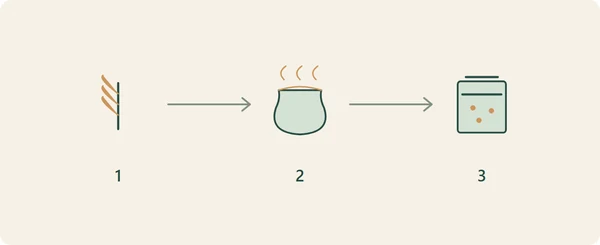
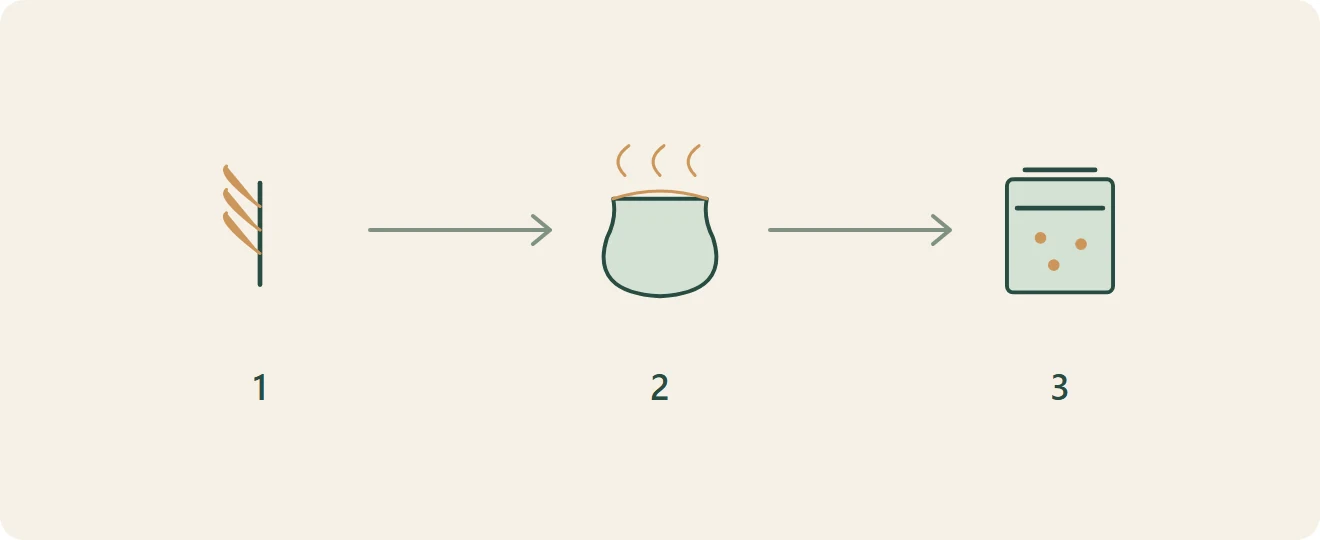
A 2022 report from Jinzhou Village describes a household mijiu workshop bringing out its first barley batch of the year, using boiled grain and solid-state fermentation.
Read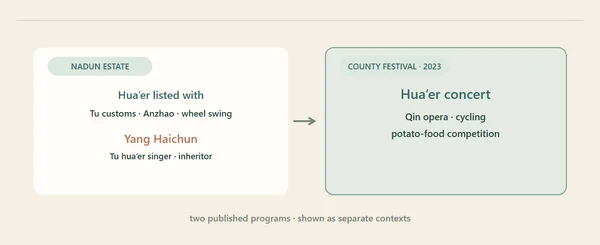
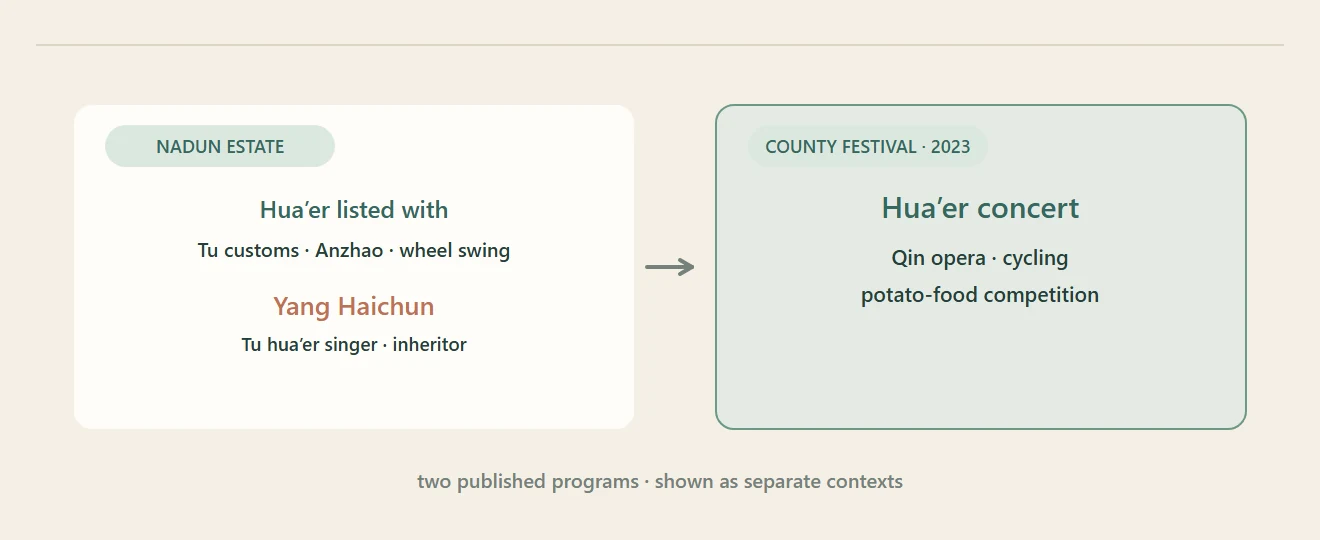
Huzhu County describes hua’er as part of its estate performance program and documents a 2023 festival schedule that included a hua’er concert alongside Qin opera and other events.
Read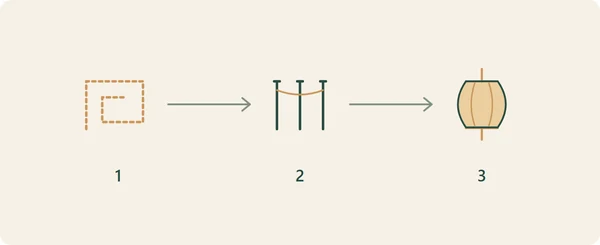
In Qilidian, villagers mark the ground, plant wooden poles and hang handmade lanterns. A 2025 account follows the work behind Ledu’s winding festival paths.
Read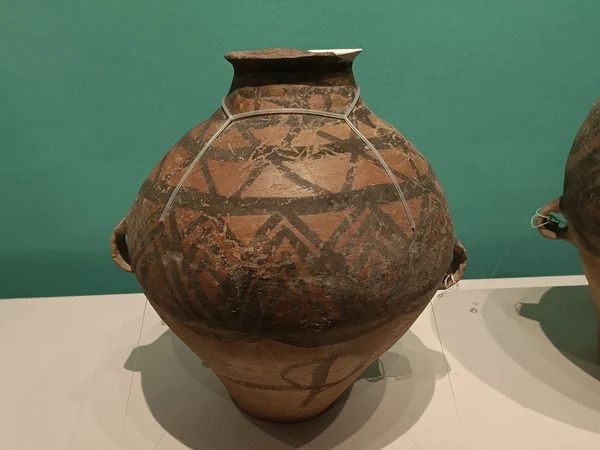
A village water-channel project in 1974 brought pottery to the surface at Liuwan. The find led to years of excavation and a museum devoted to the cemetery’s objects and burial displays.
Read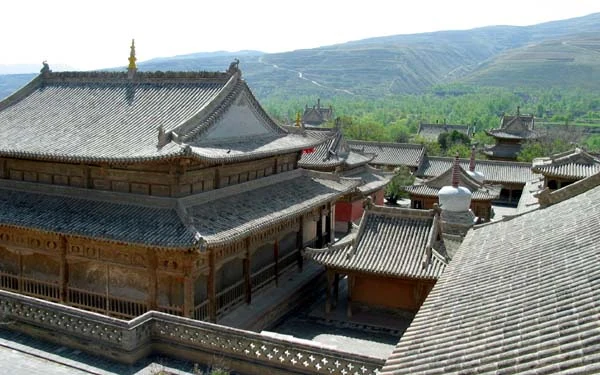
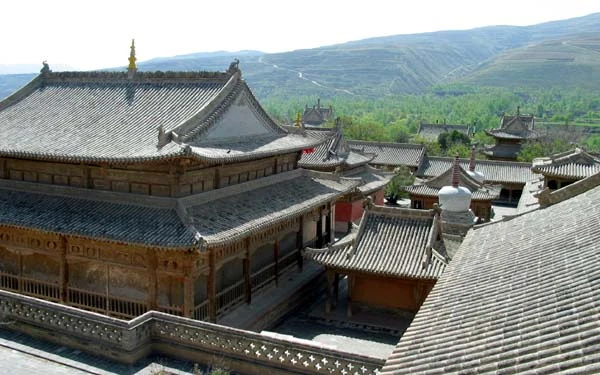
At Qutan Monastery, three principal halls rise in sequence along an east–west axis. The arrangement combines a Tibetan Buddhist monastery with an architectural vocabulary associated with Ming court buildings.
Read Qutan Monastery’s covered corridors hold a sequence of mural rooms. Their narrative follows Shakyamuni from birth to enlightenment, while individual scenes bring religious stories into contact with the plateau’s landscapes and offerings.
Read A 2026 exhibition in Beijing displayed a replica of Qutan Monastery’s Rear Hall Stele. Its Chinese and Tibetan inscriptions turned one stone monument into a meeting point for two written traditions.
Read Among the objects reported at a 2026 Beijing exhibition was a gold token described as a Ming state credential for tea-horse trade. Its label opens a story about administration and exchange across the plateau.
Read A spring report from Ledu places pear blossoms and Qutan Monastery in the same seasonal landscape. The monastery’s Ming halls and painted corridors offer a second way to read the region after the flowering trees.
Read
Jiezi appears in two different maps of Xunhua: a 2018-published county ordinance lists it as a township, while an older Salar historical account names it among the western gong. The Huanghe River explains the older orientation.
Read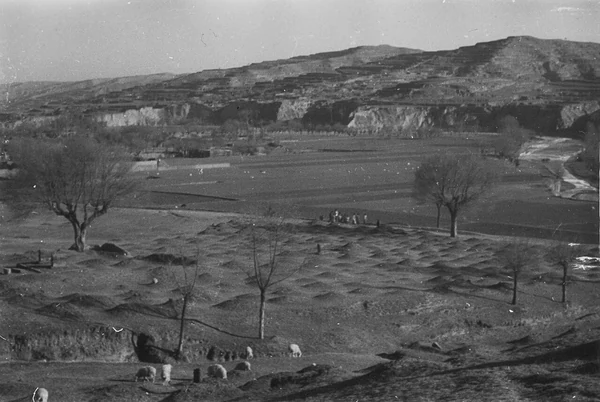
An official ethnic overview lists staple grains and Huanghe valley fruits for Salar settlement areas. Read as a dated agricultural sketch, it opens questions about seasonality, markets and home cooking in Xunhua today.
Read
The Tu narrative epic Qijia Yanxi has traveled into modern performance. A 2018 Qinqiang production in Beijing turned its story of a Ming-era commander into a stage drama performed by a rural troupe from Huzhu.
Read
A 2018 survey of traditional villages names compounds in Hualong, Ledu, Huzhu and Xunhua. Its descriptions show shared courtyard forms alongside local variations in walls, timber and roof use.
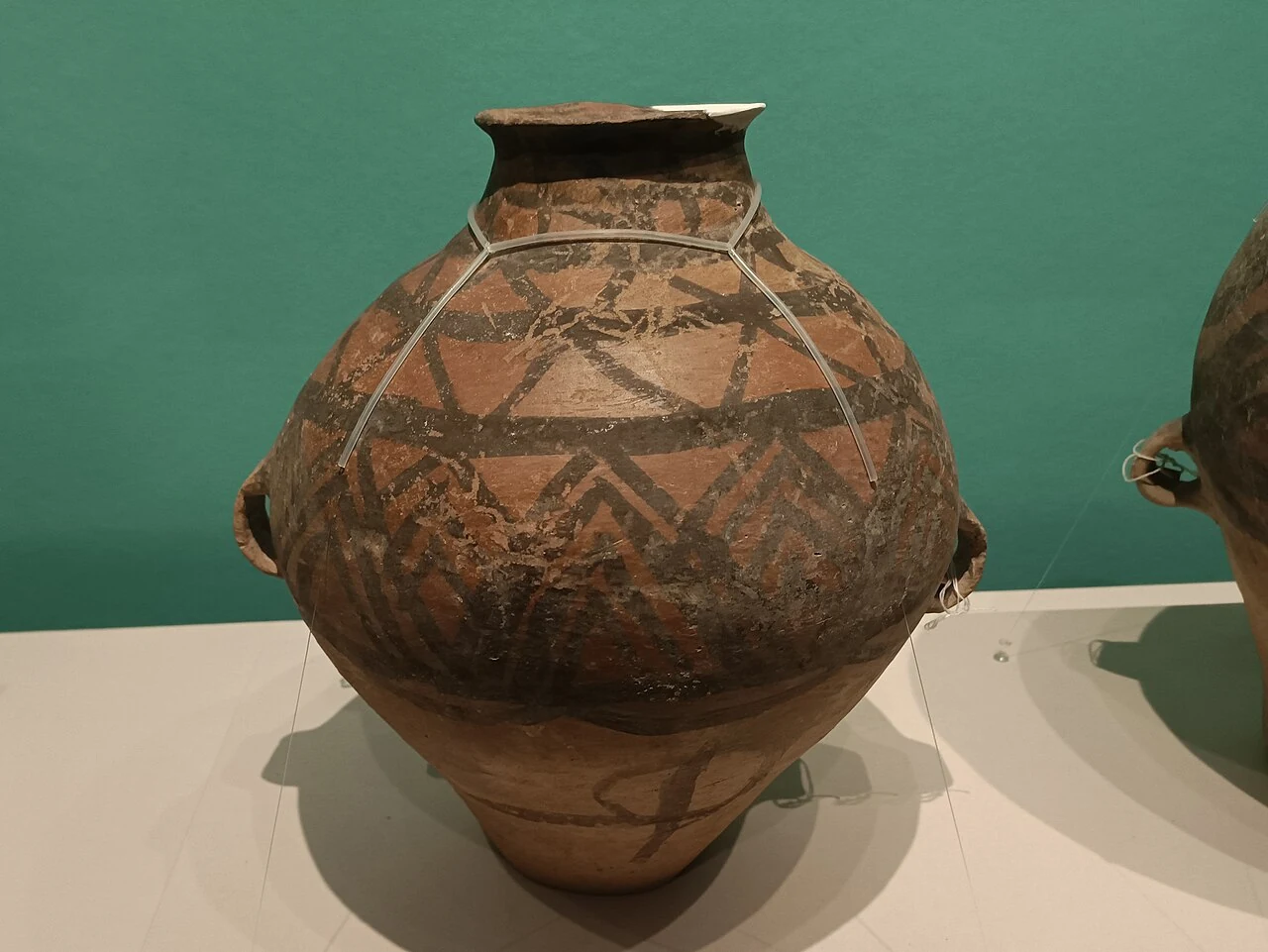
Read Liuwan’s museum displays pottery in a range of shapes: jars with human faces, handled vessels, pottery boots and containers bearing animal imagery. Looking at form beside decoration keeps the gallery’s objects distinct from the oversized village landmark.
Read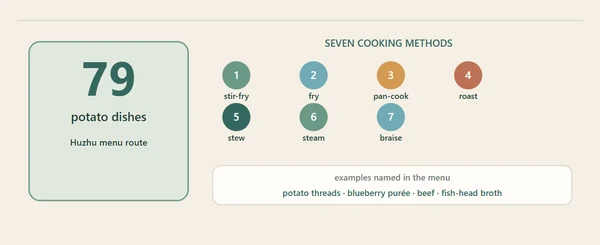
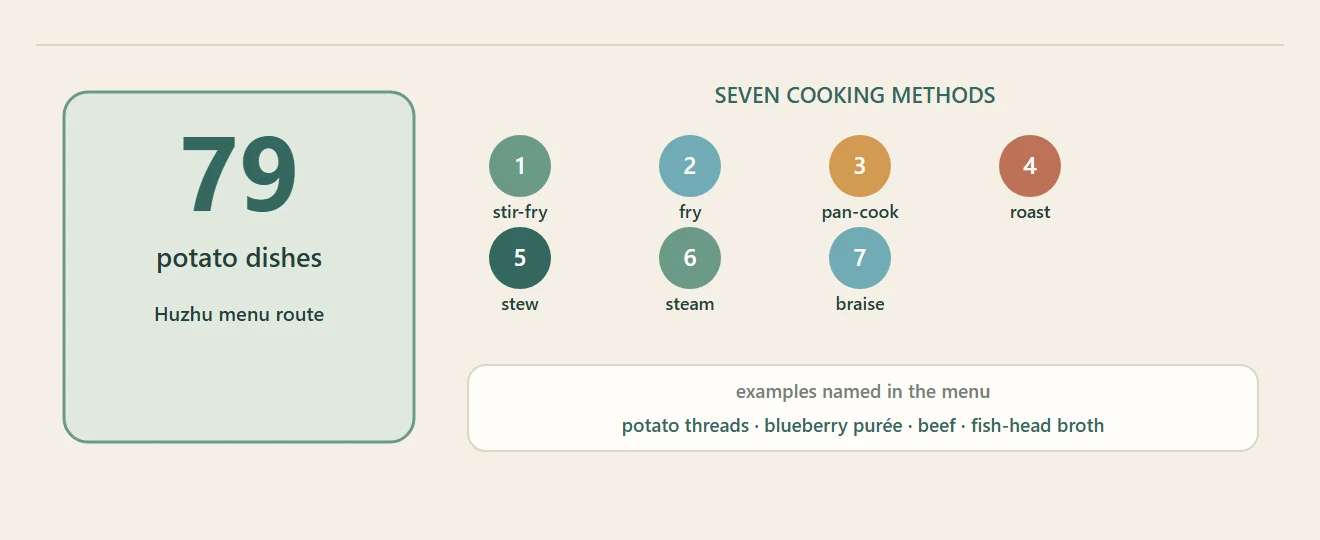
A 2024 Ministry of Culture route presents Huzhu through a regional potato banquet: 79 dishes use local potatoes in methods ranging from frying to steaming and braising.
Read A 2021 proposal to Qinghai’s provincial legislature placed Qutan Monastery within a wider preservation and town-development plan. A 2025 university field study later visited the monastery among Ledu’s tourism resources.
Read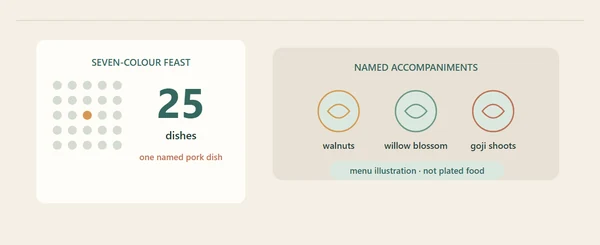
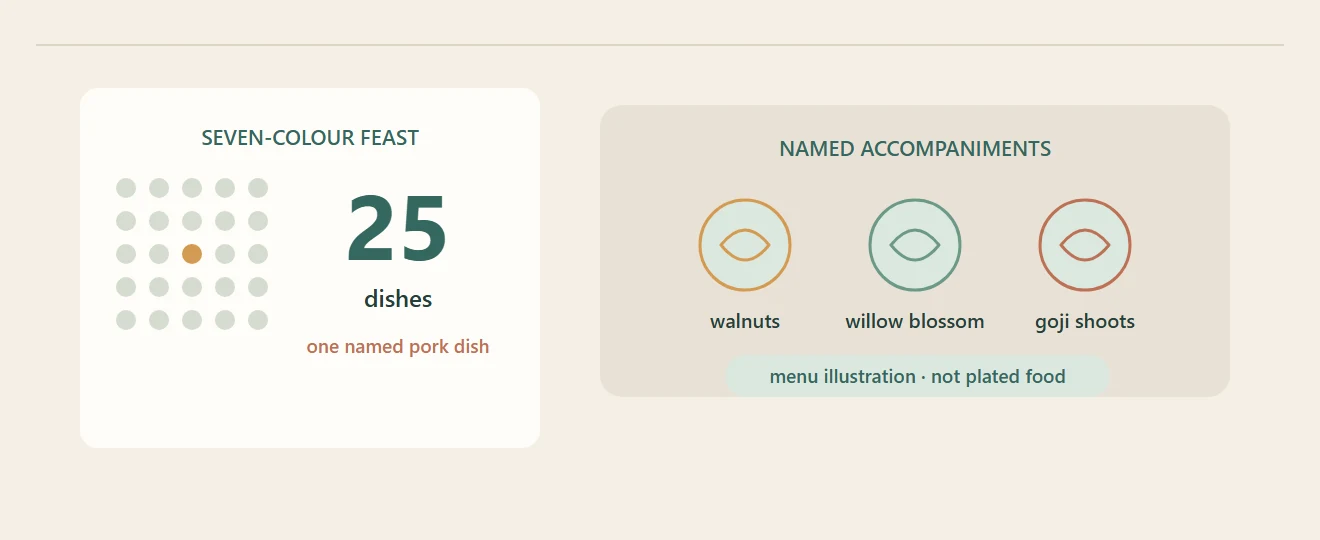
A Ministry of Culture route lists braised Eight-Browed pork among 25 dishes in Huzhu’s Seven-Colour family banquet. The menu places it beside other meat, orchard and garden ingredients.
Read