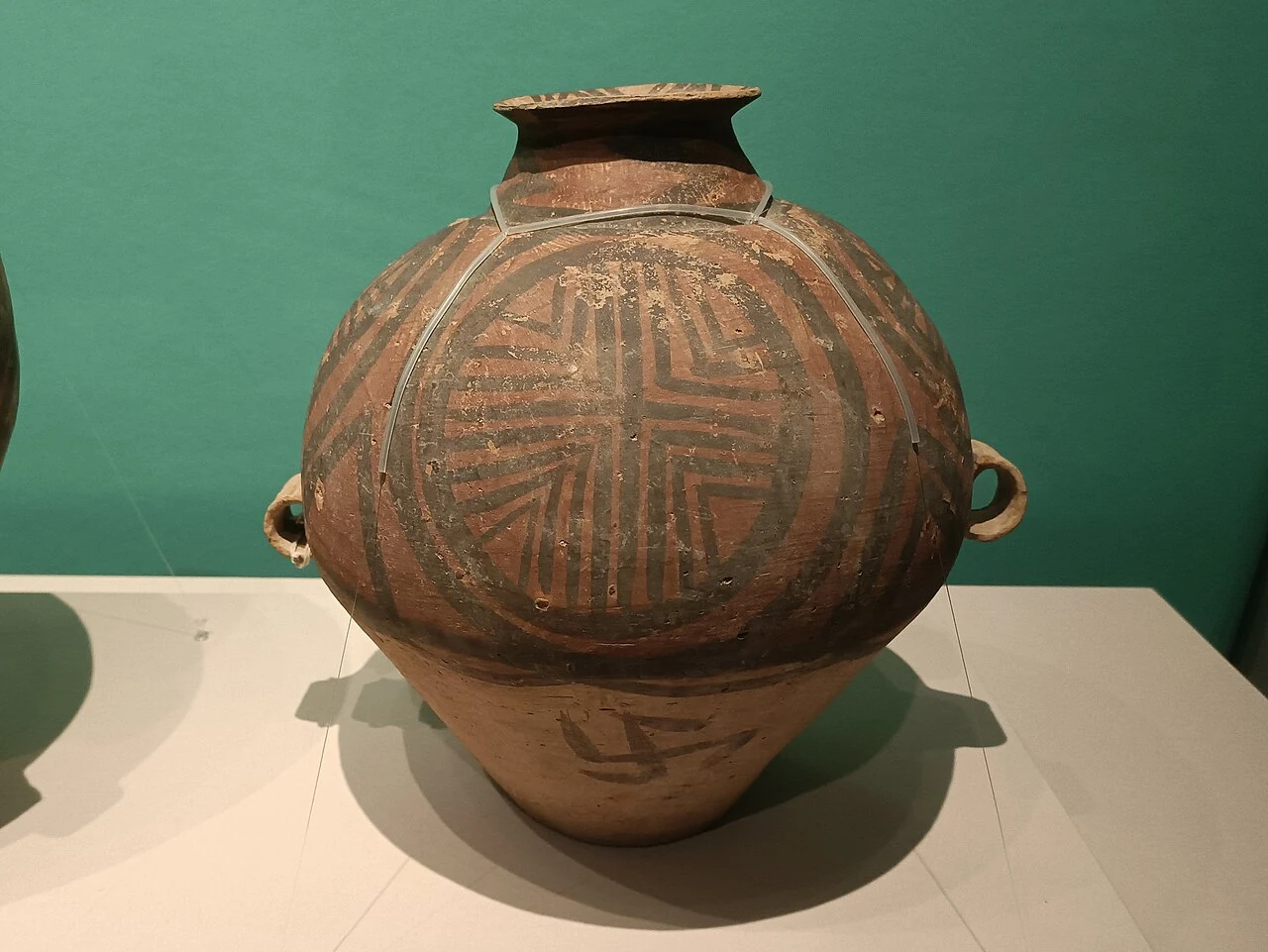
In spring 1974, residents of Liuwan village found pottery while digging a water channel. A museum researcher later recounted the discovery as the beginning of archaeological work at the site. Excavations by the Institute of Archaeology of the Chinese Academy of Social Sciences and the Qinghai archaeological team continued for seven years. The 2016 account reports more than 1,730 excavated tombs and nearly 40,000 objects. It names four cultural types represented in the finds: Banshan and Machang, associated with Majiayao culture, as well as Qijia and Xindian. The reported span, about 4,600 to 3,600 years before present, places the cemetery across a long sequence rather than a single moment.
From the journal
The Canal Discovery that Opened Liuwan’s Archaeological Story
A village water-channel project in 1974 brought pottery to the surface at Liuwan. The find led to years of excavation and a museum devoted to the cemetery’s objects and burial displays.
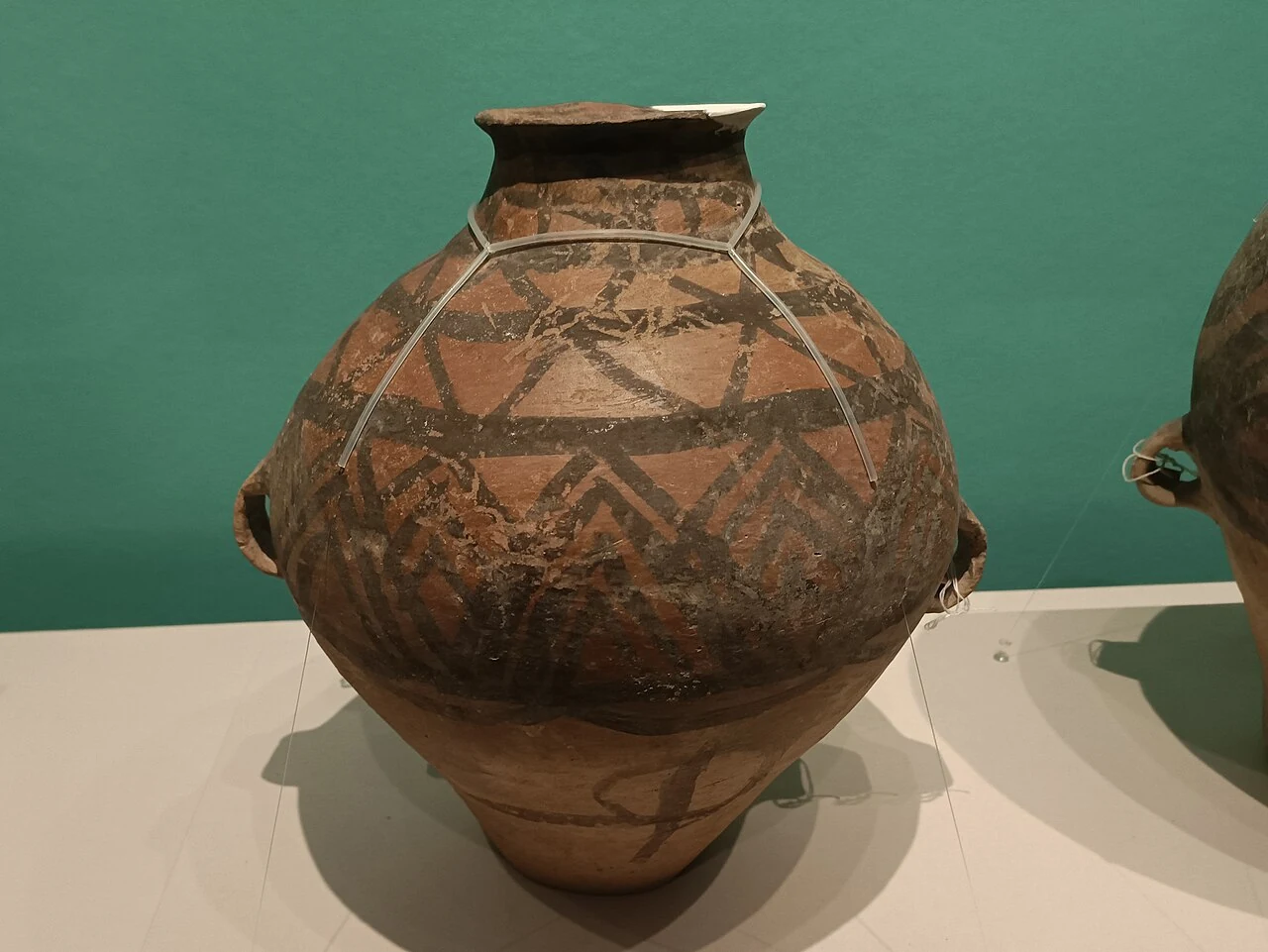
Pottery in a water channel
From excavation to a museum
The museum that grew from the Liuwan discoveries opened on 28 April 2004, after construction was completed in 2002. Its three sections introduced life, labor and burial customs, using pottery, bone tools, polished stone objects and reconstructed burial settings. The 2016 account gave the collection as 37,925 objects, about half of them pottery.
The water-channel discovery had become a sustained excavation and then a museum. The galleries linked a decorated vessel to the cemetery where objects were found, while reconstructed burials showed arrangements that a case of individual pots could not convey. The story moves from village work in 1974 to years of archaeological recording and an institution built to preserve and interpret the finds.