A Gallery Made to Melt: Butter Sculptures at Ta’er Monastery
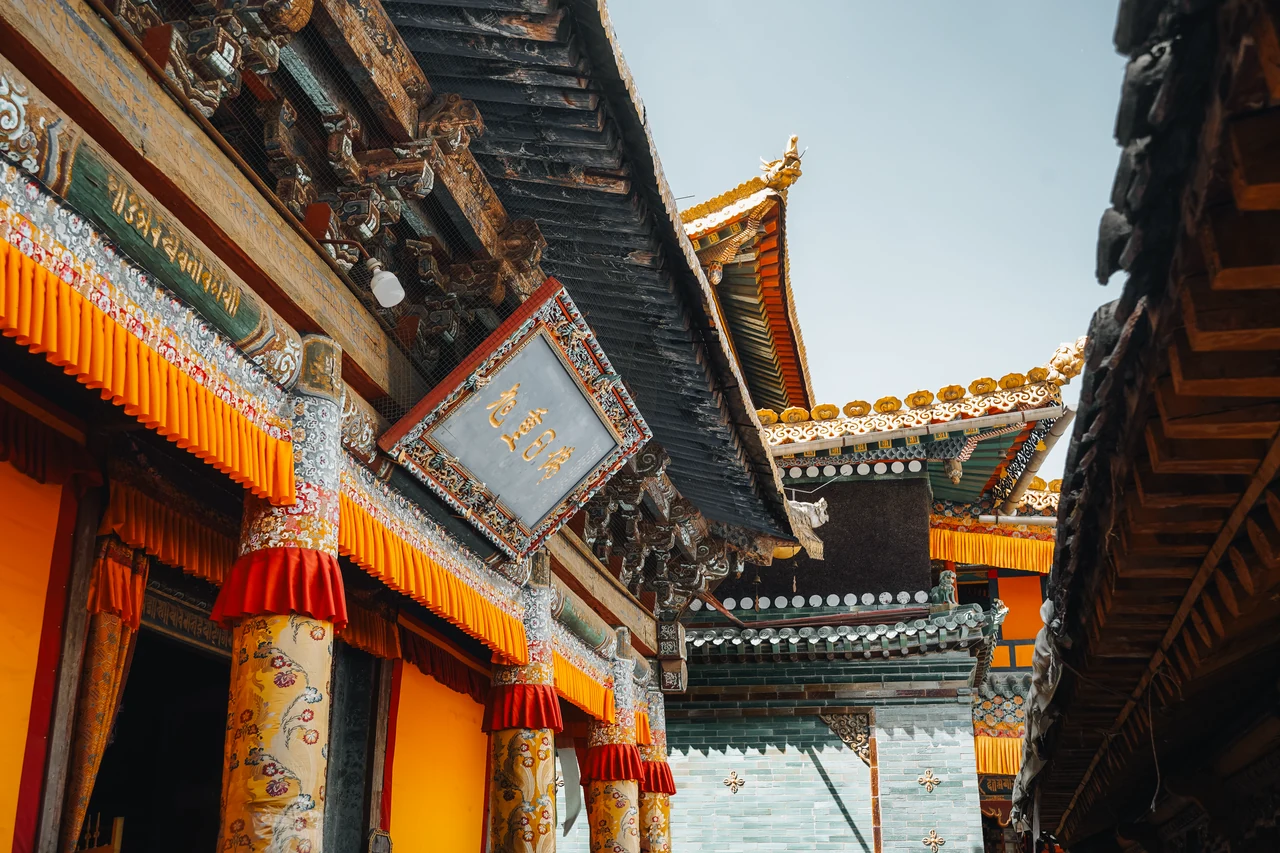
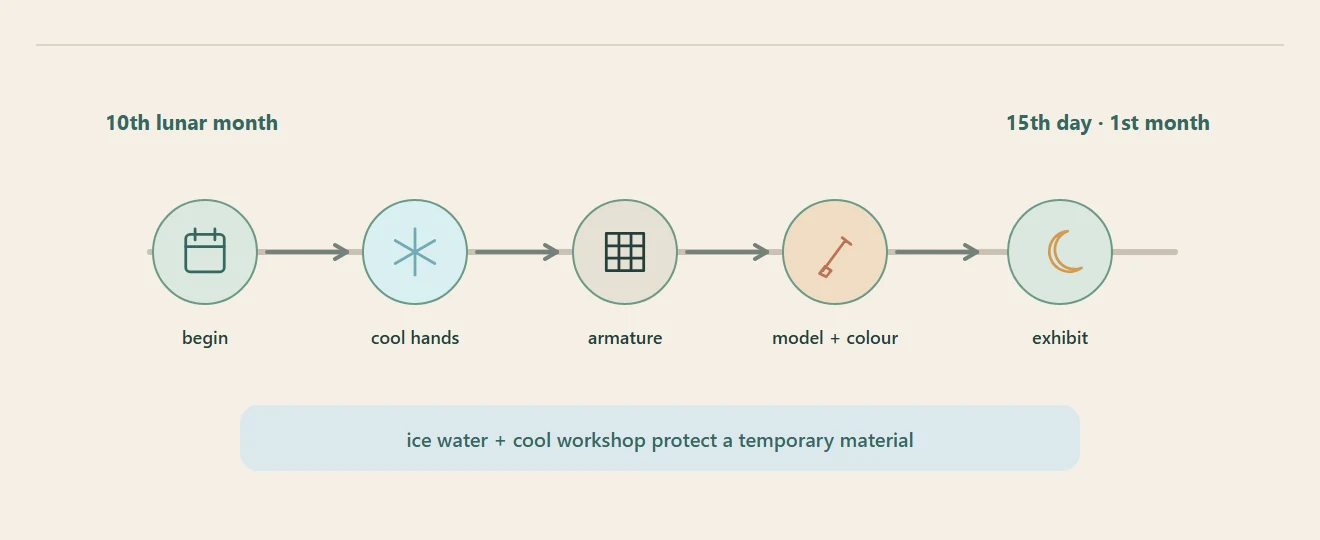
At the 2026 Lantern Festival, works from Ta’er Monastery’s Upper and Lower Flower Courtyards shared a hall. Their brief display begins with a longer winter of careful making.
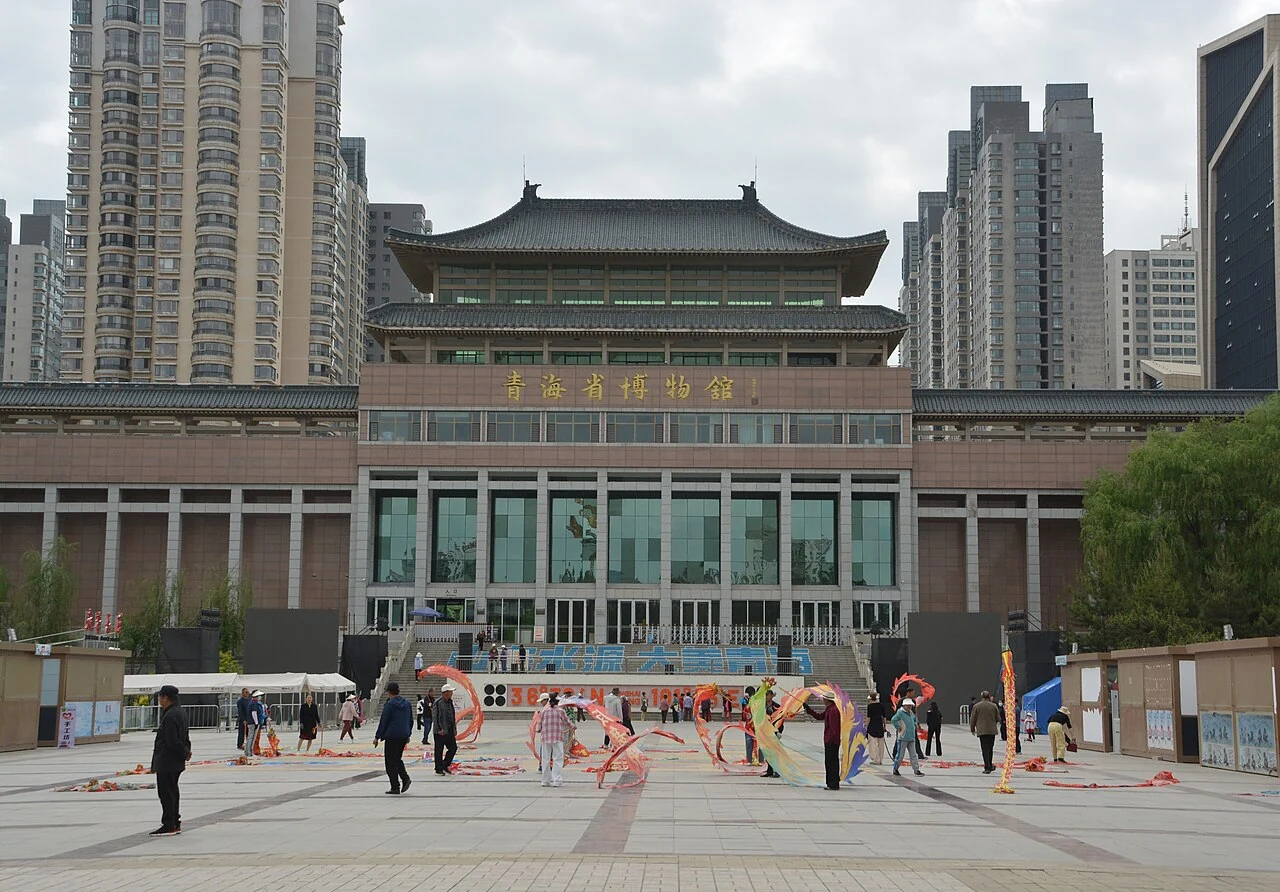
A butter sculpture at Ta’er Monastery begins in a cold workshop; a rug begins with wool and a loom. Xining’s stories move between these working rooms, the museum’s prehistoric vessels and the bowls served around the city. Beyond the urban streets, Huangyuan’s former trading town keeps another set of objects: merchant buildings, books and the papers of poet Chang Yao.
At the 2026 Lantern Festival, works from Ta’er Monastery’s Upper and Lower Flower Courtyards shared a hall. Their brief display begins with a longer winter of careful making.
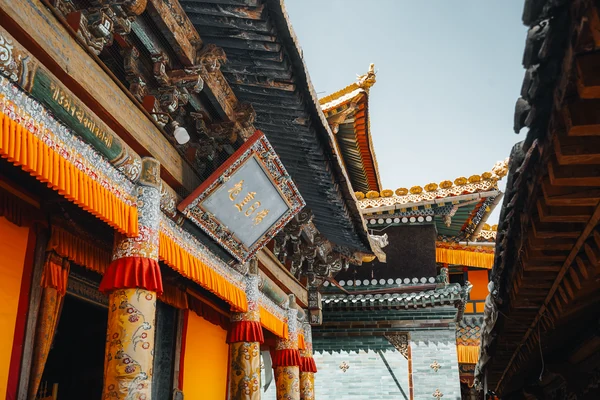
Two exhibitions, six years apart, place mural painting, appliqué embroidery and butter sculpture in a shared cultural frame while showing that each medium has a different life.
Read
Huangzhong duixiu turns cut silk into raised imagery. Recent preservation work adds a second kind of layering: a digital archive and tools for recording and developing designs.
Read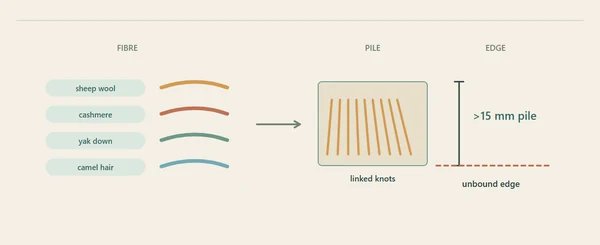
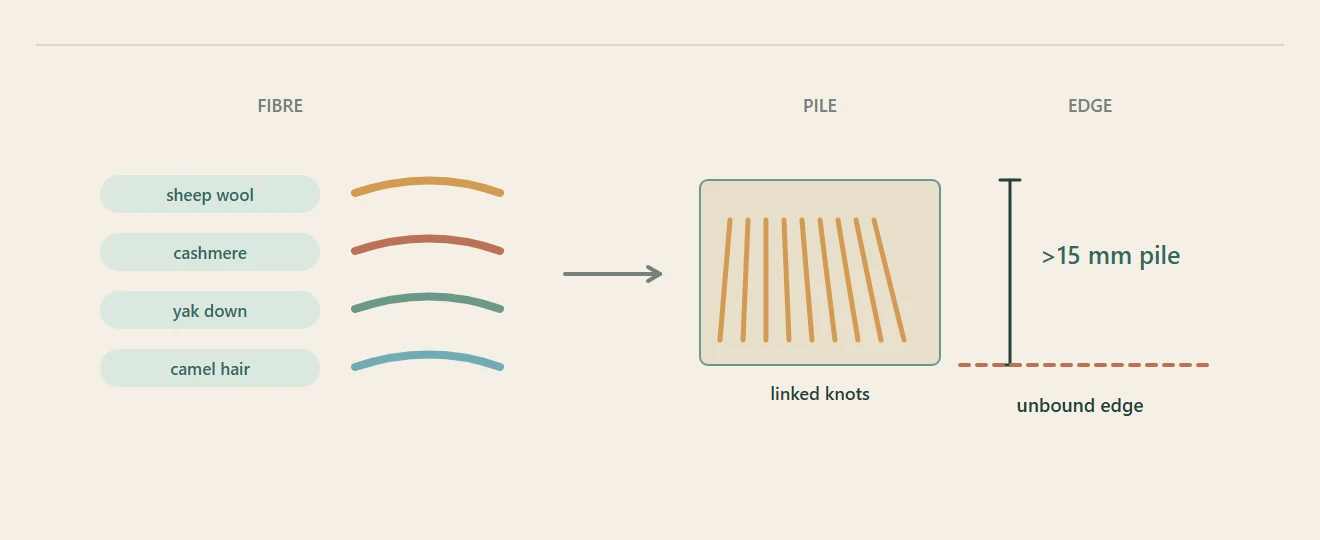
The national intangible-heritage record locates Jiaya weaving in Huangzhong and describes its fibers, linked knots, thick pile and traditional edge finish.
Read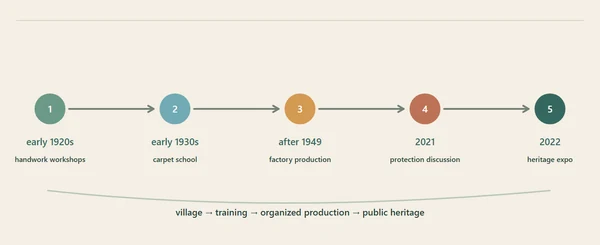
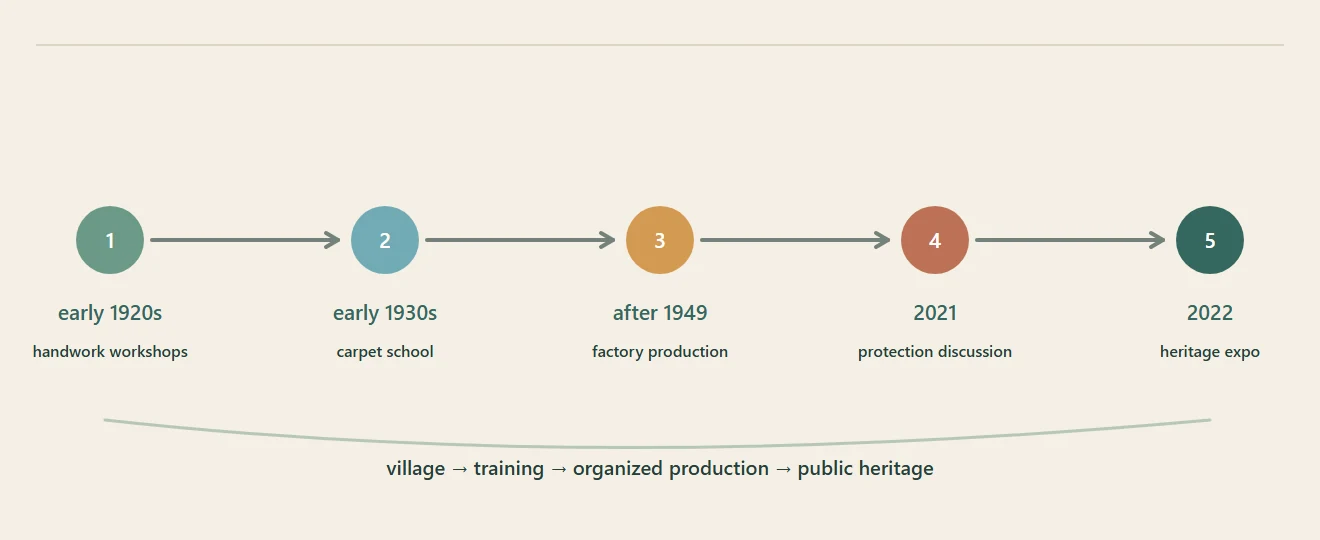
A village craft moved through workshops, a city training school and factory production, then entered national heritage exhibitions and contemporary carpet settings.
Read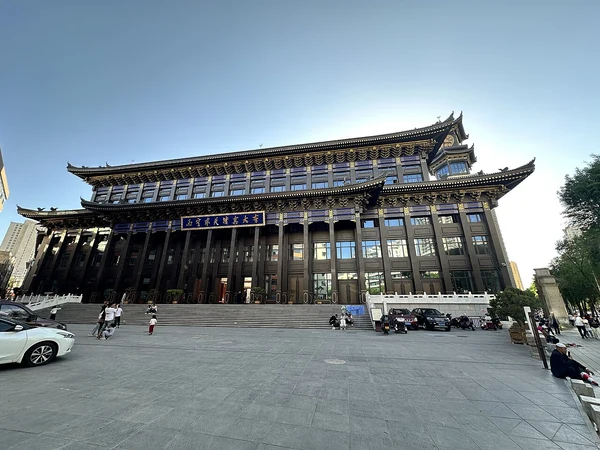
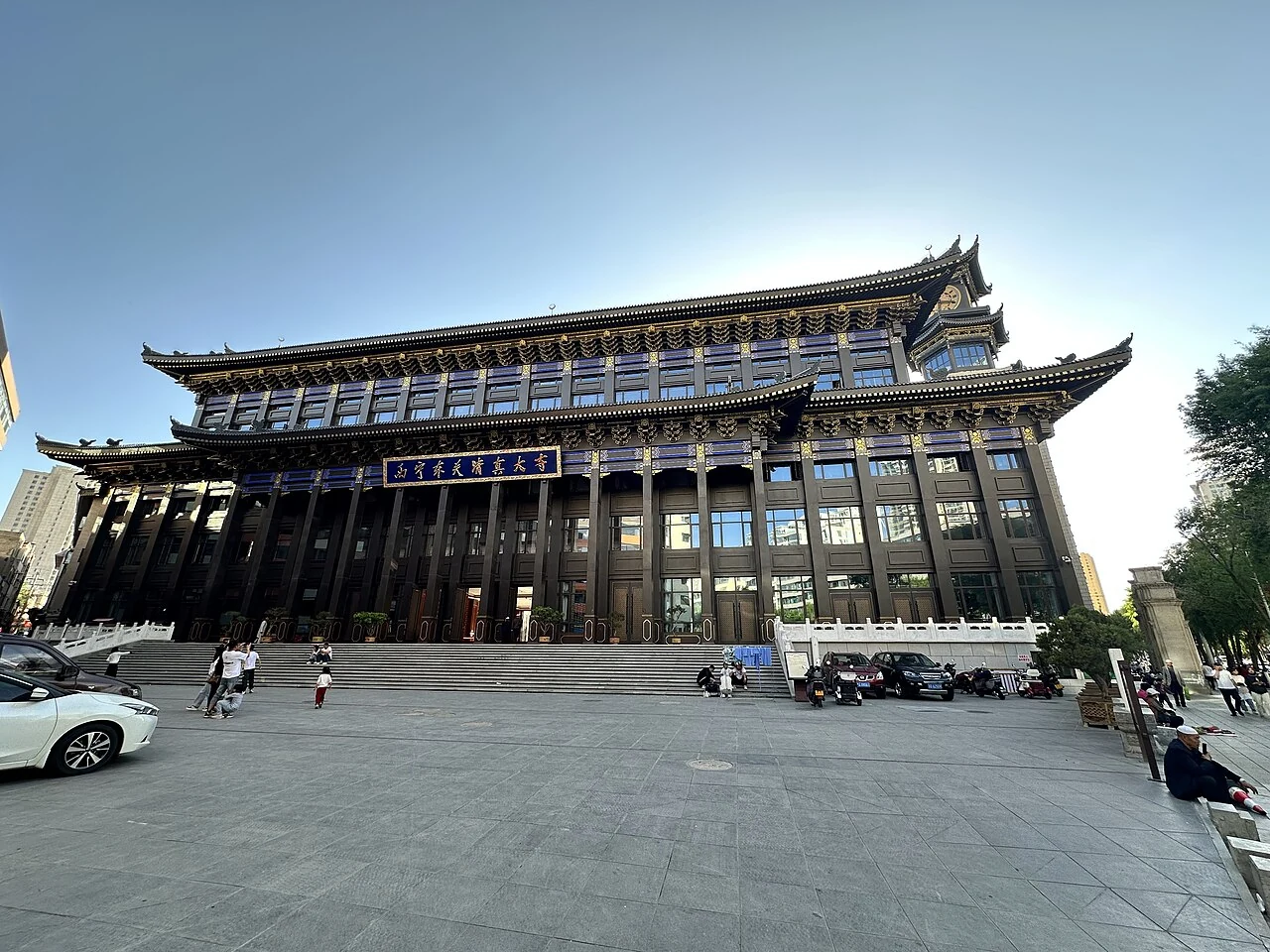
A five-bay prayer hall, paired towers and a long rebuilding history give Xining’s Dongguan Great Mosque a distinctive place in the city’s architectural landscape.
Read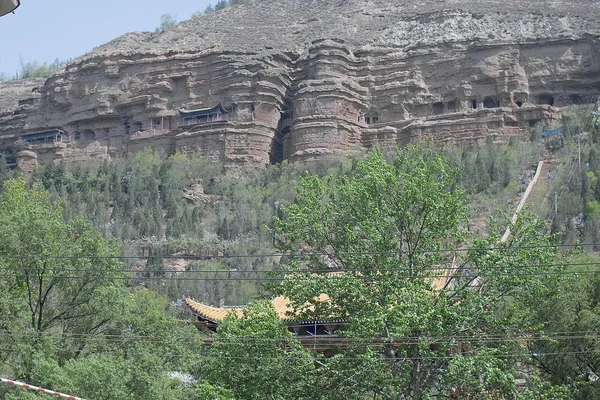
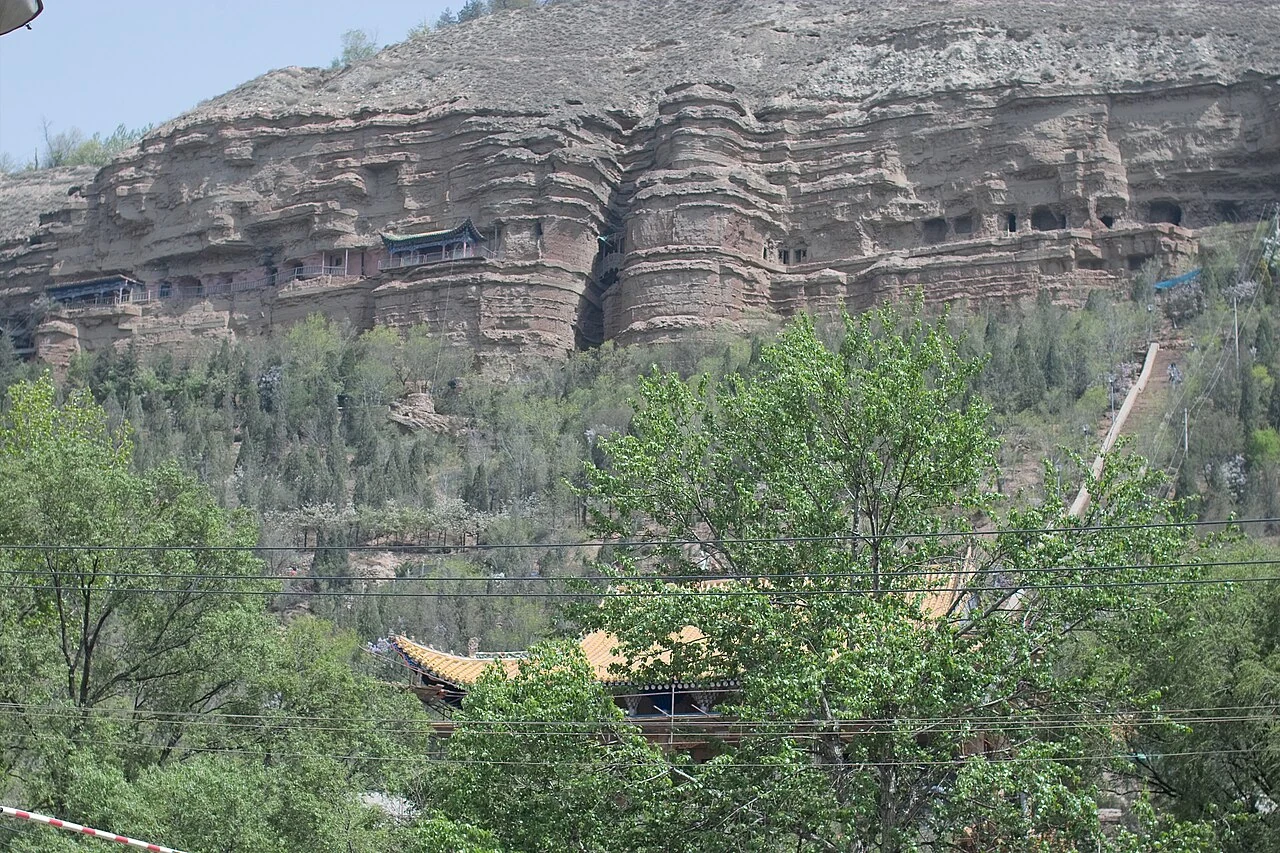
Cliff-cut caves, named halls and a summit pagoda shape the mountain architecture of Tulouguan above Xining.
Read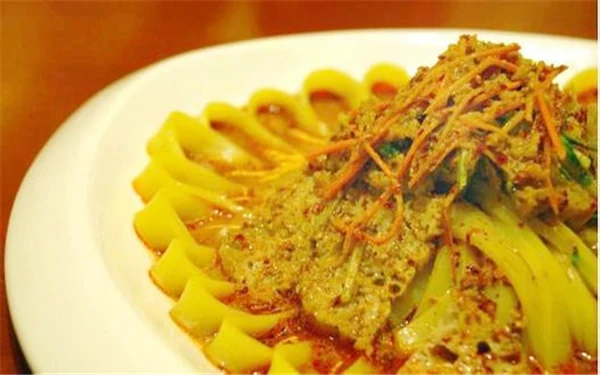
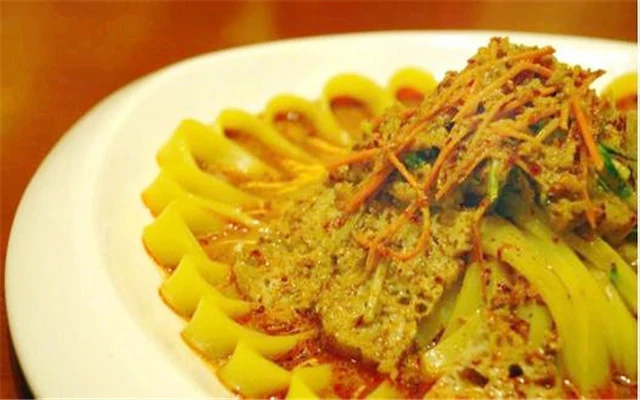
In niangpi, wheat dough separates into a smooth sheet and soft gluten. The Huangzhong government’s food entry records the transformations that turn one dough into two contrasting textures.
Read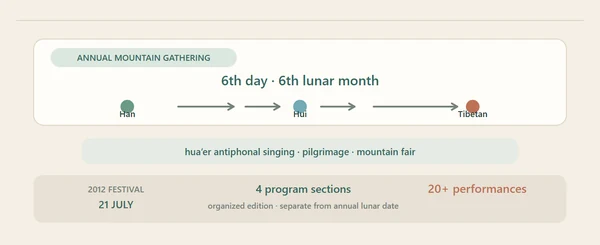
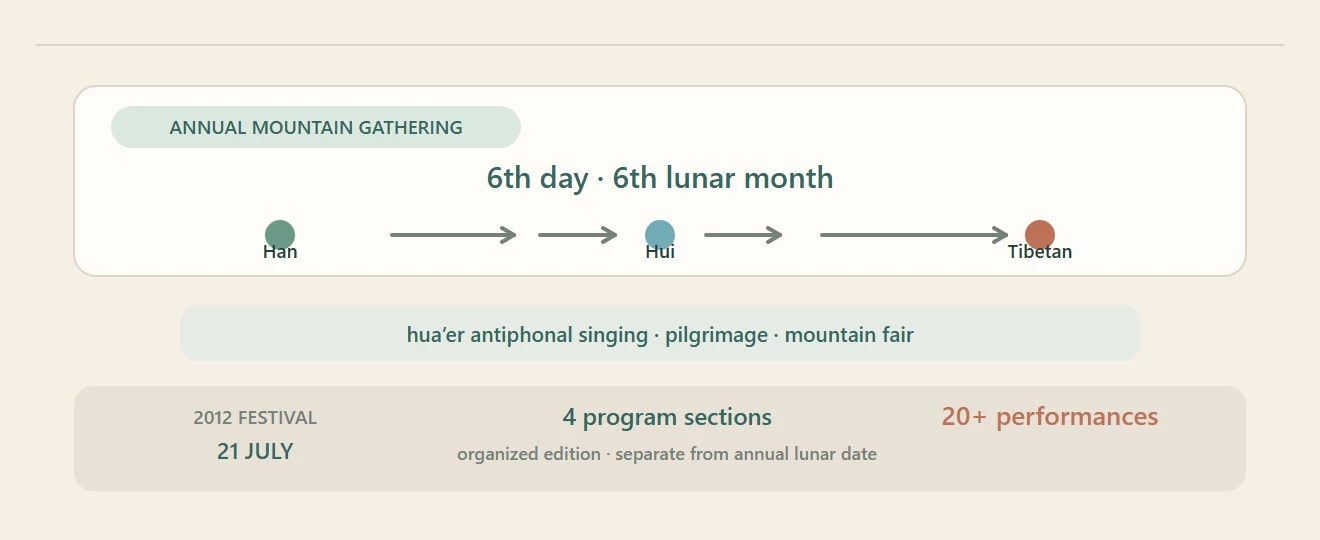
At Laoye Mountain in Datong, the annual sixth-day-of-the-sixth-month gathering joins hua’er singing with a mountain pilgrimage. The song meeting places open-air performance at the center of the seasonal event.
Read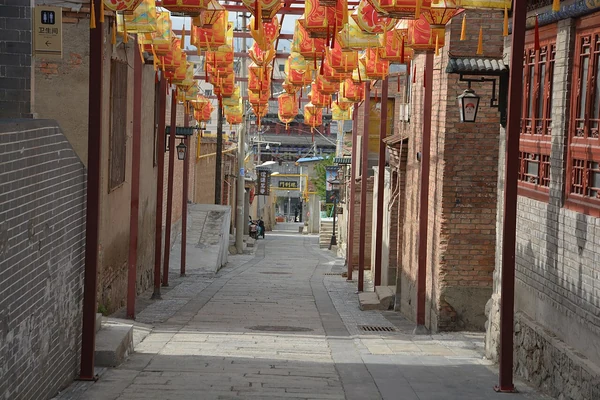
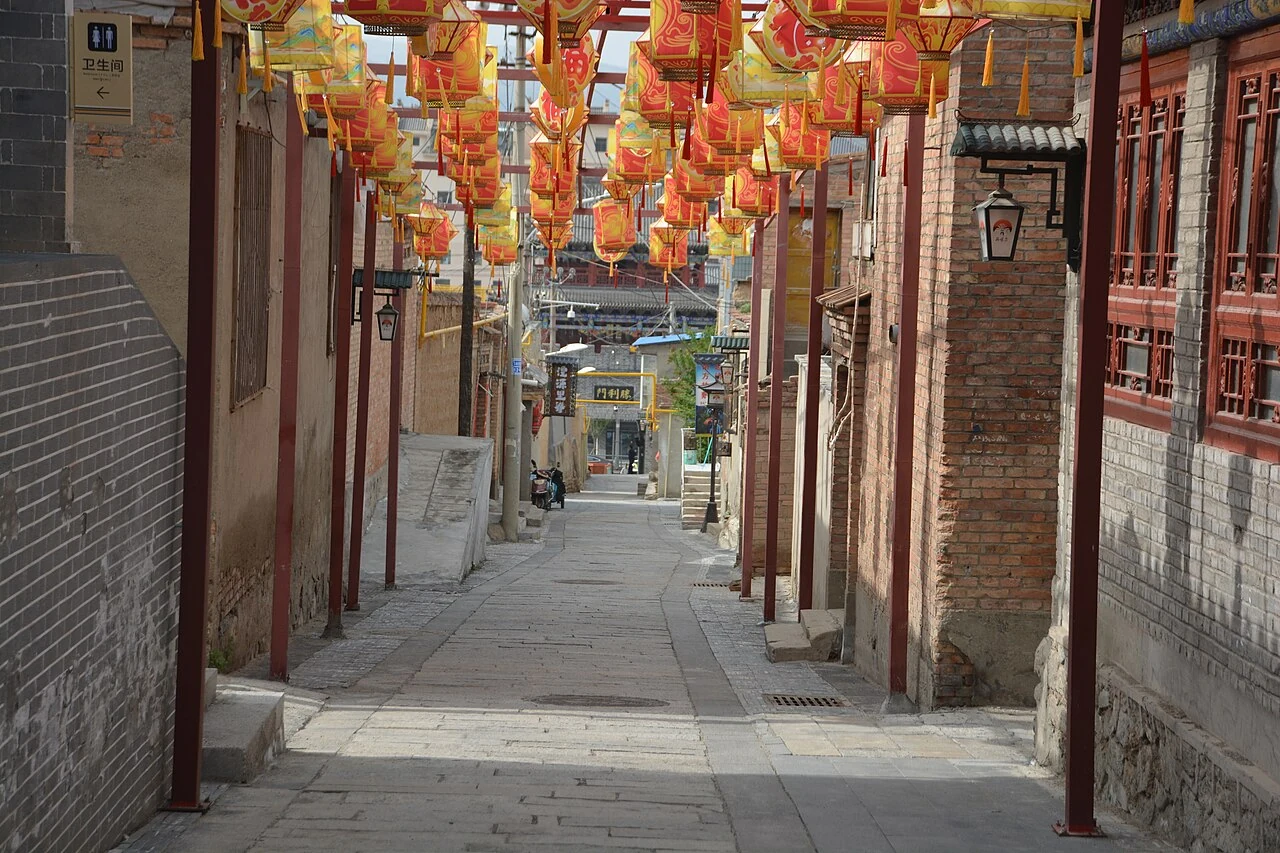
Fengsheng Street once linked Dangar’s gates, shops and workshops. County accounts describe a market supplied by rural farmers and Qinghai Lake pastoralists, where everyday goods and specialist crafts changed hands.
Read Huangyuan’s county account connects poet Chang Yao with the town and names poems set around Dangar, Red Ridge and Hala Kutu. A poetry museum occupies the former Haifeng Academy in the old town.
Read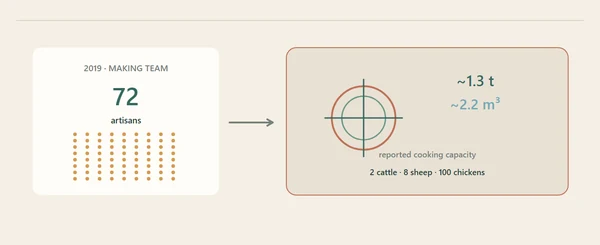
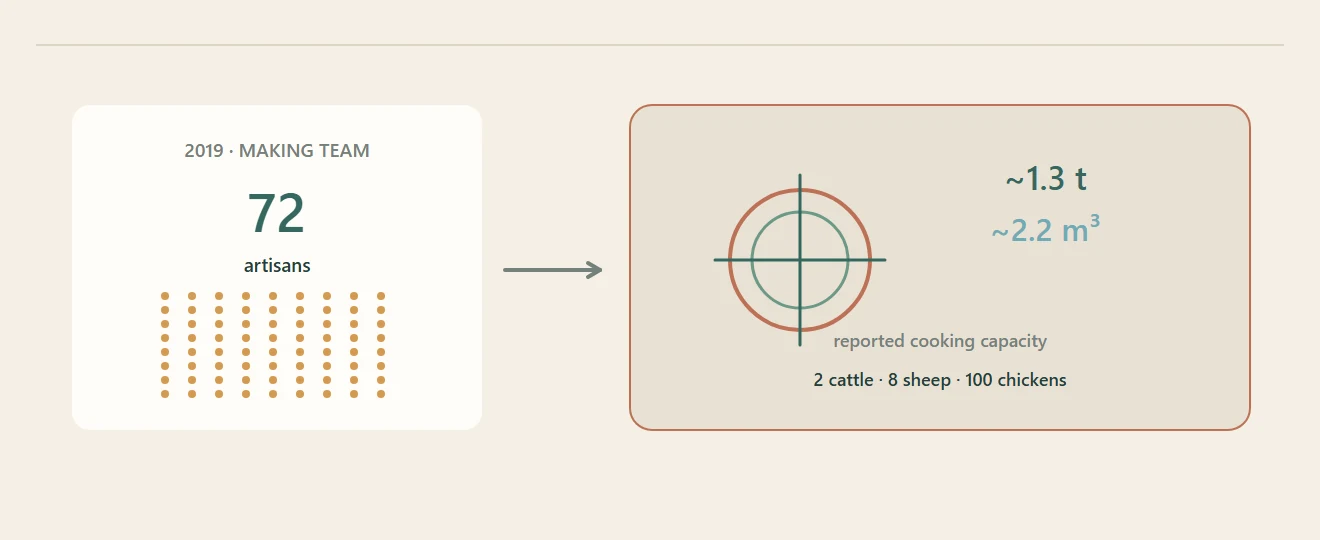
In 2020, silversmith He Man demonstrated engraving at a Beijing exhibition of Xining-area heritage. The display paired a live tool demonstration with a monumental copper vessel made by dozens of artisans.
Read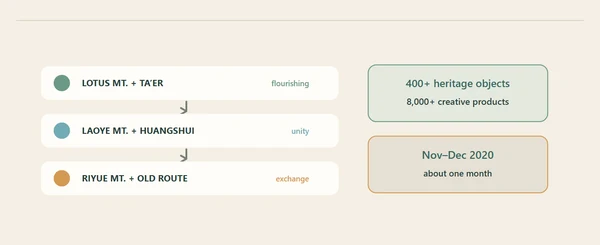
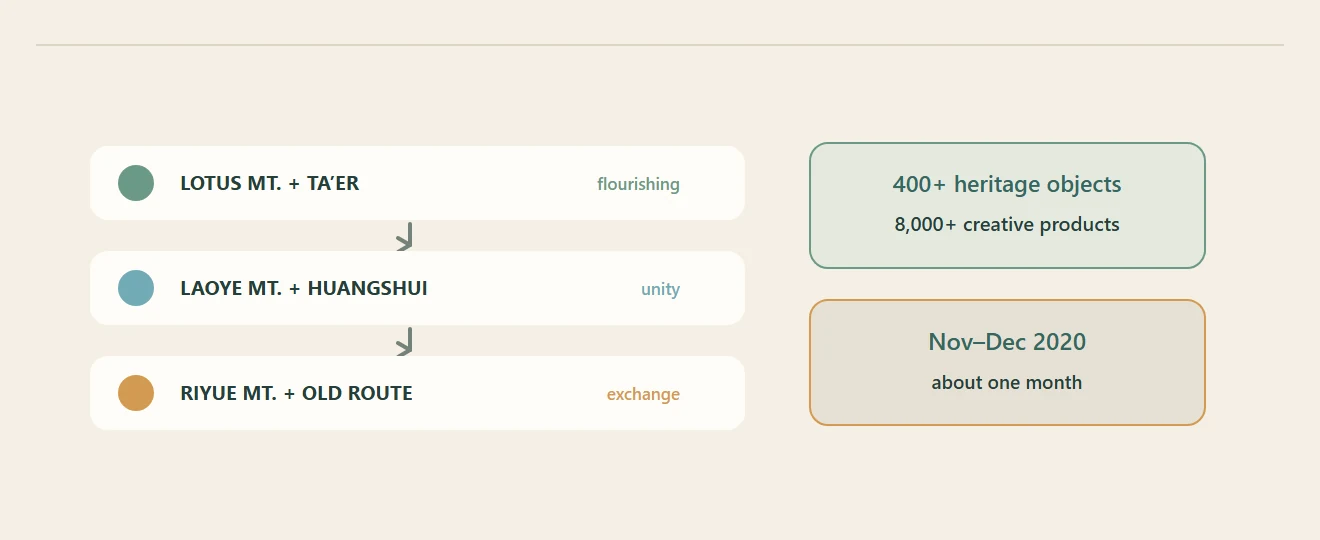
A 2020 exhibition at Beijing’s Prince Gong’s Mansion arranged Xining-area heritage through three named landscape sections. Its map was an exhibition framework linking places, projects and a cultural narrative.
Read In a government food entry, one wheat dough becomes both a translucent sheet and a porous piece of gluten. Their different textures meet in a bowl with vinegar, chili oil and other seasonings.
Read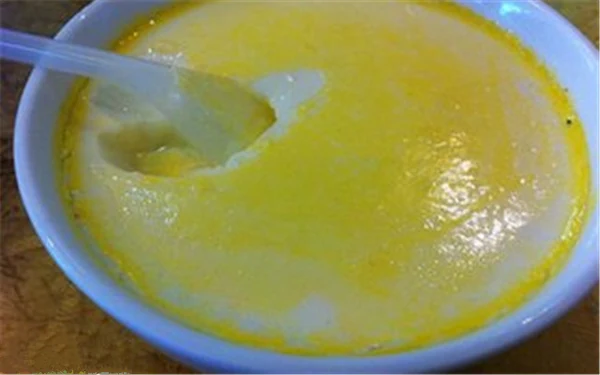
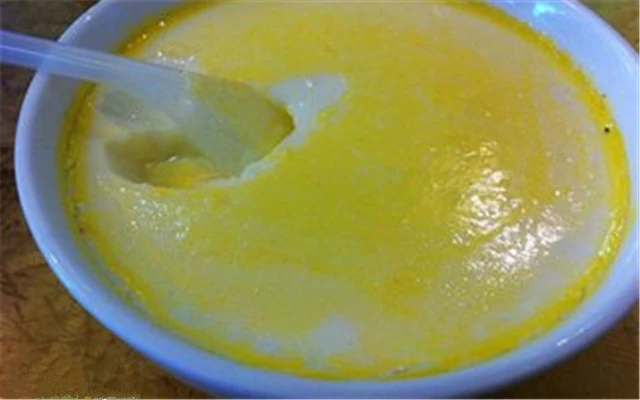
A local-government food entry describes Xining yogurt as firm enough to hold its shape in a bowl. A spoon breaks the surface, revealing white yogurt beneath a yellow sheen.
Read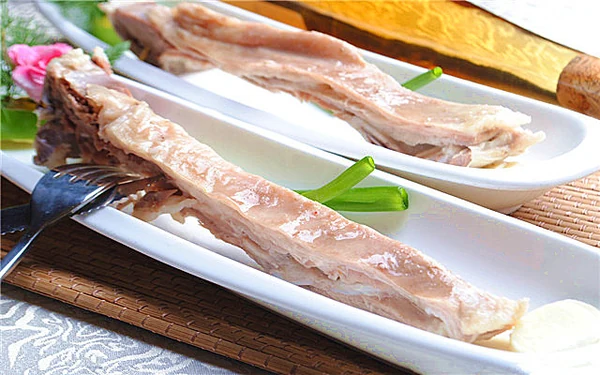
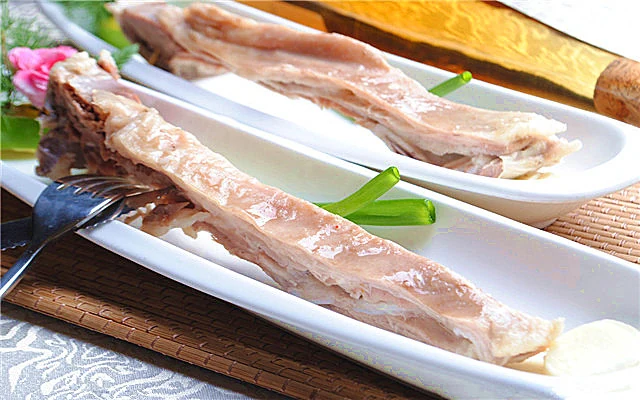
A government food entry describes hot, cold and pan-fried versions of shouzhua mutton. The same dish moves from steamed slices and dipping sauce to salt or a sizzling pan.
Read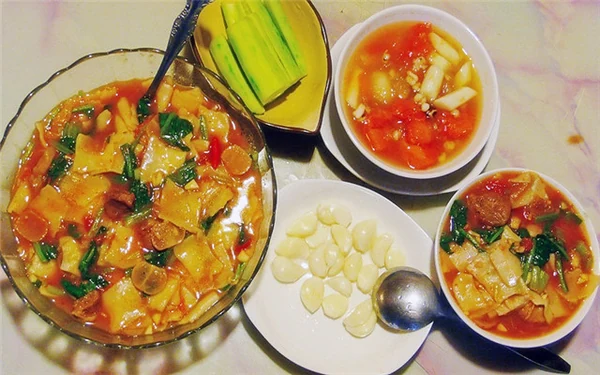
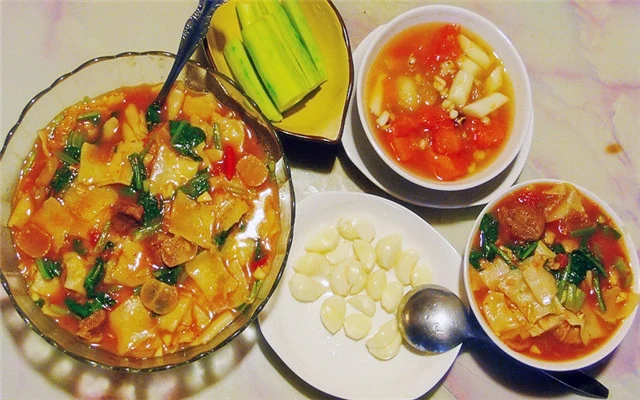
A Qinghai regional food entry follows soft dough from a resting tray to the boiling pot, where fingers pinch it into small squares. The same hand-cut piece can become several kinds of meal.
Read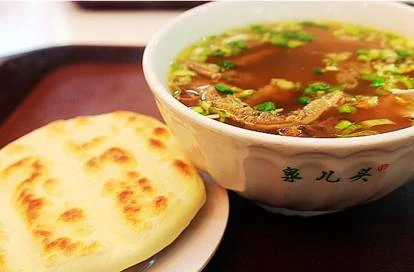
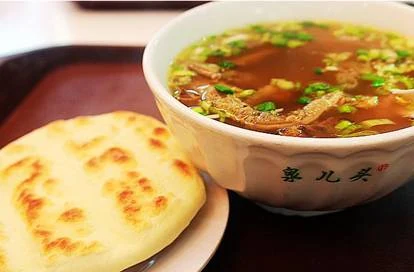
A 2024 Xining report follows offal soup from careful washing and slow cooking to the quick assembly of a breakfast bowl with garlic shoots, hot broth and leavened bread.
Read