From the journal

Chang Yao’s Huangyuan: Poems Tied to Dangar and Red Ridge

Huangyuan’s county account connects poet Chang Yao with the town and names poems set around Dangar, Red Ridge and Hala Kutu. A poetry museum occupies the former Haifeng Academy in the old town.

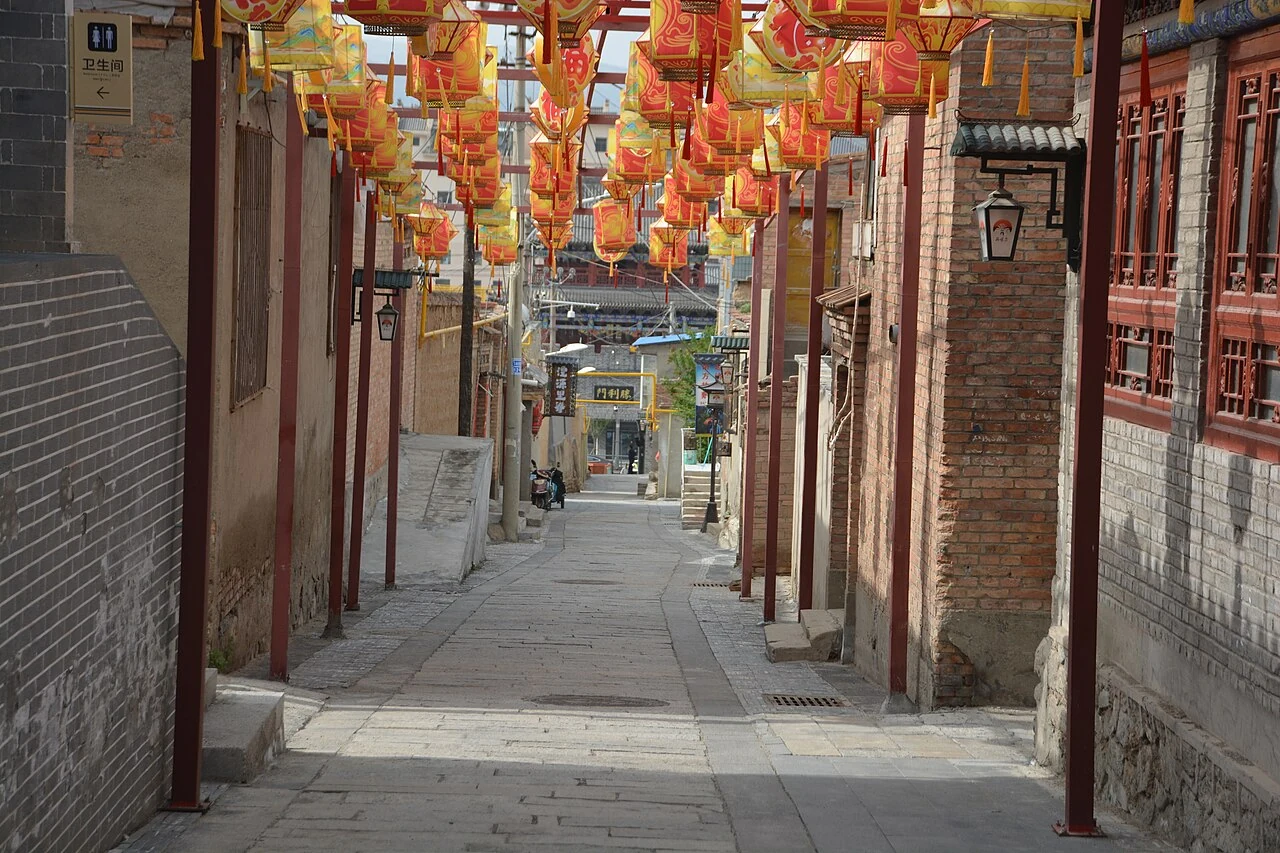
A lantern-hung lane in Dangar old town, May 2026; this is town context, not an identified view of the Chang Yao Poetry Museum.

A poet’s geography of Huangyuan

Huangyuan enters Chang Yao’s story as a place where the poet lived and wrote. A county government account calls the town his “second home” and describes it as a place of exile on the frontier. It links several poems to the area: “Dangar,” “Cihang,” “At the Aobao of Red Ridge” and “Hala Kutu.” Their titles move between the old town and nearby landscapes, giving the reader a map of places that returned in his writing.

The county account ties these poems to the fortunes and scenery of the region. Together, the titles form a literary geography: Dangar, Red Ridge and Hala Kutu locate the poems across town, mountain and former exchange center. The named places connect Huangyuan’s streets and settlements with the routes running through its surrounding landscape.

A poetry museum in a former academy

The Chang Yao Poetry Museum occupies the former Haifeng Academy inside Dangar old town. The county’s description says the exhibition includes the poet’s books, letters, poem manuscripts and personal belongings, with a statue in the museum. Paper, handwriting and everyday objects bring a literary collection into a historic school building.

The museum’s location joins the poet’s named places to the town that preserves his work. The former academy sits within the old-town fabric of streets, gates and merchant buildings; the poems named in the county account reach beyond it toward Red Ridge and Hala Kutu. Together, the place and collection offer a local starting point for reading Chang Yao’s writing about Huangyuan.

Continue exploring · Xining ↗
Photo credits and rights
  1. A lantern-hung lane in Dangar old town, May 2026; this is town context, not an identified view of the Chang Yao Poetry Museum.Jonashtand · CC BY-SA 4.0 Photo source ↗ Rights information ↗ Proportionally resized and converted to WebP without cropping. No objects were added, removed or reconstructed.