In a 2024 report from Xining, zasui soup begins with beef or mutton offal: head, heart, tongue, intestines and stomach are washed and simmered until tender. The cooked pieces are set aside, then assembled to order. At one shop near Zhifang Street, the report describes a server choosing pieces, dipping them through hot broth, adding garlic shoots and filling the bowl with soup. The process makes the ingredients visible before they disappear beneath the broth. A bowl can hold different combinations of head, tripe, tongue and intestine, each with its own texture.
From the journal
A Bowl of Zasui Soup before Dawn in Xining
A 2024 Xining report follows offal soup from careful washing and slow cooking to the quick assembly of a breakfast bowl with garlic shoots, hot broth and leavened bread.
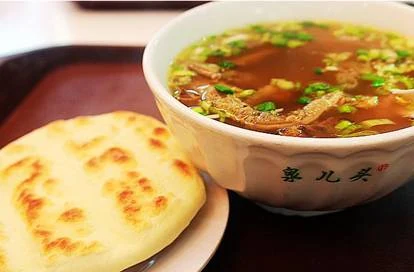
A Bowl of Zasui Soup before Dawn in Xining
From texture to table
The feature pairs zasui with leavened bread and records an early schedule at several named shops. One opened at 4:30 a.m.; another was described as busy at 10. In a separate account, a shopkeeper said cleaning ingredients and slowly cooking the broth took seven or eight hours. Together, the hours and preparation set a quick bowl at service beside the many hours of work before opening. The hot broth, chopped greens and bread form a compact breakfast: meat and soup in one bowl, a soft piece of bread alongside. A local saying in the article calls the soup a food that “does not wait,” a phrase tied to its early hours and the need to arrive while a pot is still available. At one shop, diners add chili and vinegar to taste after the bowl arrives. That last adjustment sits beside the restaurant’s preparation sequence: the kitchen has already cleaned and simmered the ingredients, while the customer chooses how much heat or acidity to bring to the broth.