From the journal

Caves and Halls on Xining’s North Mountain

Cliff-cut caves, named halls and a summit pagoda shape the mountain architecture of Tulouguan above Xining.

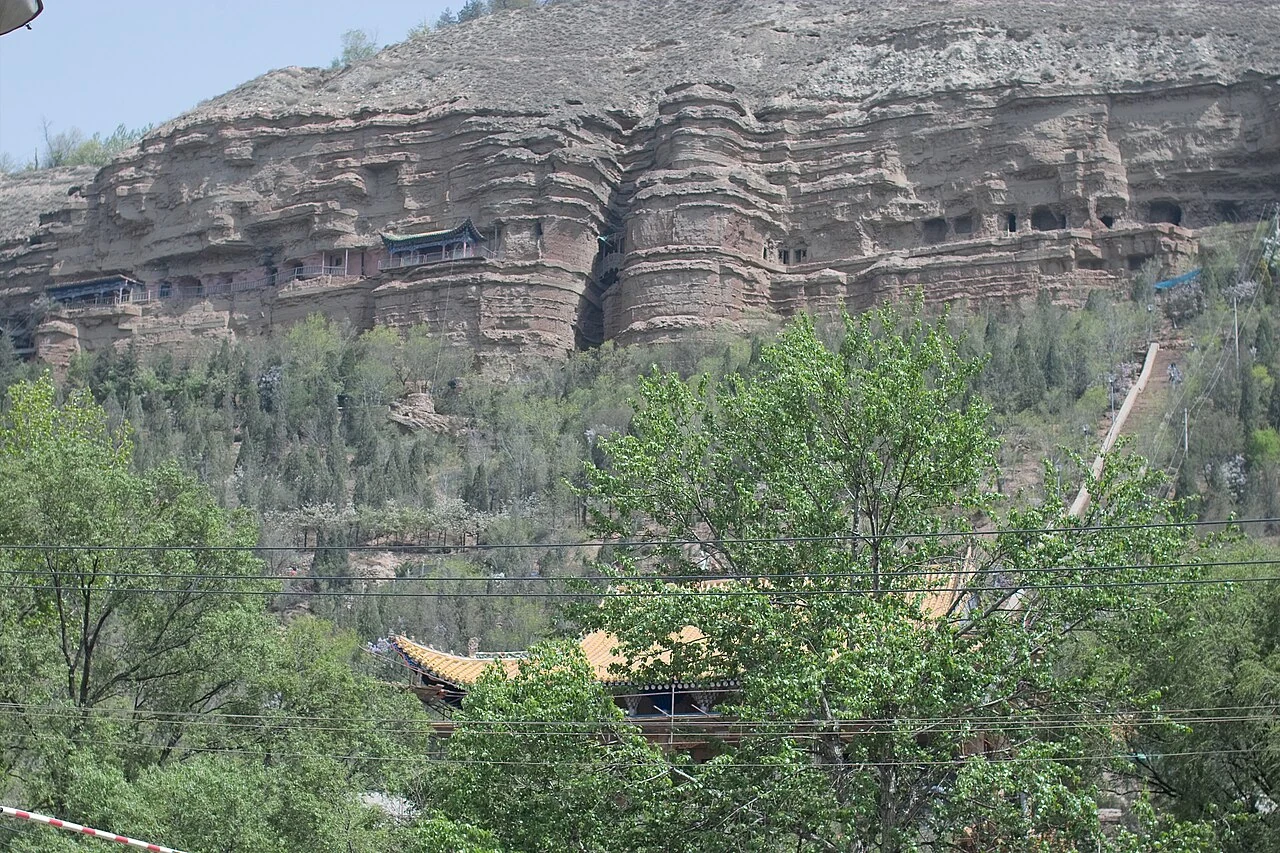
Tulouguan’s buildings against the cliff, photographed in 2009.

A shrine built into the hillside

On Xining’s northern edge, Tulouguan occupies the steep slope of Beishan. A 2010 Qinghai Station description calls the mountain red and pale in alternating bands, with cliffs rising above the city. Caves are cut into the hillside; the Ning Shou Pagoda stands among trees near the summit, while halls and temple buildings climb the slope below. The name Beichan Temple also appears in the historical account of the site, while Tulouguan remains the name attached to its Daoist precinct.

The setting is architectural as well as geological. Rock face, cave openings, wooded ridge and rooflines form a vertical arrangement, with the buildings adapting to the mountain rather than spreading across a level courtyard. From the city, that stacked profile helps explain why the site has long been pictured as a north-side landmark.
A landscape of named halls

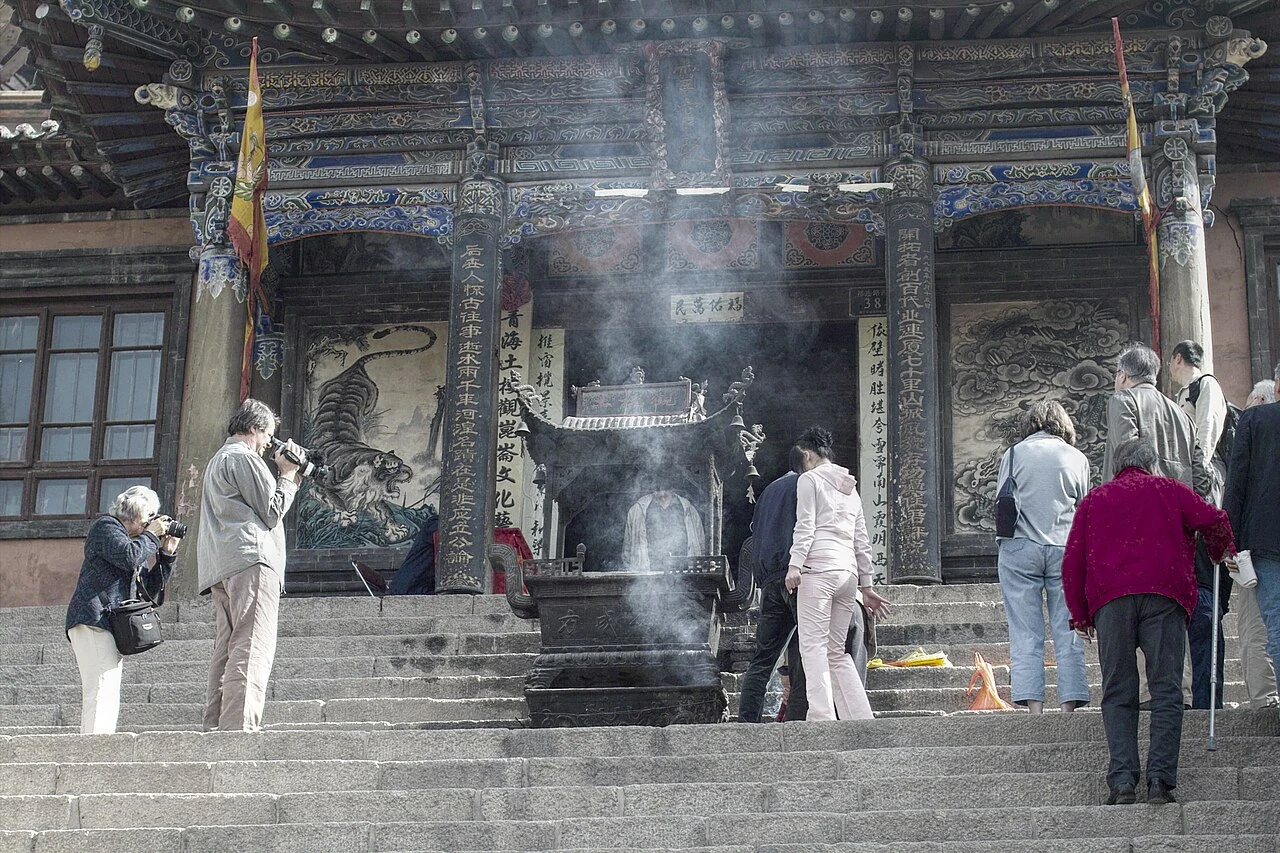
The compound’s names preserve a map of its sacred architecture. The Qinghai Station page lists several halls, including those dedicated to Xiwangmu, Lingguan, the City God and Sanqing, as well as Kuixing and Yuhuang pavilions and a vegetarian hall. It also describes a complex of nine caves and eighteen grottoes. Together, the names map the mountain ensemble’s separate halls, pavilions and caves.

A 2012 Ministry of Culture feature described Beishan Temple through Confucian, Buddhist and Daoist associations, placing it in Xining’s broader history of religious sites. The physical layout gives that layered history a visible form. A visitor looking across the slope can follow the relationship between the rock-cut chambers and the later halls, while the pagoda holds the skyline above them.

Tulouguan’s entrance and courtyard, photographed in 2012.
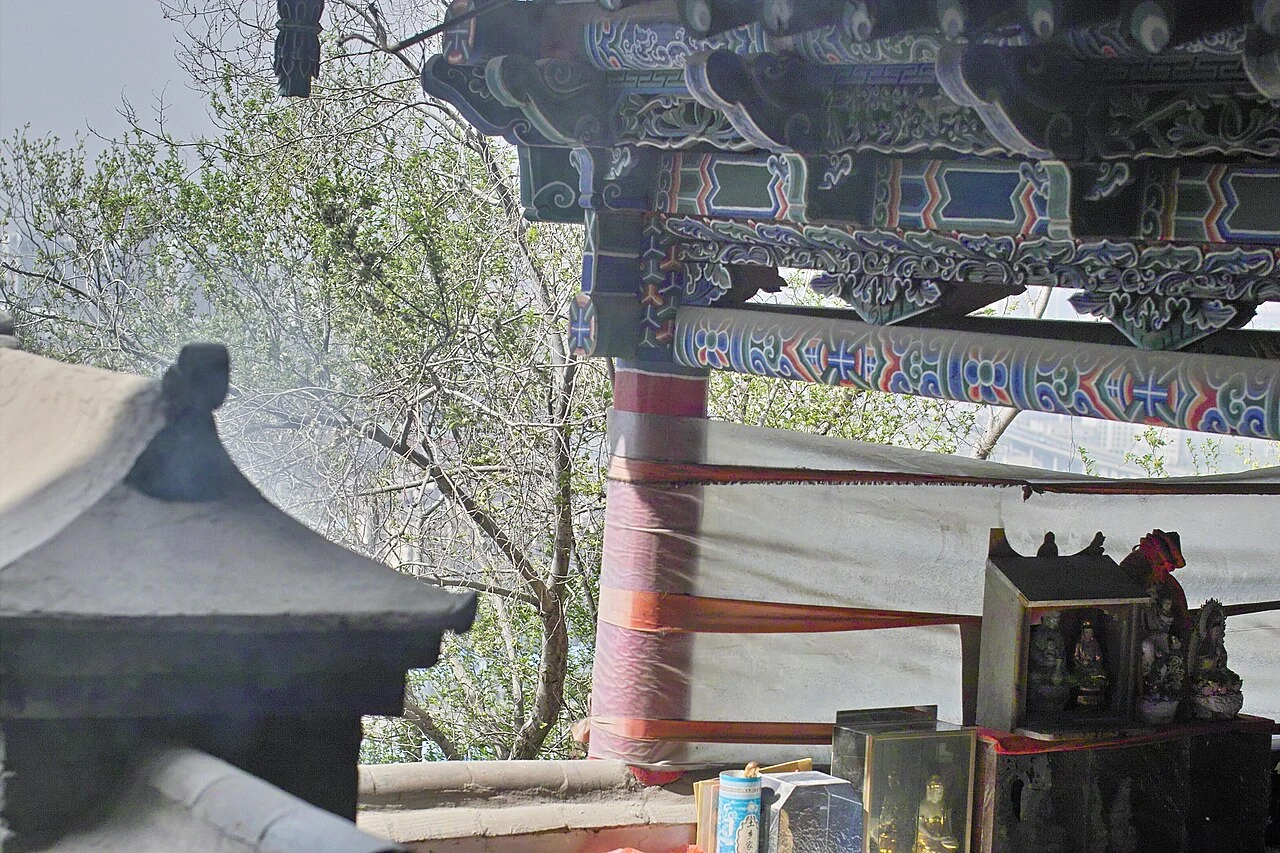
Roof timbers and a small shrine at Tulouguan, photographed in 2009.
Continue exploring · Xining ↗
Photo credits and rights
  1. Tulouguan’s buildings against the cliff, photographed in 2009.ArishG · CC BY-SA 3.0 Photo source ↗ Rights information ↗ Proportionally resized and converted to WebP without cropping. No objects were added, removed or reconstructed.
  2. Tulouguan’s entrance and courtyard, photographed in 2012.ArishG · CC BY-SA 3.0 Photo source ↗ Rights information ↗ Proportionally resized and converted to WebP without cropping. No objects were added, removed or reconstructed.
  3. Roof timbers and a small shrine at Tulouguan, photographed in 2009.ArishG · CC BY-SA 3.0 Photo source ↗ Rights information ↗ Proportionally resized and converted to WebP without cropping. No objects were added, removed or reconstructed.