A 2010 Qinghai regional food entry describes ga mianpian as soft dough worked by hand. The dough is rolled into a rounded length, flattened and divided into small pieces. After a short rest under a damp towel or cover, each piece is pressed, stretched and pinched into a small square before it drops into boiling water. The source gives the most carefully made pieces a fingernail-like size. This is where the dish gets its motion: one hand stretches the dough while the other pinches it free, sending a stream of little pieces toward the pot.
From the journal
Pinched into the Pot: The Many Forms of Ga Mianpian
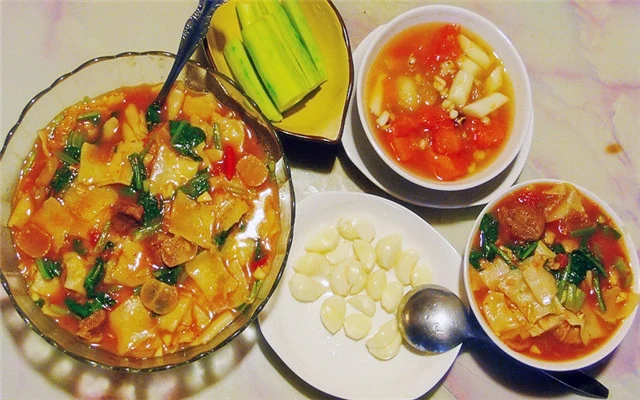
A Qinghai regional food entry follows soft dough from a resting tray to the boiling pot, where fingers pinch it into small squares. The same hand-cut piece can become several kinds of meal.
Pinched into the Pot
From texture to table
The same guide lists several ways those pieces become a meal. Greens and scallion make a simple version; beef or lamb may be stir-fried before the dough is pinched in, or cooked first in a broth that receives the dough later. Other bowls arrive as a stir-fry with meat, glass noodles, chili and garlic shoots, or with a small amount of soup and bean paste. A clear version has neither meat nor oil. Each bowl begins with the same hand-shaped dough, yet the broth, vegetables and order of cooking change its texture and weight. The list makes the small pieces a flexible base: they can float in soup, meet a rich pan or take on the flavor of greens and scallion. The pinch itself is constant; the pot determines what surrounds it. Before resting, the small dough pieces are rubbed with cooking oil and laid out on a plate. A damp towel or plastic cover is placed over them for about ten minutes, then the cook resumes pinching and stretching. The short pause separates shaping from cooking.