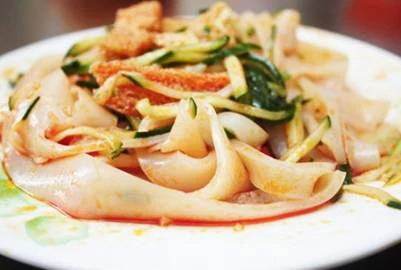
The Xining-area niangpi entry begins with wheat flour, alkaline powder and a firm dough. The dough is kneaded in cool water until starch washes away and the remaining gluten turns porous, like a honeycomb. That gluten is cooked separately. The starchy liquid is stirred and either ladled into a shallow pan and blanched in boiling water, or allowed to settle before the liquid above is poured off and the starch is steamed on cloth. One batch of dough thus separates into two textures: a smooth sheet and a spongy, elastic gluten. The local entry notes the pronunciation “rang pi,” and describes the Xining version as golden and translucent, with oil-red chili, vinegar and a tangy aroma.
From the journal
One Dough, Two Textures: Niangpi in Xining
In a government food entry, one wheat dough becomes both a translucent sheet and a porous piece of gluten. Their different textures meet in a bowl with vinegar, chili oil and other seasonings.
One Dough, Two Textures
A bowl of two textures
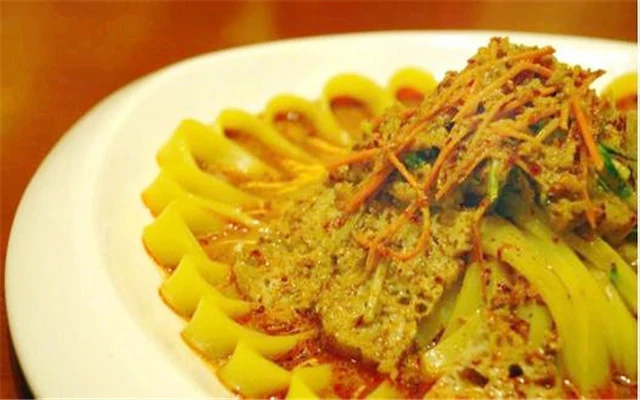
To serve niangpi, the sheet is cut into long strips and paired with pieces of cooked gluten. Vinegar, red chili oil, mustard, chives and garlic bring sharpness and heat to the smooth, cool noodles. The local description lists it as both a filling main dish and a cold side, served warm or cold throughout the year.
The two preparations—blanching a thin layer or steaming settled starch on cloth—produce the sheet; the washed gluten becomes the second ingredient. Smooth ribbons carry the dressing, while porous gluten holds it. One batch of dough gives the bowl its contrast.