From the journal

New Forms, Recognizable Stitches: Li Faxiu’s Tu Embroidery

A 2017 Huzhu profile shows how embroiderer Li Faxiu combined panxiu with other stitches in named works, then explored new designs and product forms.

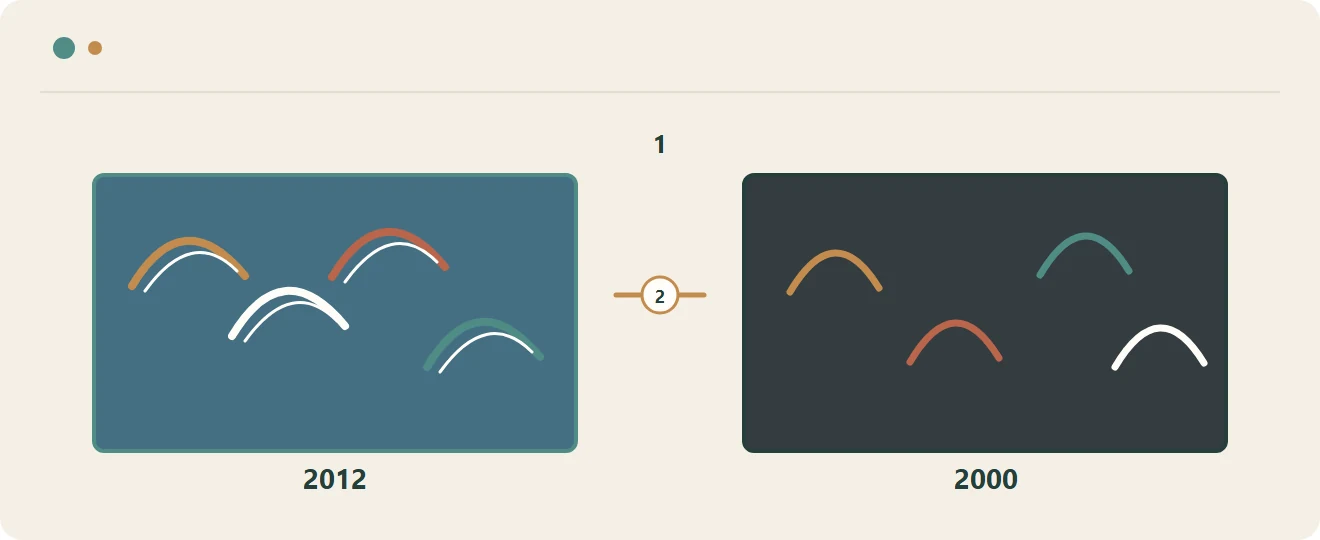
Original editorial diagram, not a photograph or measured plan: The thread-role schematic marks Li Faxiu’s documented 2000 and 2012 works without copying either composition.

A double dragon and a sunflower

A Huzhu County profile of embroiderer Li Faxiu describes two works made years apart. “Double Dragons Playing with a Pearl,” completed in 2012, measures one metre by 46 centimetres including its border. Li used blue satin as the ground, with gold and silk threads outlining the dragons, clouds and pearl; panxiu was combined with flat embroidery. An earlier piece, “Rich Sunflower,” made in 2000, used a black satin ground and included a sunflower, a Chinese-knot motif called “Wanliu” in Tu, and a continuous prosperity pattern.

These examples show how a familiar stitch can support different compositions. The double-dragon panel builds a paired figure from metallic outlines, while the sunflower piece arranges several symbolic forms on a dark field. Color gradations, outline and stitch density make the images distinct without separating them from the embroidery tradition.

From inherited stitch to new product

The county profile records Li’s move toward new designs and marketable forms. After showing her work at an international women’s forum in Beijing in 1995, she began exploring the commercial potential of embroidery and continued to devise original pieces. The same account notes that she trained embroiderers in local workshops and later offered work through an online shop. These details place design alongside teaching and sales as parts of her practice in the 1990s and 2000s.

The national heritage description helps explain what stayed constant as the work changed form: two threads with separate roles, color-rich silk embroidery and patterns built by hand. Li’s documented panels make that continuity visible. A dragon, a sunflower or a prosperity motif can move between a wall piece, a wearable item and a small gift, while the stitch remains the link between image and maker.

Continue exploring · Haidong ↗
Photo credits and rights
  1. Original editorial diagram, not a photograph or measured plan: The thread-role schematic marks Li Faxiu’s documented 2000 and 2012 works without copying either composition.© 2026 IFreeing · Rights information Photo source ↗ Proportionally resized and converted to WebP without cropping. No objects were added, removed or reconstructed.