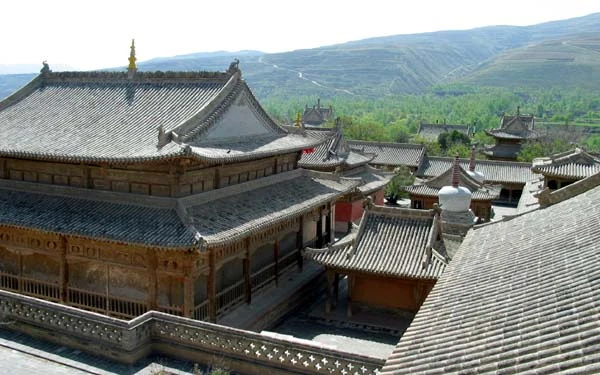
The covered corridors at Qutan Monastery are also a long painted narrative space. A specialist interviewed in 2023 describes 28 well-preserved mural corridor bays. In sequence, the paintings tell the story of Shakyamuni from birth to enlightenment, giving the corridors a rhythm that unfolds as visitors move through the architecture. The images are not detached panels: they occupy passages linking the monastery’s halls, so the act of walking provides a way to encounter their sequence.
From the journal
A Buddha’s Life Unfolds along Qutan Monastery’s Murals
Qutan Monastery’s covered corridors hold a sequence of mural rooms. Their narrative follows Shakyamuni from birth to enlightenment, while individual scenes bring religious stories into contact with the plateau’s landscapes and offerings.
A narrative along the corridor
Devotees in a painted mountain landscape
One scene singled out in the account is “Worshipping the Buddha in the Deep Mountains.” A young monk sits in the mountains; devotees arrive with yaks, carrying milk pails and butter as offerings. At the left, a group in armor approaches with raised banners. The painted details make landscape, religious devotion and movement part of one composition. The interviewer and scholar connect the scene to a local legend about the Jianwen emperor, but the legend remains a story attached to the image, not an established account of the people depicted. The specialist also describes different artistic influences across the complex: the main halls show Nepalese influence, the corridors include green landscape painting, and Qing-period repainting reflects techniques associated with Rebkong thangka art. These layers make the corridors a record of artistic exchange as well as a sacred narrative.