From the journal

Wheat, Barley and Orchard Crops in Xunhua’s Valley

An official ethnic overview lists staple grains and Huanghe valley fruits for Salar settlement areas. Read as a dated agricultural sketch, it opens questions about seasonality, markets and home cooking in Xunhua today.

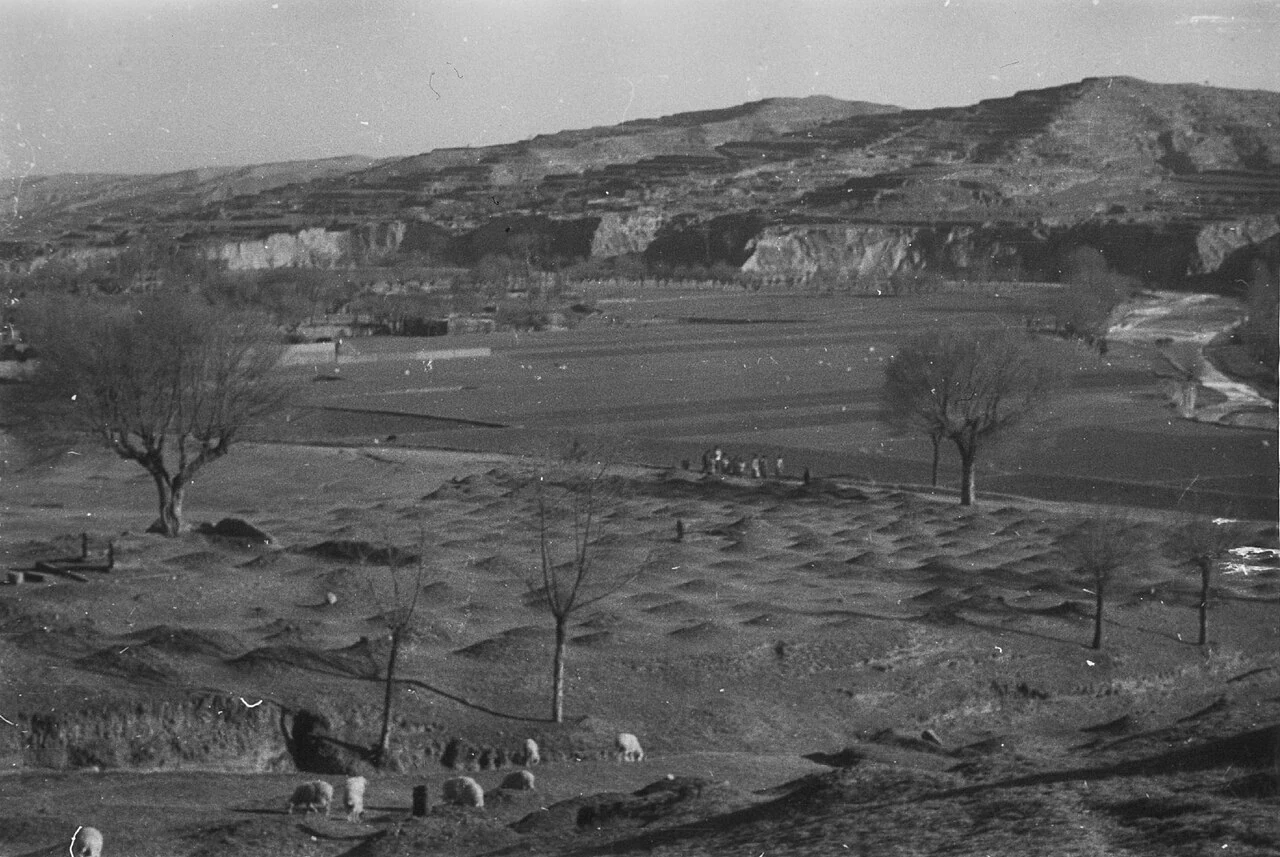
Fields, river and mountain in Xunhua in a 1932 archival photograph.

Grain fields and valley orchards

Wheat, highland barley, buckwheat and corn appear in a national ethnic-affairs overview of crops in Salar settlement areas. Along the Yellow River valley, the same account names pears, apricots, walnuts and grapes. Grain fields and fruit trees form two parts of this agricultural landscape.

A separate account of Salar food customs identifies wheat as a principal staple, with barley, buckwheat and potatoes also used. Flour becomes noodles, breads and other dough preparations. The valley’s produce reaches the table in several forms, from a staple bowl to fruit and nuts.

More than one use for a grain

The customs account also describes roasted-grain tea: grain is roasted and crushed before being simmered with salt and other ingredients. A crop that can become flour also becomes a drink, changing texture through heat, grinding and water.

For festivals and guests, the account lists oil-fried pastries, hand-served beef or mutton, stuffed buns and mixed vegetable dishes. These recorded preparations bring grain together with meat and vegetables at different kinds of meal. Noodles, breads and roasted-grain tea show the range of work performed by a staple, while orchard fruit adds another strand to the Yellow River valley’s food landscape.

Continue exploring · Haidong ↗
Photo credits and rights
  1. Fields, river and mountain in Xunhua in a 1932 archival photograph.Holton, Carter D., 1901-1973 [creator] 1923-1941 · CC BY-SA 4.0 Photo source ↗ Rights information ↗ Proportionally resized and converted to WebP without cropping. No objects were added, removed or reconstructed.