From the journal

A Gold Token and the Tea-Horse Trade in a Beijing Exhibition

Among the objects reported at a 2026 Beijing exhibition was a gold token described as a Ming state credential for tea-horse trade. Its label opens a story about administration and exchange across the plateau.

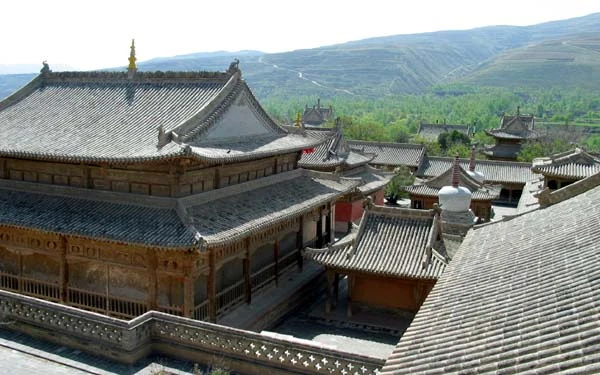
Qutan Monastery and its mountain setting, photographed in 2004.

A small credential for long-distance exchange

A gold token appeared among the objects in Beijing’s 2026 exhibition “Highland Silk Road: Light of Qutan.” The exhibition account described it as a state-backed credential for Ming tea-horse trade. An object small enough to fit in a gallery case thus pointed toward a much larger system of official authority and exchange.

The gold surface gives the credential a visible form. Its label identifies its role in Ming tea-horse trade, while its placement in the exhibition connects this administrative object to the wider story of goods moving along Qinghai routes.

A gallery crossing several eras

The exhibition assembled 84 sets of artifacts and interpretive displays. Its objects included a Neolithic dance-pattern pottery basin, a Yongle-period gilded bronze Guanyin and a Tang-dynasty gold chain inlaid with turquoise. Pottery, religious sculpture, ornaments and a trade credential brought different forms of contact into the same exhibition.

The gold token added an administrative dimension to that collection. Beside painted and sculpted images, it represented a system in which exchange required recognizable credentials. The exhibition connected these distinct objects through Qinghai’s long history of routes, patronage and trade.

Continue exploring · Haidong ↗
Photo credits and rights
  1. Qutan Monastery and its mountain setting, photographed in 2004.Andreas Gruschke (Freiburg) · CC BY-SA 3.0 Photo source ↗ Rights information ↗ Proportionally resized and converted to WebP without cropping. No objects were added, removed or reconstructed.