From the journal

Two Threads, Two Jobs: The Structure of Tu Panxiu Embroidery

In Huzhu Tu embroidery, two same-colored threads work together: one coils along the pattern while the other secures it. The technique makes the stitch thick, tactile and durable.

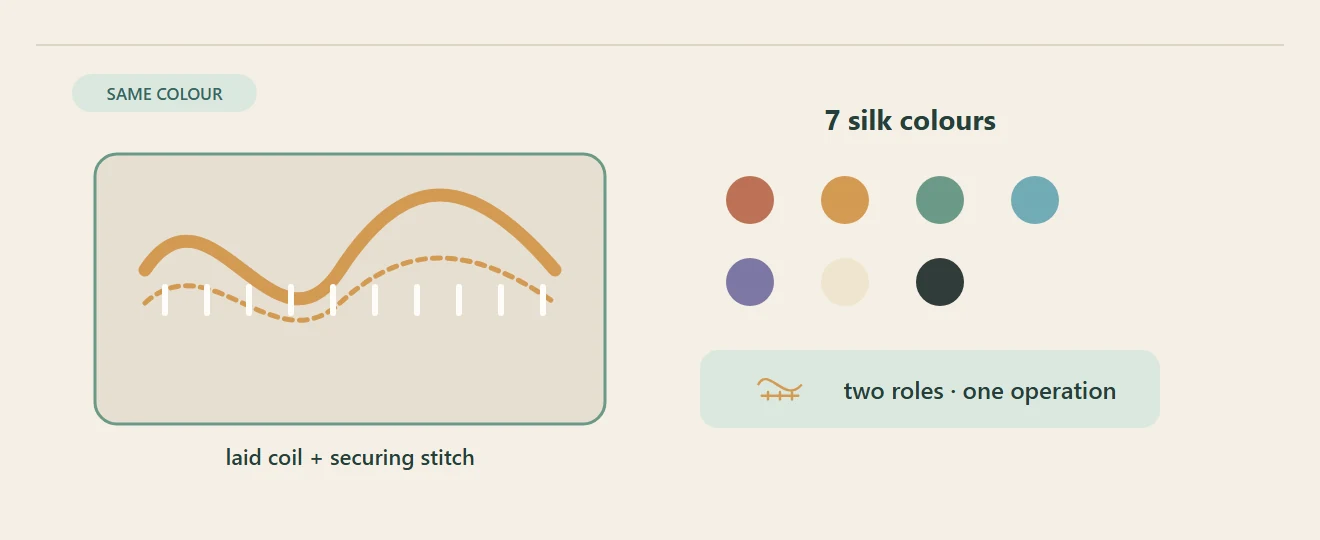
Two same-colour threads: one lays the coil, one secures it; the heritage record lists seven silk colours. Original editorial diagram; illustrative, not a photograph or measured site plan.

One thread coils, one thread secures

Tu panxiu embroidery is made with two threads of the same color at once. One is laid in a coil along the design; the other passes through the needle to secure it to the cloth. The paired action builds a raised, compact surface. In the national intangible-heritage description, the work is done without a frame: the embroiderer holds the fabric in one hand and guides the needle with the other.

The two lines have separate jobs but move as one operation. The laid thread forms the visible track, while the stitching thread anchors it to the ground. That construction can make the finished embroidery dense and sturdy, with a relief-like texture that catches light along its curves.

A craft rooted in Huzhu townships

The national heritage entry places panxiu in Huzhu Tu Autonomous County, listing Donggou, Dongshan, Wushi, Songduo and Danma among the townships where it is practiced. It describes black cotton cloth as a common ground and names a palette of seven silk colors, including red, yellow, green, blue, purple and white. Motifs range from five-petal plum blossoms and cloud patterns to figures and Buddhist images.

Each piece brings together a ground fabric, chosen colors and a pattern worked by hand. The heritage entry describes transmission through families, including mothers and daughters as well as sisters and in-laws. Across the listed townships, the technique remains recognizable through the relationship between the two threads: one line sets the shape, and the other holds it in place.

Continue exploring · Haidong ↗
Photo credits and rights
  1. Two same-colour threads: one lays the coil, one secures it; the heritage record lists seven silk colours. Original editorial diagram; illustrative, not a photograph or measured site plan.© 2026 IFreeing · Rights information Photo source ↗ Proportionally resized and converted to WebP without cropping. No objects were added, removed or reconstructed.