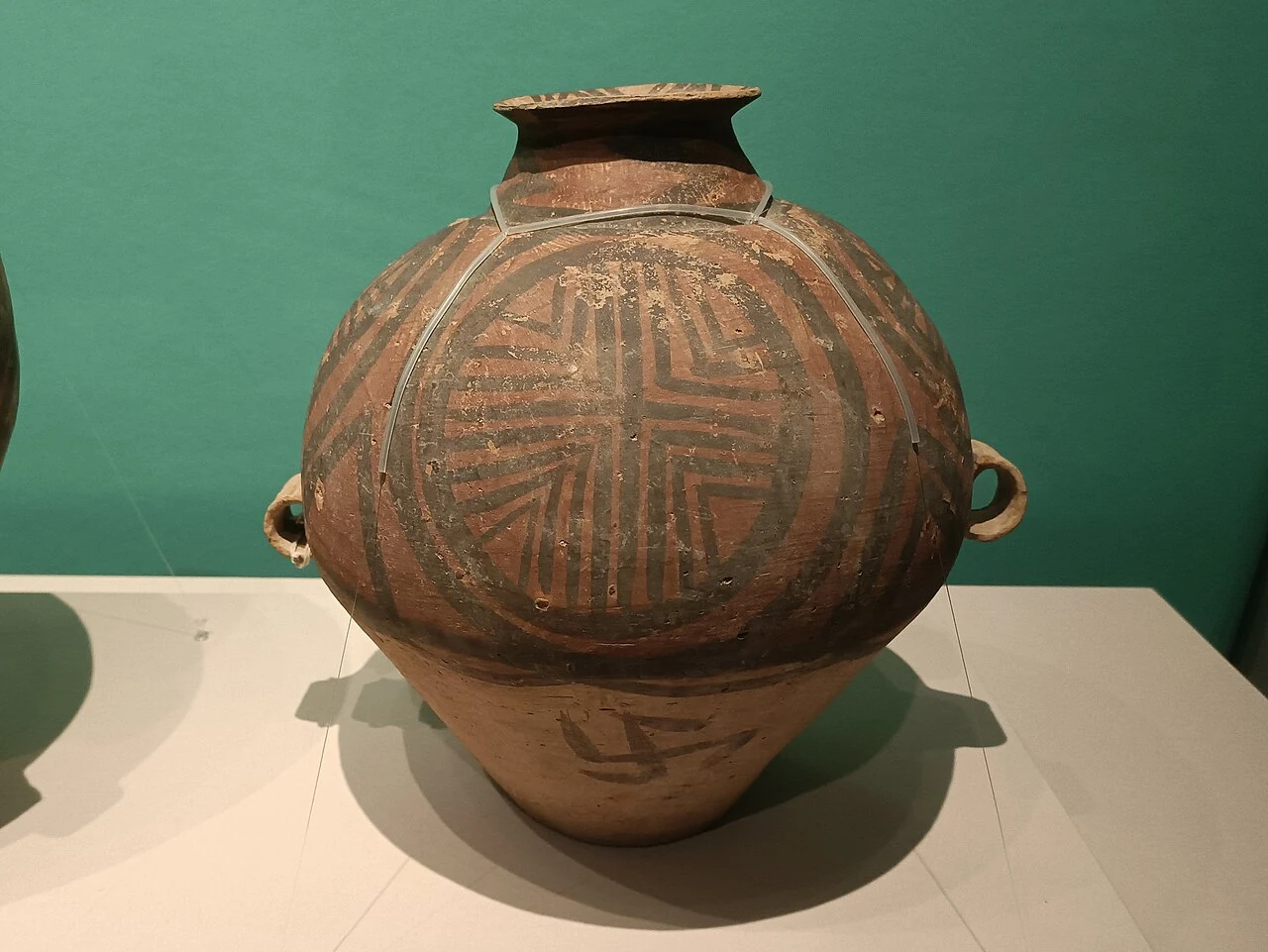
A report on Liuwan’s pottery museum lists objects that ask visitors to look beyond color alone: a human-headed jar, a square vessel, a pottery boot, frog-patterned jars, handled pots and owl-faced containers. The shapes change the object’s profile; painted designs add another layer of recognition. The same account describes many surfaces in orange-red or purple-red, with black geometric or animal motifs. Bone tools and polished stone implements appear beside the ceramics, placing decorated vessels among other objects from the region’s prehistoric collections.
From the journal
From Human-Headed Jar to Owl-Faced Vessel: Liuwan Pottery
Liuwan’s museum displays pottery in a range of shapes: jars with human faces, handled vessels, pottery boots and containers bearing animal imagery. Looking at form beside decoration keeps the gallery’s objects distinct from the oversized village landmark.
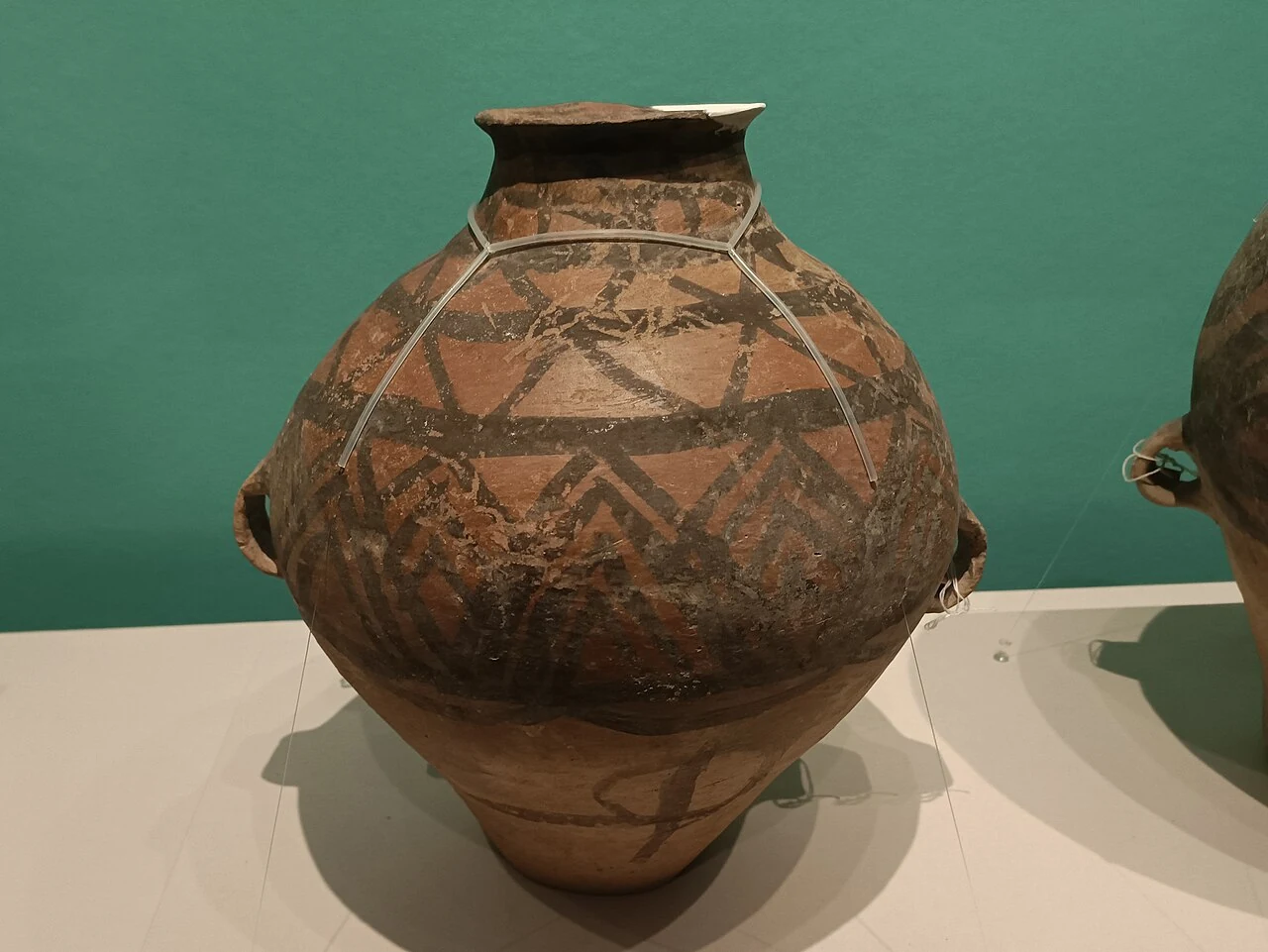
Faces, handles and painted surfaces
Objects within an excavated cemetery
The museum is in Liuwan village, Ledu, where the collection includes pottery from the communal cemetery. A 2024 report describes close to 20,000 painted ceramics in the museum and outlines excavations conducted from 1974 to 1981, which yielded more than 1,700 burials and nearly 38,000 artifacts. These figures help explain why the galleries range from individual vessel forms to a broader presentation of burial and settlement history. Human faces, animal imagery and handles shape how these vessels meet the eye and hand. Displayed beside bone tools and polished stone implements, the decorated pottery sits within a wider archaeological collection.