From the journal

Qijia Yanxi: From Oral Epic to the Qinqiang Stage

The Tu narrative epic Qijia Yanxi has traveled into modern performance. A 2018 Qinqiang production in Beijing turned its story of a Ming-era commander into a stage drama performed by a rural troupe from Huzhu.

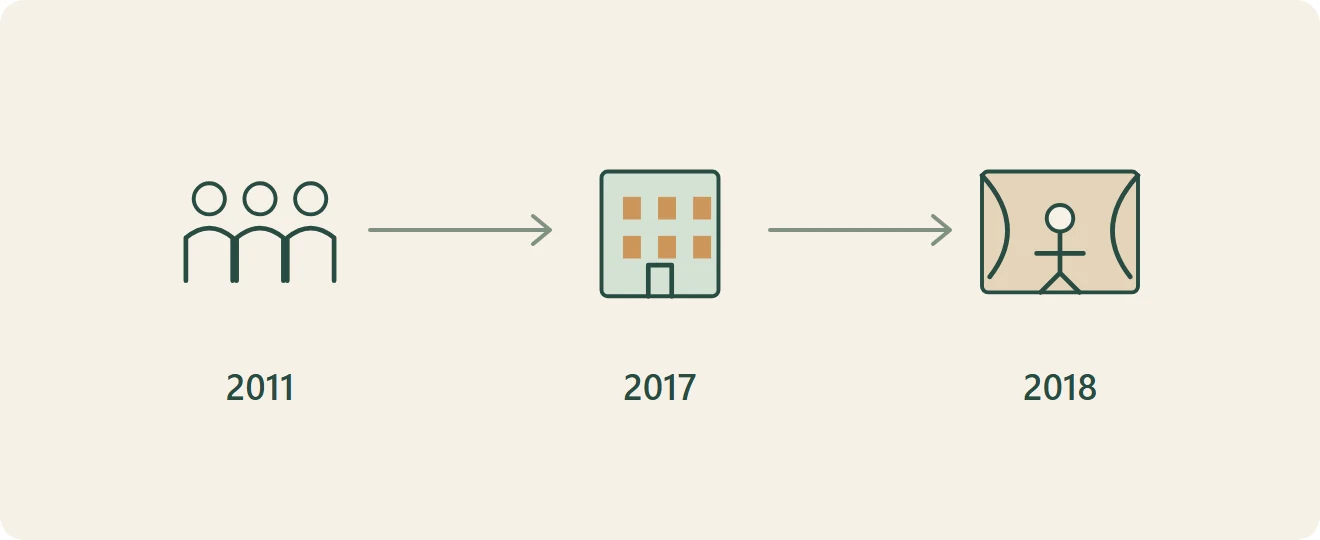
Original editorial timeline: township drama groups joined in 2011, the arts company formed in 2017, and The Tu Commander reached Beijing in 2018. The symbols do not portray a particular performer or stage set.

An oral epic enters a theatre

Qijia Yanxi appears in the National Ethnic Affairs Commission’s account of Tu narrative poetry. In 2018, a Huzhu troupe brought a Qinqiang adaptation to Beijing under the title “The Tu Commander.” Its central figure, the Ming-era commander Qiyanxi, defends his home and the country’s territory.

The adaptation gave a narrative poem a different performance form. Roles and scenes carried the story through a regional opera tradition, bringing an epic associated with the Tu people to a theatre audience beyond Huzhu.

Farmers carrying the repertoire

The troupe began in 2011 by gathering performers from six amateur drama groups in Huzhu townships. It became an arts company in 2017. A Ministry of Culture report recorded 50 performers, all farmers, and a repertoire of more than 30 traditional plays.

The company performed around the Huangshui region, including school and community shows. “The Tu Commander” grew within that network of local performance before reaching Beijing in 2018. Its journey joins two histories: a narrative inherited through Tu literature and a company formed from township drama groups, whose performers carried both traditional repertoire and a new adaptation to their audiences.

Continue exploring · Haidong ↗
Photo credits and rights
  1. Original editorial timeline: township drama groups joined in 2011, the arts company formed in 2017, and The Tu Commander reached Beijing in 2018. The symbols do not portray a particular performer or stage set.© 2026 IFreeing · Rights information Photo source ↗ Proportionally resized and converted to WebP without cropping. No objects were added, removed or reconstructed.