Winter is when the lake is counted. On 15 January 2025 a photographer working the water in the Hengshui Lake national nature reserve found a group of Baer's pochards, and the reserve's monitoring staff confirmed 120 of them, the largest group recorded there since 2018. The bird is small and dark-headed and extremely shy; it is classed as critically endangered and as first-class protected in China. In the same survey season the counters logged 71 wintering species, more than 2,000 common cranes, over 20,000 bean geese and nearly 10,000 ducks. The water they were on is 75 square kilometres, the second largest freshwater lake on the North China Plain after Baiyangdian, and the only reserve on that plain still holding marsh, open water, mudflat, meadow and forest in one system. It is not a natural basin in the simple sense. A dike runs from the Nanqiao sluice north-east to Wangkou village in Weitun town and divides the surface into two halves that do not connect, and the water comes largely from irregular diversions of the Yellow River. The birds are not choosing a wilderness. They are choosing a managed piece of water, and the management is why they are there. The inner dike that closes in the breeding season is the same line beside which the first pochard record was made in 2000, so the record and the closed area are marked on the same piece of shore.
From the journal
Hengshui Lake and the Birds That Winter on the Plain
Hengshui Lake is 75 square kilometres of water on the North China Plain and a staging point on a major migration route. Its winter counts include 120 Baer's pochards seen together in January 2025 and more than 60 wintering species.
In the same city · Hengshui ↗Counting pochards in winter
A lake on a flyway
The reserve covers 16,365 hectares and was created to protect an inland freshwater wetland and the birds that use it, including species on the national first and second protected lists. It is both a national nature reserve and a provincial wetland and bird reserve, and what it protects is a system rather than a single species. Its position is the accident that matters: it sits on the East Asian–Australasian flyway, one of nine major migratory routes in the world, and serves as a staging point on it. The record of the pochard shows how quickly a stopover can become a home. In 2000 a survey by Beijing Forestry University and the Chinese Academy of Forestry found the species on the west side of the inner dike of the eastern lake. In March 2017, 308 birds were seen there at once, the largest group then known anywhere. In March 2018 an international symposium on the species met at the university and at the lake, and the secretariat of the flyway partnership designated the reserve an important habitat for it and presented a plaque. The bird was later raised to first-class national protection and now stays at the lake all year. Protection followed a similar sequence: a Sino-German project on wetland protection and restoration, a seasonal core area closed to people in the breeding season, and a method the reserve calls near-natural, using dug ponds, diverted water and repaired shorelines.
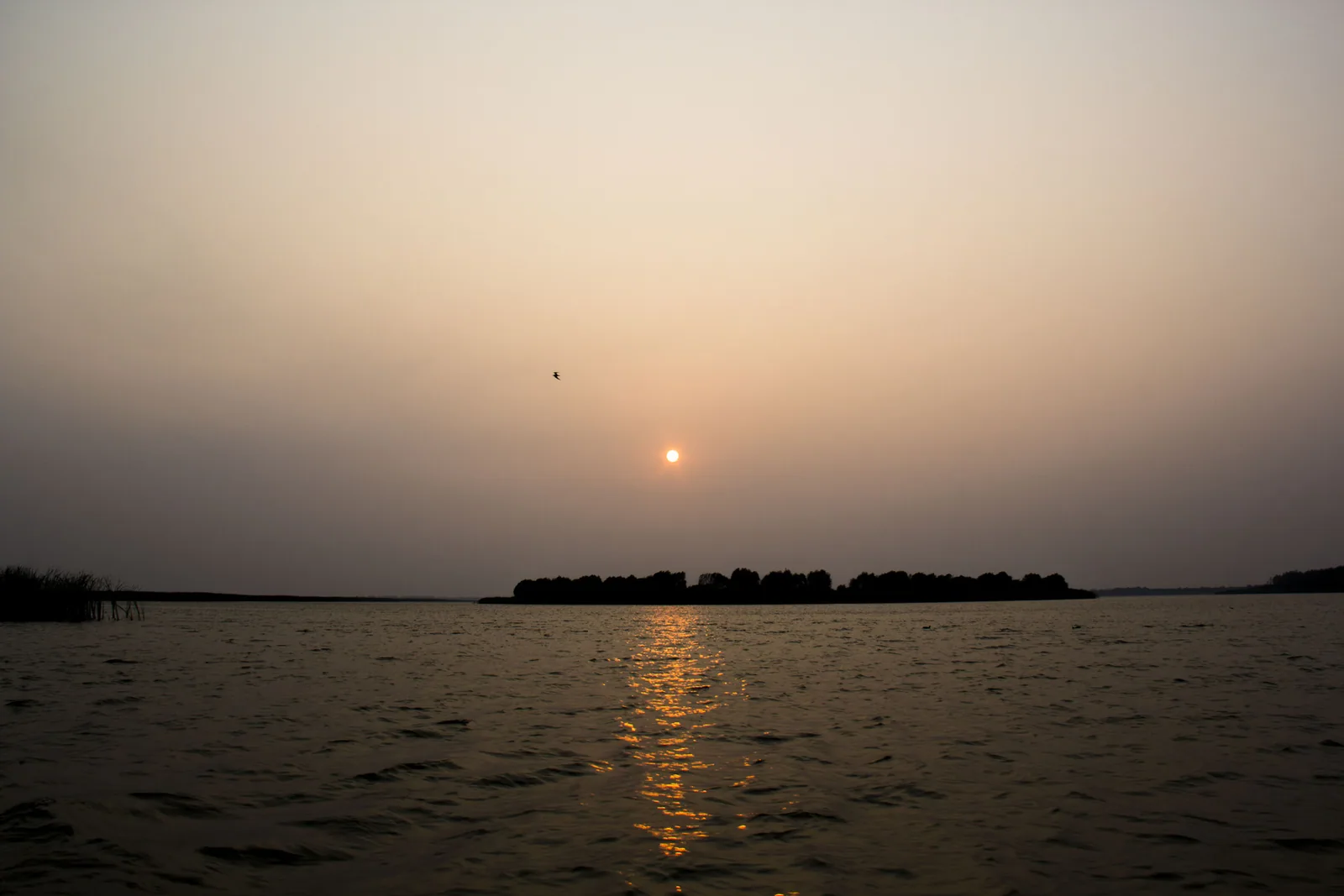
A managed wetland
The numbers are the plainest evidence. When the reserve was established, 283 bird species had been recorded; by 2022 the figure was 332, and first-class protected birds had gone from 7 to 20. A 2022 survey added 231 new records across birds, fish, insects and amphibians; insects went from 538 to 757 species, 33 of them new to Hebei. By August 2024 the bird list stood at 334, 68.7 per cent of all species recorded in the province, and by early 2025 at 336. Breeding matters as much as wintering: in the 2024 season more than 40 species and over 30,000 birds nested along the shore and in the reeds, and some herons that used to migrate now stay. The management is unglamorous: a ten-month fishing ban each year, restocking of fish and shrimp fry, water held at class III quality, and the breeding-season closure of the inner dike. The lake also has a public face, with more than 250,000 study visitors in 2024, watching from boats and from a tower on Plum Blossom Island. A reserve that people visit has to argue for itself, and Hengshui's argument is made in counts. The reserve's own figures put the wintering population at more than 60 species and, in good years, over 100,000 birds. The air is measured too, at 4,600 negative oxygen ions per cubic centimetre. A lake fed by diversion and cut in two by a dike is not a stable thing, and the numbers are how the management is judged.