In November 1931 the First National Soviet Congress met in Ruijin county and founded the Chinese Soviet Republic. The temporary central government took the town as its capital and renamed it Ruijing. This is the moment the name attached to Ruijin across the country: the county's name has been used for a great many things since, the way Yan'an's has. It is worth remembering that the state was short-lived and that the meeting happened in a small county town in a province most visitors associate with porcelain.
From the journal
The first red capital
For two years, Ruijin was the capital of a state that tried to run a country from a hill town in southern Jiangxi.
In the same city · Ganzhou ↗November 1931
Where the record is kept
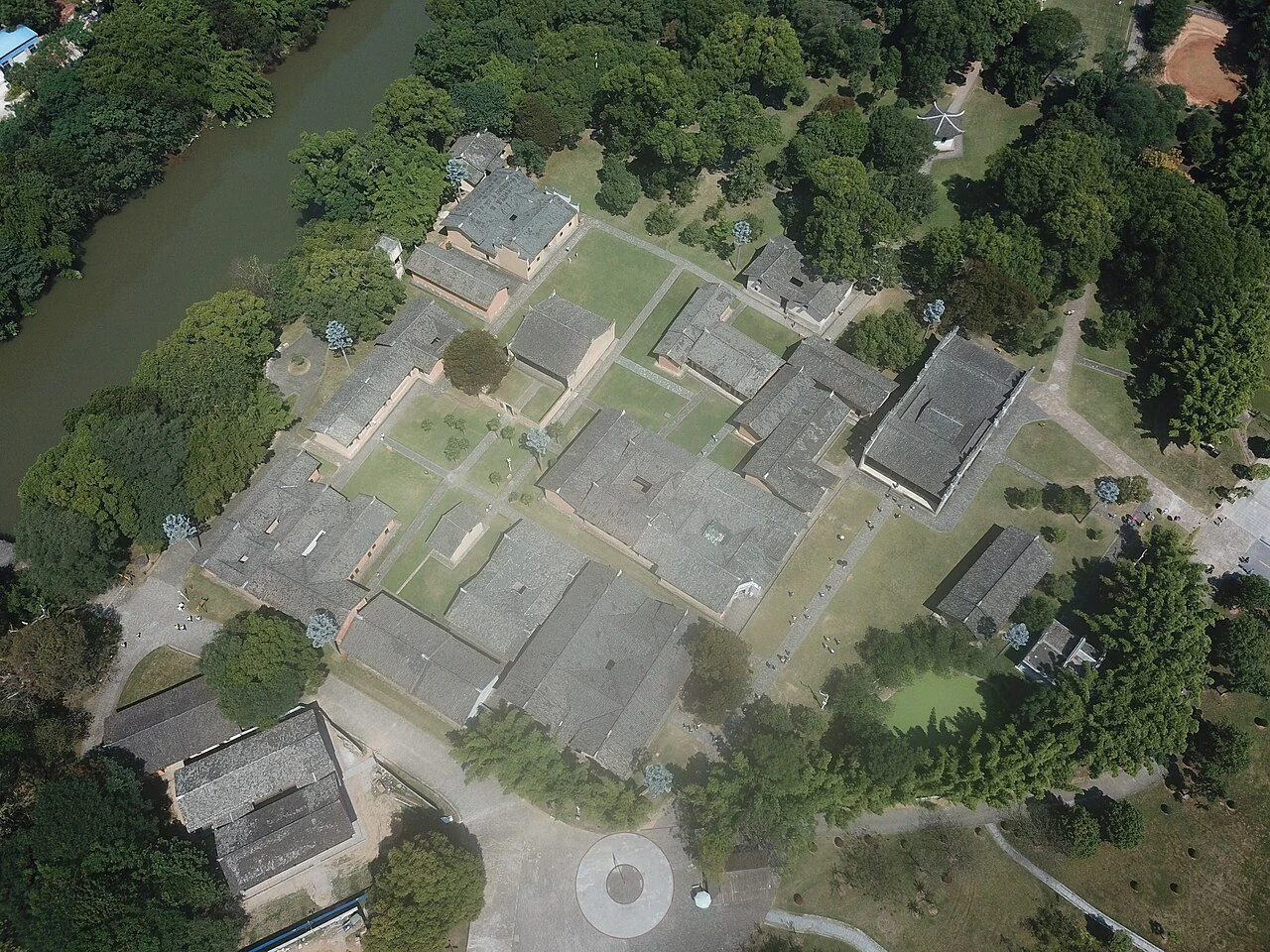
The revolutionary sites of Ruijin are listed as a national key protected relic and lie mainly in Yeping township and in Shazhouba town. Shazhouba is a name that recurs in the history of the Long March, because it was here that the marchers assembled before moving out of the province in October 1934. The protected sites are scattered across the same rolling country that grows navel oranges, and visiting them means moving between small towns and low hills rather than looking at one monumental building.
Why a capital was here at all
The location was not accidental and it was not a remote one either. Ruijin sits in the southern hills of Jiangxi, in the country of the Hakka, on a trade route between the provinces, in a region that had long been a base of anti-tax rebellion. A government that had neither money nor an army depended on the local networks of a frontier country, and Ganzhou prefecture supplied them. The connection between the Hakka country, the old rebel tradition and the short-lived state is the real subject of the place, and it explains why a provincial town can carry a national name.