Anyuan was where the coal was. Mining in the area was worked in the late Qing, and the Pingxiang collieries were later combined with the Hanyang ironworks and the Daye iron mine into a single company; in that period Pingxiang became one of the earliest heavy-industrial bases in China. The district is now a working neighbourhood of the city of Pingxiang, with its own streets and its own name, and the mine sits inside it rather than at a distance from it.
From the journal
The pit and the strike
Anyuan was the biggest coalfield south of the Yangtze, and in September 1922 its workers stopped work and changed the country's politics.
In the same city · Pingxiang ↗The biggest coalfield south of the Yangtze
September 1922
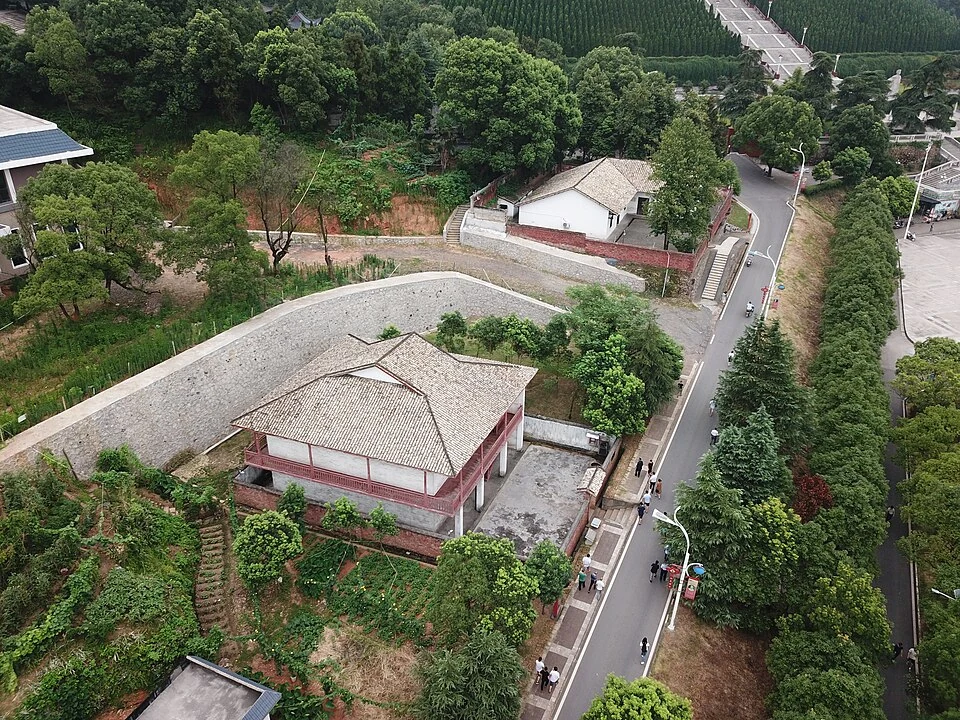
On 13 September 1922 the Anyuan railway and mine workers went on strike under the leadership of Liu Shaoqi, Li Lisan and others. The action is remembered in China as one of the birthplaces of the Chinese workers' movement and of the workers' and peasants' army that followed, and Pingxiang is called its source. The Anyuan Railway and Mine Workers' Movement Museum is listed among the country's hundred patriotic education sites, which means the story is told in the district where the pit was, and not only in books about national history.
A city made out of extraction
What makes Anyuan worth reading is the way it makes the rest of Jiangxi legible. A province of hills and rivers also produced a modern industrial working class, and the shift from coal to steel to a high-tech industrial base at Xinyu and elsewhere has a starting point. Standing in a mining district that is still a mining district, with the Wugong range behind it, shows that the province's history is not a retreat from tradition but a series of different economies, each with its own buildings and its own memory.