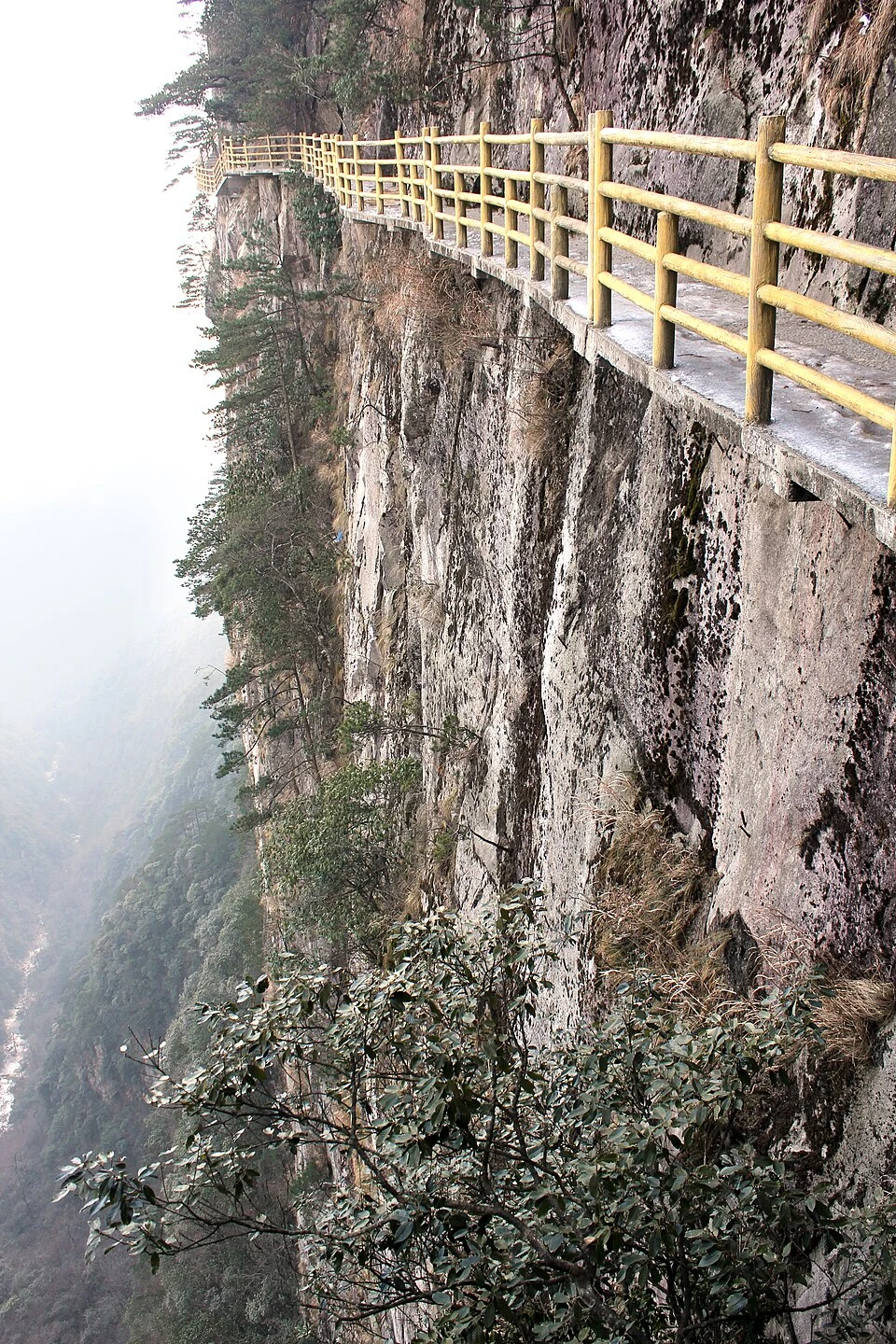
Mingyue Mountain is the north-eastern section of the Wugong range, lying in Yuzhou District of Yichun, and is designated a national forest park of some 136 square kilometres. That is about a third of the area of the Wugong National Forest Park on the other side of the ridge. Two prefectures, two park administrations and one granite range, and the reason a reader who knows Wugong will recognise the rock, the cloud and the bamboo here as well.
From the journal
The other granite range
Mingyue Mountain is the north-eastern section of Wugong, and the hot springs of Wentang rise out of the same rock.
In the same city · Yichun ↗The same mountains, the other side
The springs of Wentang
At the foot of the mountain the hot springs of Wentang have been used for a long time, and the town that grew around them is one of the best known hot-spring places in the country. The connection is geological rather than administrative: the same fractured granite that makes the highland scenery sends warm water out of the hillside below. It is a pleasant thing to notice that a mountain in Jiangxi can be read through the water at its bottom, and that the two belong to the same stone.
The western edge of the province
Yichun's own character lies at its margins. To the west, Tonggu County keeps a small and scattered Hakka-speaking population, the westernmost reach of a dialect that otherwise runs through the far south of the province. The city itself was Yuanzhou for most of its history and governed a wide country of towns. Read from the edge inward, a provincial city like this makes sense: it is a junction of upland, river and dialect rather than a single defined thing.