Tangwanghe Forest-Sea and Strange-Stone Scenic Area, in today’s Tangwang County, is known for granite peaks set among woodland. Heilongjiang’s culture and tourism department describes the area as a geological assemblage that includes granite structural peaks, periglacial landforms and newer collapse features. The visitor’s first impression may be visual contrast—vertical rock against trees—but the landform is not a decorative arrangement. It records different forces acting on bedrock across deep time, then exposure and erosion shaping what can now be seen at the surface.
From the journal
Granite Peaks in the Forest: Tangwanghe’s Stone Landscape
At Tangwanghe, granite formations rise within the forest rather than replacing it. Narrow rock passages, exposed peaks and tree-covered slopes reveal a geological landscape shaped by ancient rock and long processes of weathering.
In the same city · Yichun, Heilongjiang ↗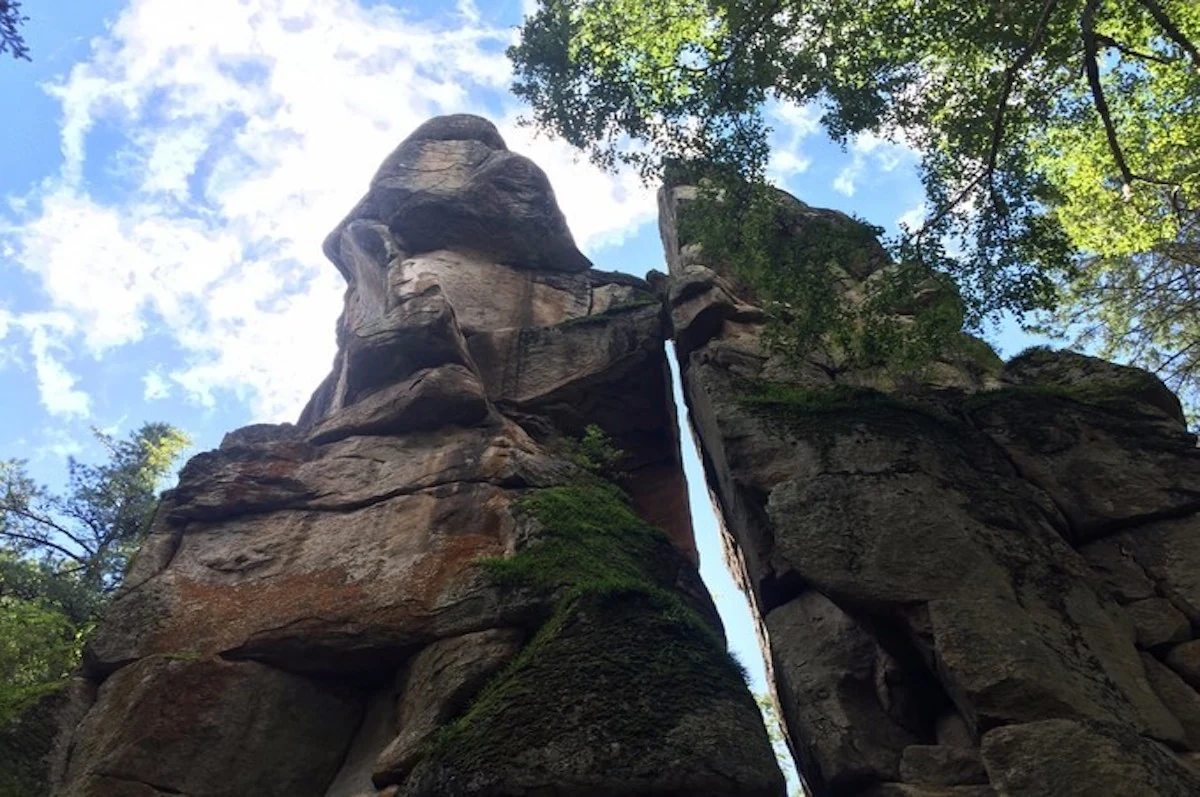
Stone formations under a forest canopy
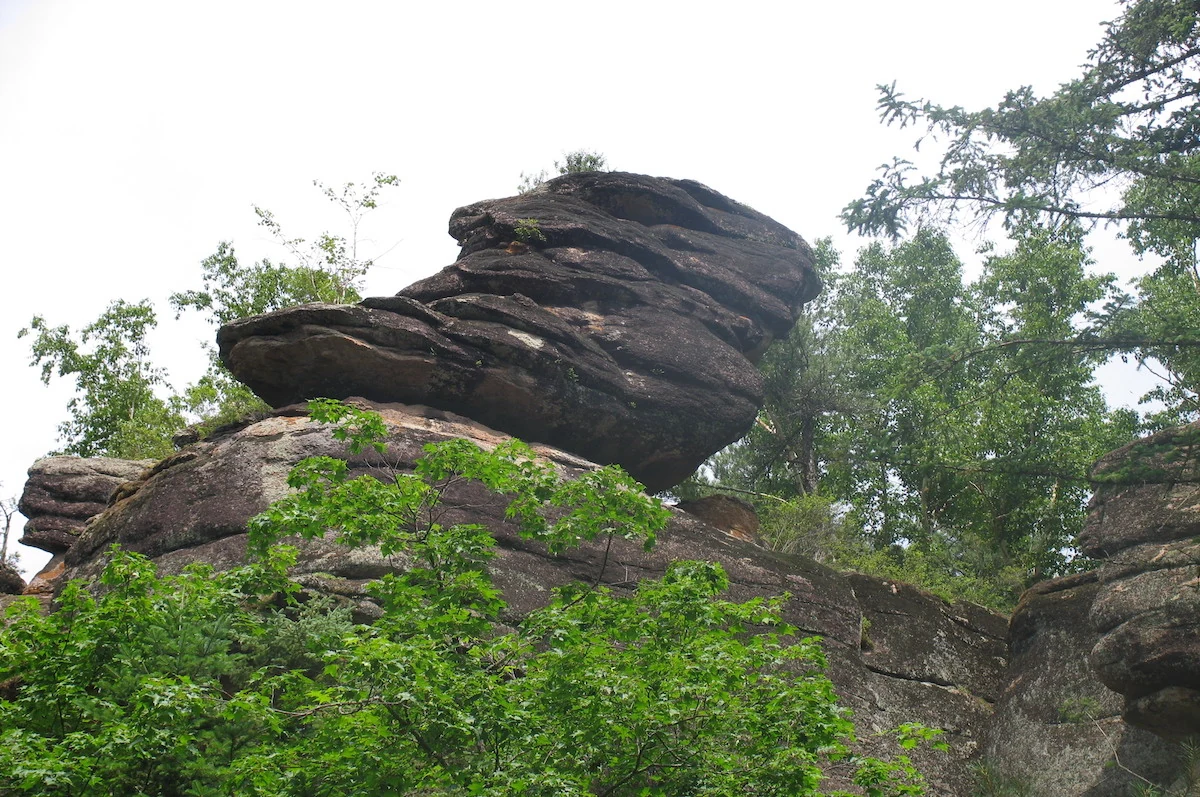
A passage only thirty centimetres wide
One named feature, Yixiantian or ‘A Thread of Sky,’ is formed by two rock pinnacles separated by about 30 centimetres. It turns a broad geological account into a bodily measure: a person can see the gap, while the rock walls make the scale immediately legible. The scenic-area account also identifies six especially notable peaks and gives the tallest as 26.13 metres. Such measurements are more helpful than assigning human figures to rocks; they let visitors compare formations without mistaking metaphor for geology.
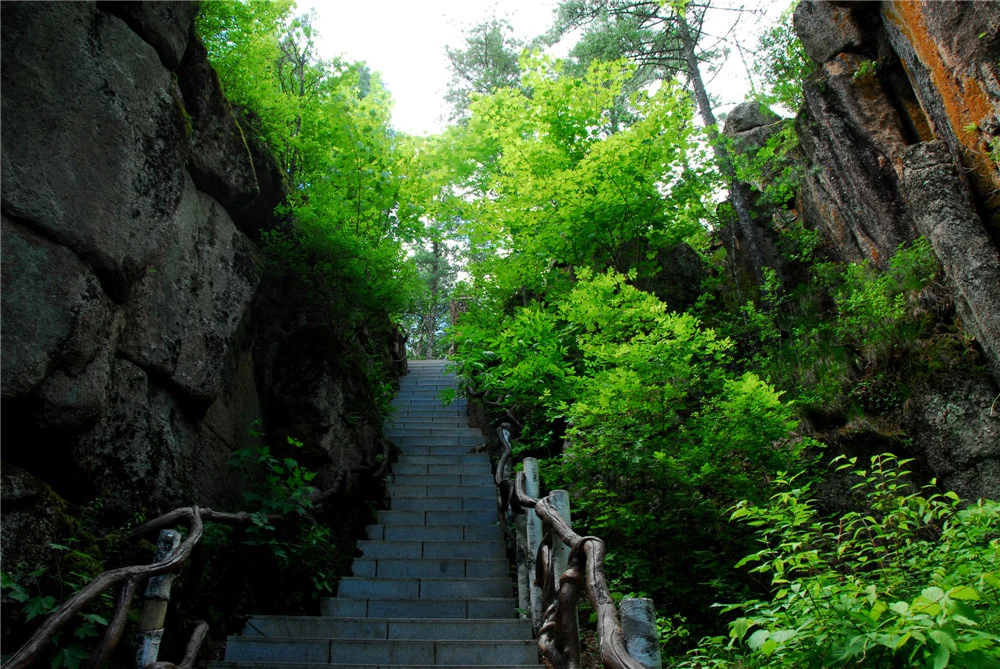
A geological site within a living ecosystem
The provincial government lists the scenic area at 19,000 hectares and reports 99.8 percent forest cover. Those figures describe the wider park, whose identity joins geology with an intact forest setting. Its formal designations have accumulated since 2003, including forest-park, geological-park and 5A scenic-area status. The stone formations are therefore presented within a landscape managed for conservation, public access and education. Reading the site well means looking both at the exposed granite and at the wooded ground that surrounds and connects the peaks.