Shengshan Fortress stands in Sunwu County's Yanjiang Manchu and Daur Ethnic Township. Japanese forces began constructing the position in 1934 as part of their military occupation of northeast China. The county's account identifies three principal components: headquarters at Shengwu, the main Shengshan position and field positions at Maolan. The complex was destroyed by Soviet forces in August 1945.
From the journal
Shengshan Fortress: Reading a Wartime Military Site
Shengshan Fortress is a surviving military landscape associated with Japan’s invasion and occupation of northeast China. Its underground structures and defensive works should be read through documented chronology and evidence, with the history of aggression kept clear.
In the same city · Heihe ↗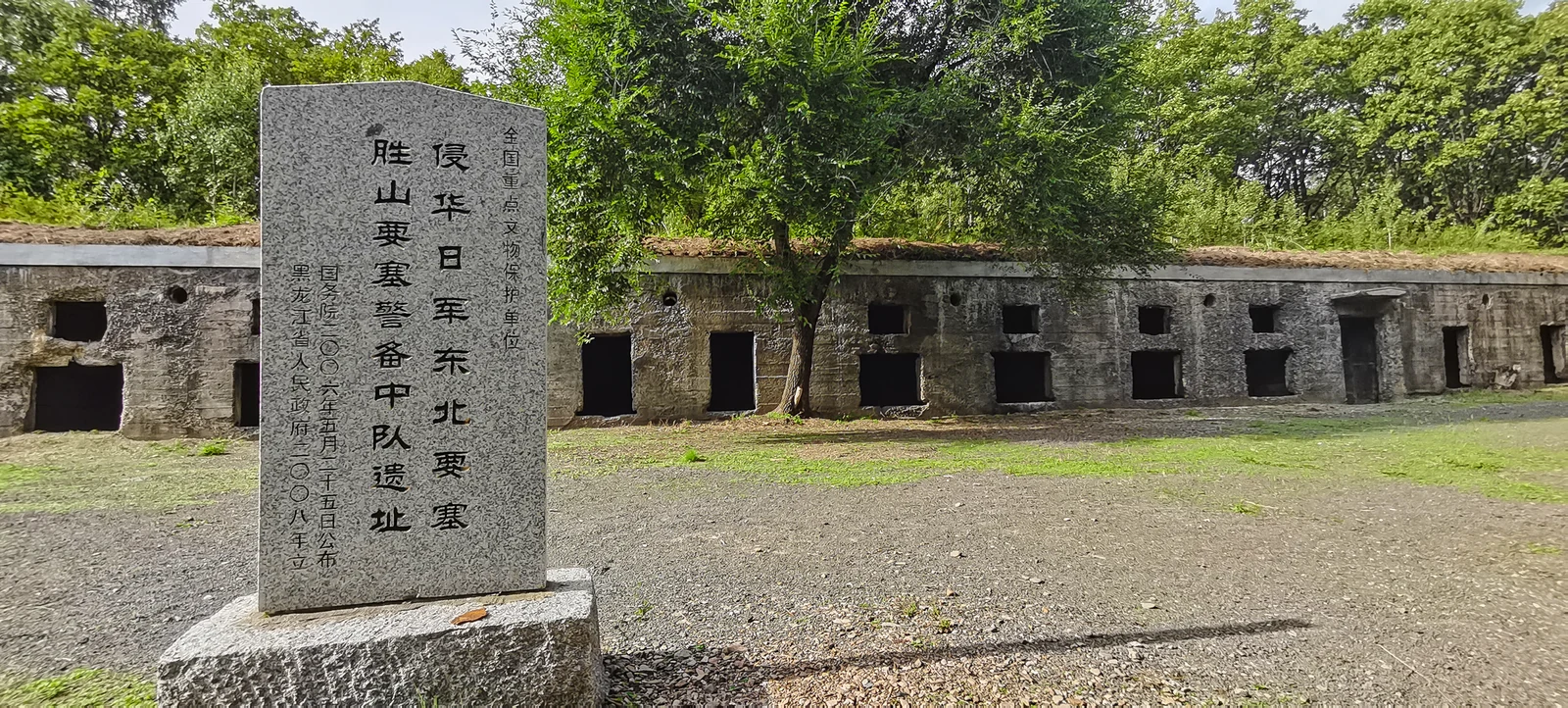
A Japanese military position begun in 1934
A system built into the hills
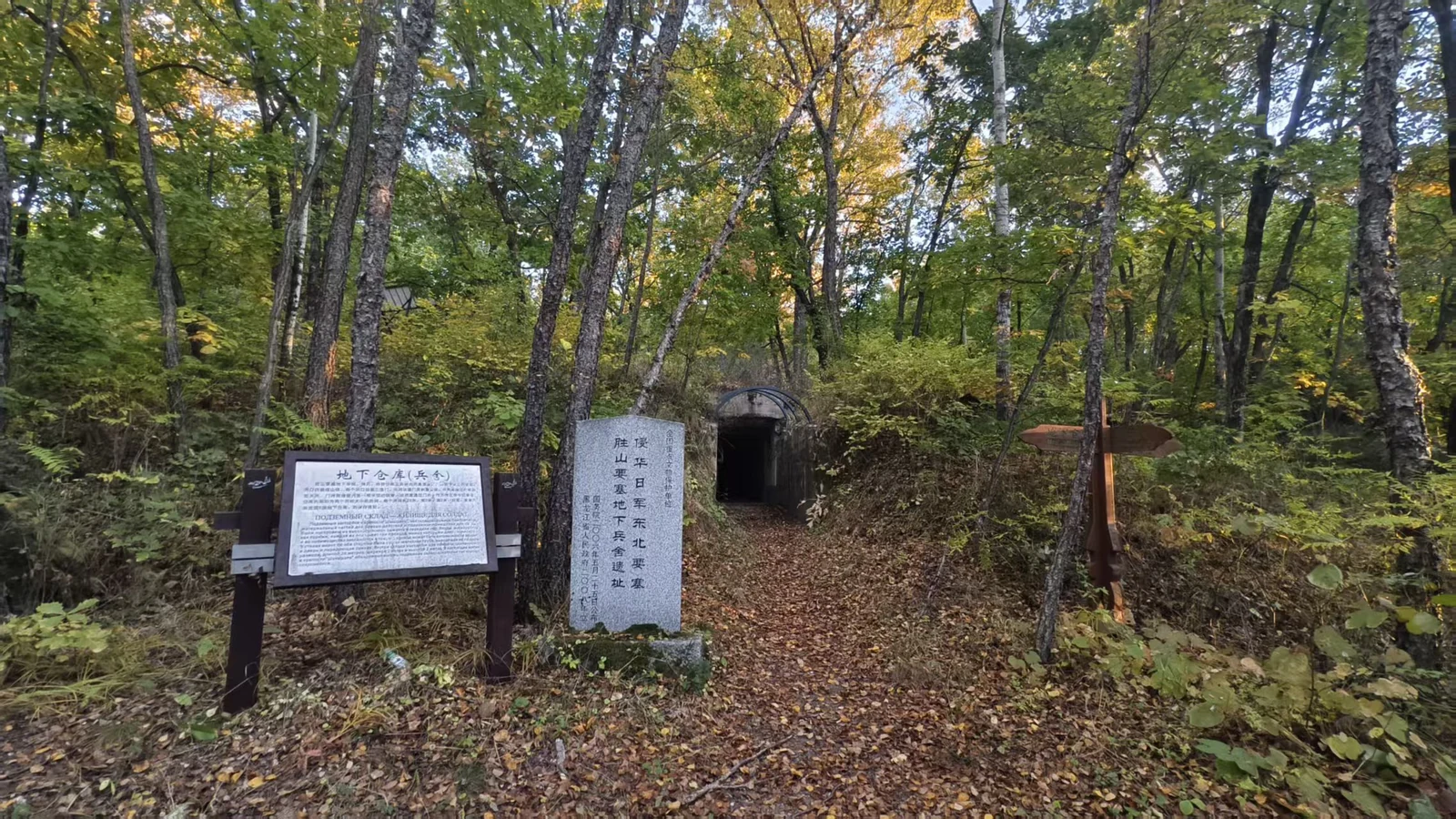
Concrete works and underground spaces formed a connected military system. The documented remains include a command centre, barracks and stores for weapons, ammunition and supplies, with artillery positions above ground. Their distribution across wooded terrain explains why one bunker cannot represent the whole fortress. Sunwu's heritage record identifies 49 sites and remains within the protected complex.
The survey continues beyond the main position
In 2025, information from villagers led a heritage survey team to further remains around Xishenshan near the fortress. Using aerial photography and RTK positioning equipment, the team recorded concrete bunkers, firing apertures, barracks and artillery remains. One concealed position had a view toward the fortress museum and supported the main defensive area. Survey and mapping continue to clarify the scale of this surviving evidence of Japan's invasion.