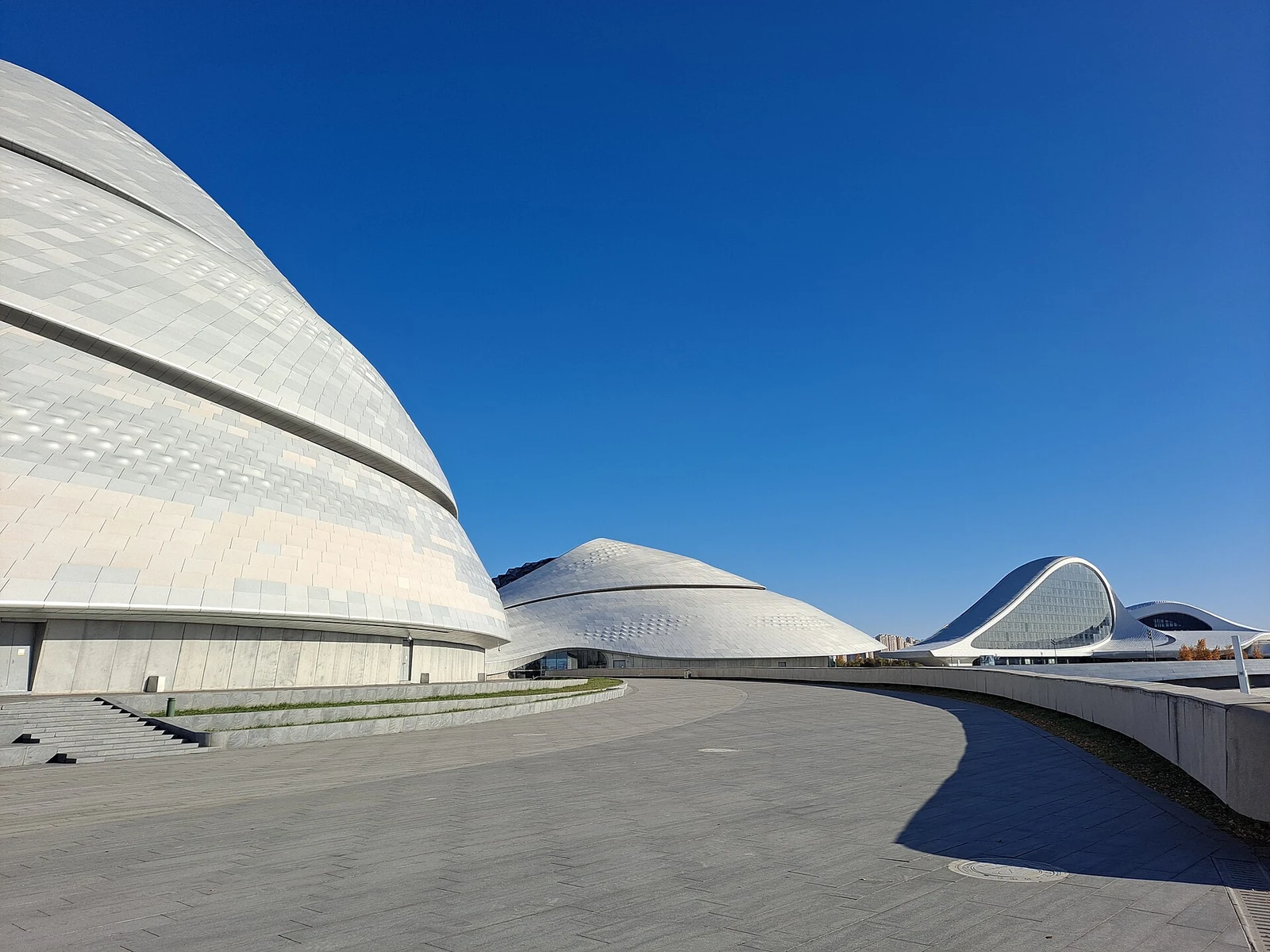
MAD’s project description places Harbin Opera House within the city’s wetlands and says its design responds to the northern climate and surrounding topography. The pale, curving exterior appears to rise from the landscape, while a public path is cut into the façade. The approach carries visitors along the building as if crossing a small section of urban terrain, bringing the wetland edge into the architecture itself.
From the journal
Harbin Opera House: curves above the wetland
Glass, Manchurian ash and a carved public route connect the opera house’s performance spaces with its wetland setting.
In the same city · Harbin ↗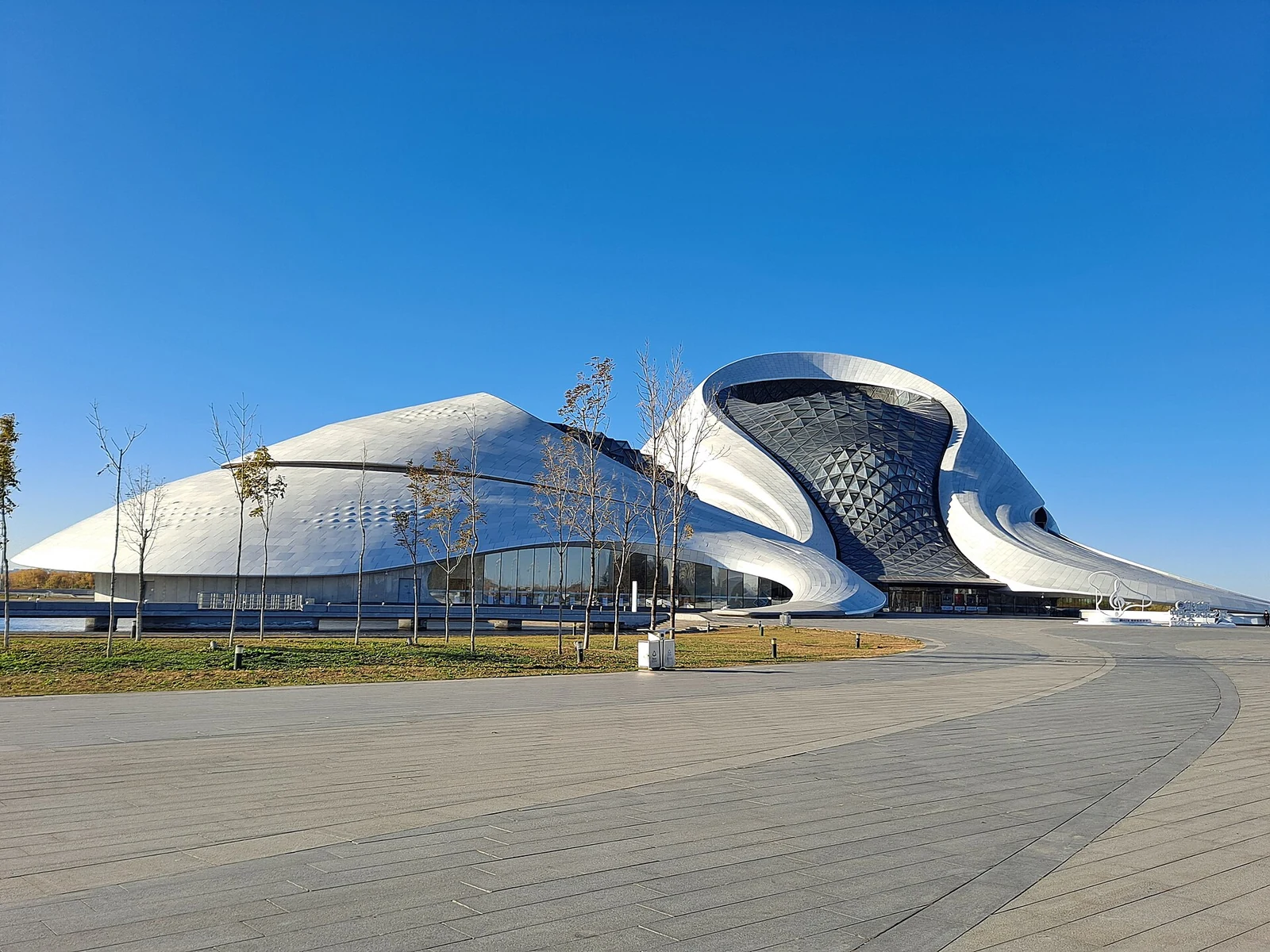
An opera house embedded in wetlands
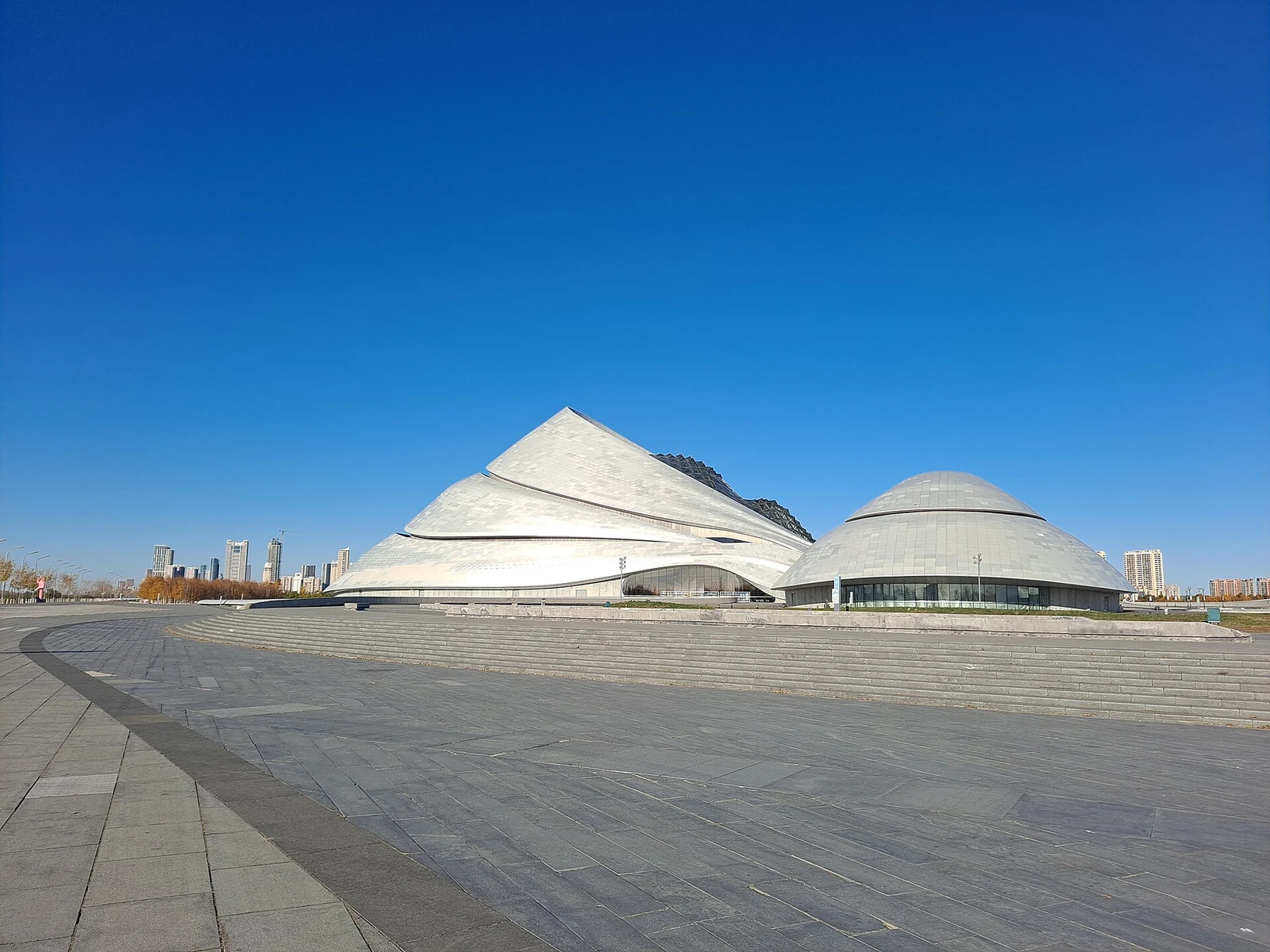
Light in the lobby, ash around the stage
Inside, transparent glass walls connect the grand lobby with the exterior plaza and sweeping façade. Overhead, a crystalline glass curtain wall brings daylight into the lobby. In the main theatre, walls sculpted from Manchurian ash wrap the stage and seating. The transition from glass to wood moves from an open arrival space to concentrated listening. MAD describes carved paths in the façade and an open-air performance and observation space, extending the building’s route from wetland edge to theatre.