Lhasa
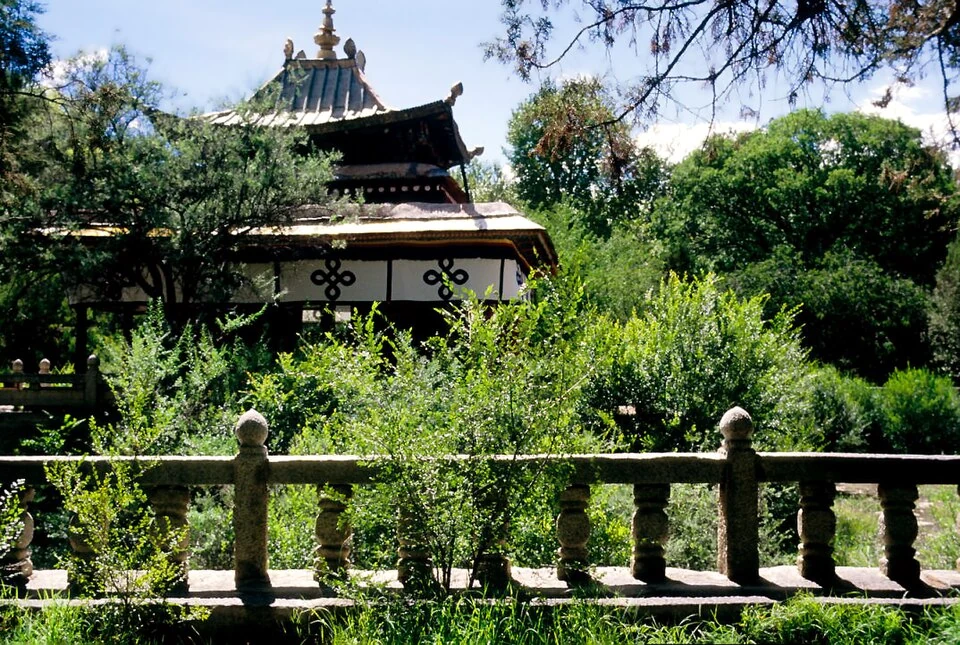
Norbulingka
Lhasa’s summer residence brings palace rooms, planted grounds, paths and performance spaces into a different rhythm from the Potala.
Courtyards, workshops and watersheds
Follow a line, a river, a circle
A carved printing block in Nyemo, a line of pigment on a thangka, a fiddle moving with dancers in Mangkang: small actions open large landscapes. Lhasa’s courtyards lead into the monastery and farming country of Shigatse and Shannan. Farther east, Nyingchi’s forest valleys and Chamdo’s salt terraces follow different rivers and working traditions. Northward, Nagqu’s lake shores and migration routes change the scale; westward, Ngari’s ruins, caves and wetlands ask for another pace of looking. Read across these seven regions, keeping each place, maker and tradition in view.
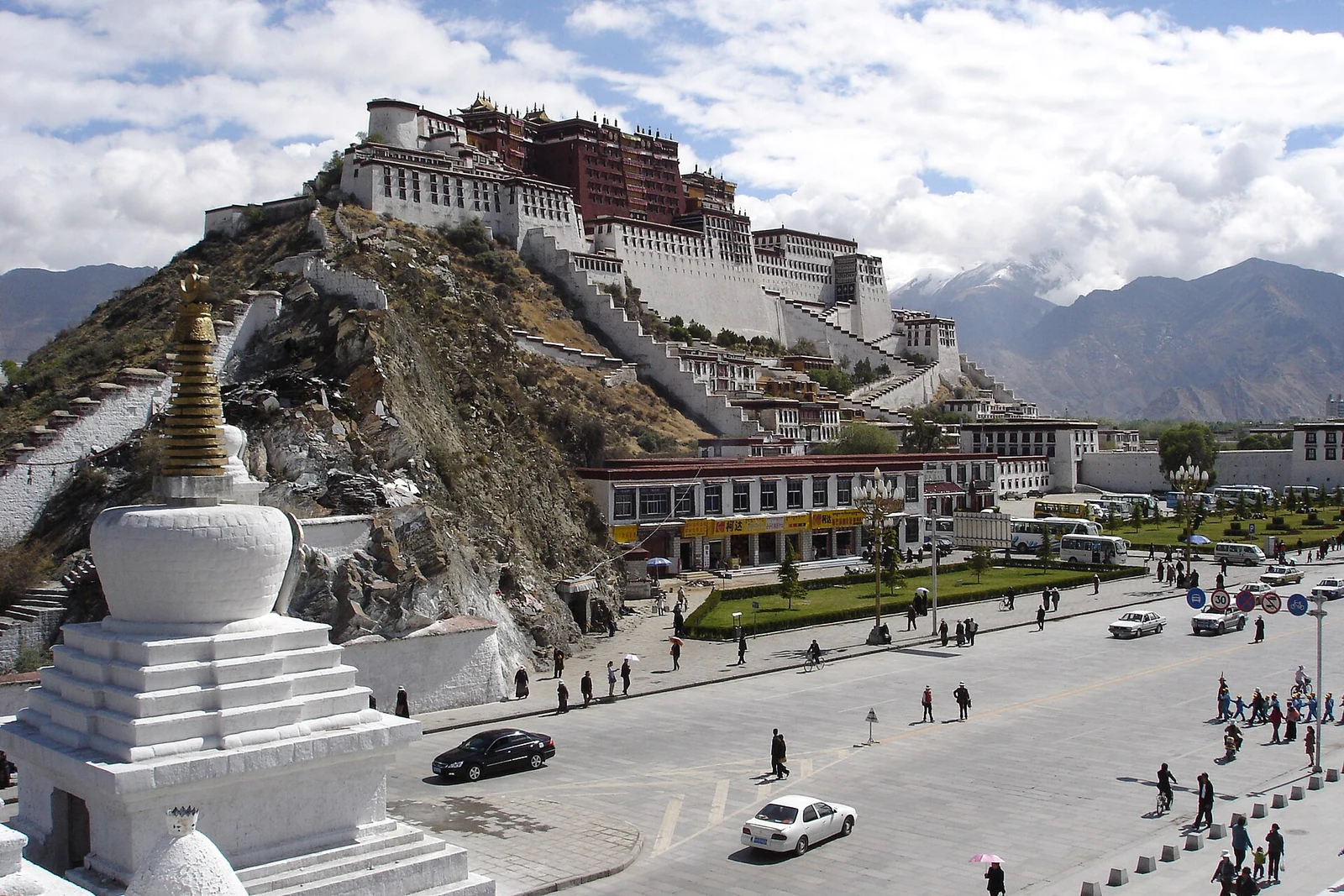
Potala Palace
Begin with a material, a movement or a riverbank.
Lhasa
Lhasa’s summer residence brings palace rooms, planted grounds, paths and performance spaces into a different rhythm from the Potala.
Nyingchi
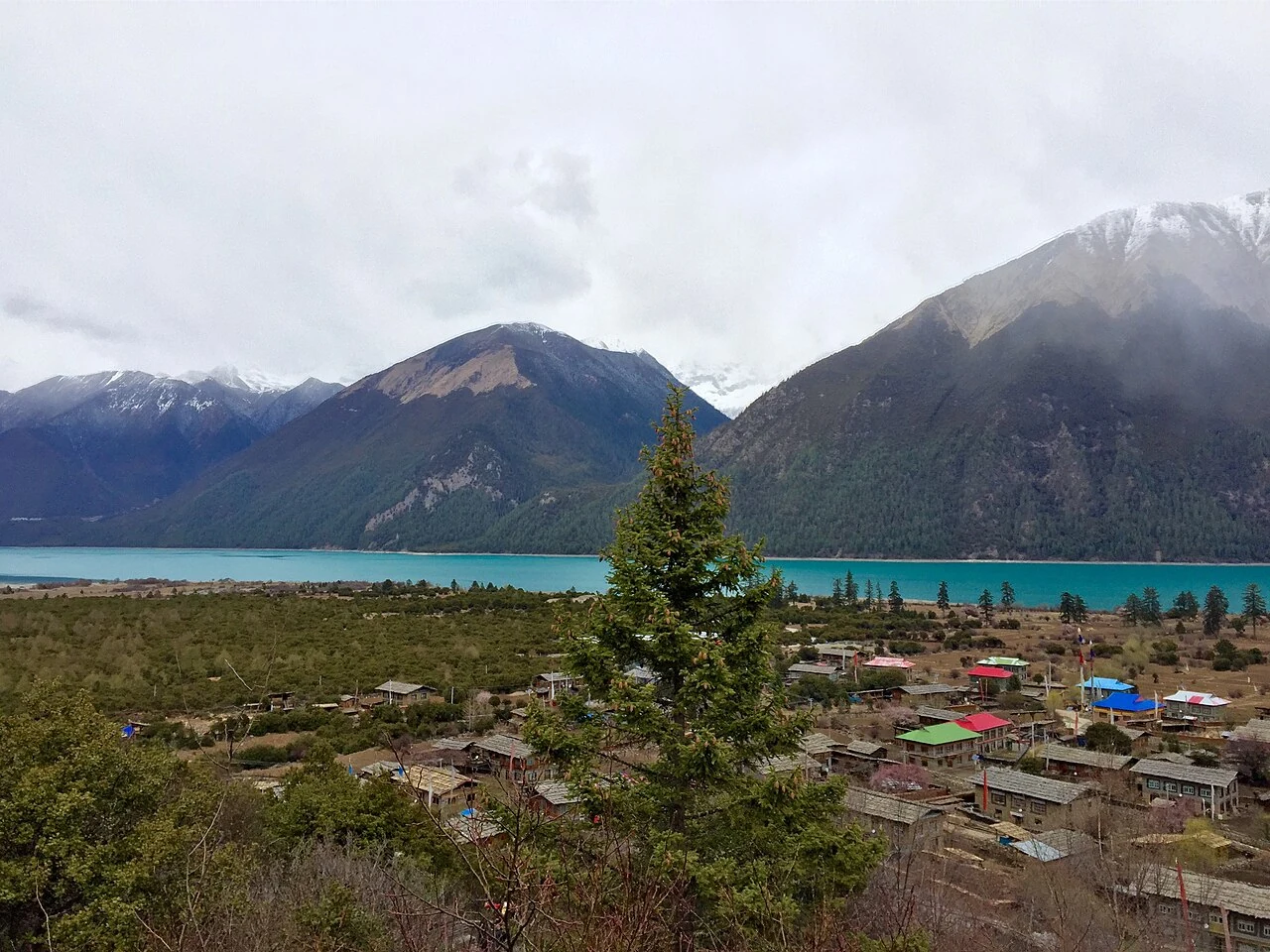
At Basum Tso, Tsozong Gongba Monastery on Tashi Island and the villages of Jeba and Cuogao turn a mountain lake into a lived cultural landscape.
Ngari
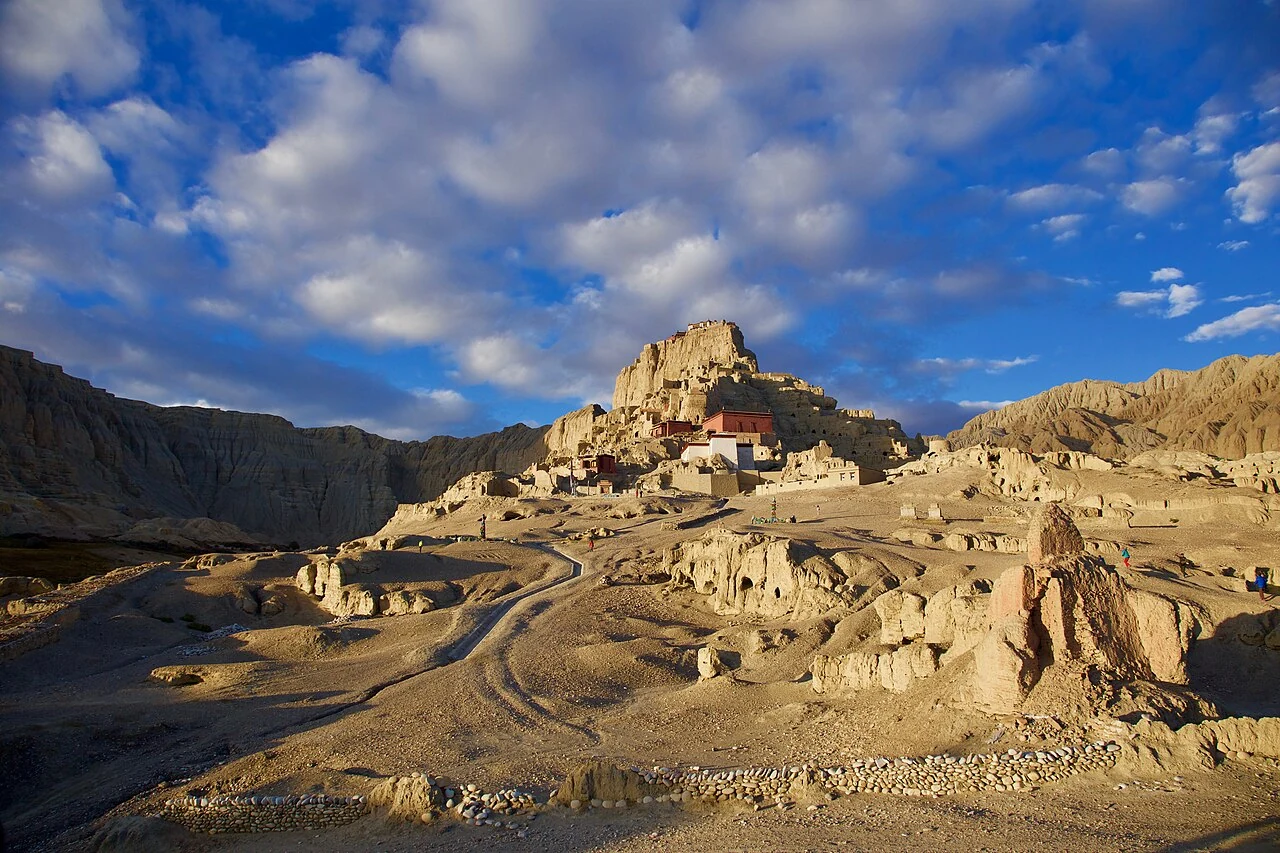
Tsaparang gathers palace remains, caves and Buddhist monuments on a steep ridge above the Zhada landscape. Recent radiocarbon and textual research refines the dates of several structures, showing a capital built and adapted across distinct periods.
Continue through all seven regions.
From the journal
Murals, scroll paintings and palm-leaf manuscripts reveal another scale of the Potala, where architecture shelters fragile surfaces and recorded knowledge.
From the journal
A 2015 report from Gyantse follows carpet makers through the work of sorting, spinning, dyeing, weaving and shearing wool into a household textile.
From the journal
The meeting of water and land at Yamdrok connects the lake’s irregular geography with practical questions of waste, water use and habitat protection.
From the journal
Near Midui Village in Bomi County, glacier ice, mountain forest and village life meet; dated photographs preserve seasonal views, while a 2022 report records local horse-team visits.
From the journal
A field study of Ranwu Lake’s water balance in 2015 traced seasonal contributions from rain and glacier melt. Photographs from May 2012 show an exposed lakebed and sediment work, preserving an earlier moment rather than describing today’s shoreline.
From the journal
A 2017 Landsat image shows Selin Co in natural color. NASA’s account of a long satellite study places that striking view beside a measured change in summer blooms and the lake’s role as a wetland stopover for migrating birds.
From the journal
A twelfth-century manuscript found near Tholing preserves a historical narrative centred on Tibetan kingship, distinct from Buddhist histories of its period.
Choose a region to browse its published places and articles.
Around Jokhang, Barkhor brings devotional movement, trading streets and the thresholds of old courtyards into close proximity. The Nichi tradition links the shape of a bamboo nib with disciplined letter forms and a history of teaching centred on Nyemo.
All articlesA 2015 report from Gyantse follows carpet makers through the work of sorting, spinning, dyeing, weaving and shearing wool into a household textile. In Lhatse knife-making, a forged steel blade meets a handle of horn or wood and a sheath worked in silver, copper and engraved motifs.
All articlesOn the south bank of the Yarlung Tsangpo, Jêdêxoi’s woollen aprons connect coloured stripes with spinning, dyeing, weaving and family teaching. The painter Menla Dondrup’s connection with northern Lhodrak opens a story of training, travel and the changing role of landscape in Tibetan painting.
All articlesNear Azha village in Upper Chayu, a long glacier descends toward forest, giving the landscape its “green-sea glacier” image. At Basum Tso, Tsozong Gongba Monastery on Tashi Island and the villages of Jeba and Cuogao turn a mountain lake into a lived cultural landscape.
All articlesAn official Chamdo tourism profile locates three differently named lakes at Puyu Village and describes how they sit in relation to one another. Its account connects color names to shoreline and mineral observations, while leaving water chemistry and seasonal change for closer study. In Waichong Village, woodblock carver Zepei describes a craft learned from childhood and carried into a workshop with younger apprentices. The work joins careful material preparation to the exacting demands of Tibetan calligraphy.
All articlesThe Gesar epic travels through performance rather than a single fixed book. Its episodes, musical choices and regional versions keep the story in motion. At Selin Co National Nature Reserve, wildlife ranger Tsering Tagqing patrols on a motorcycle with binoculars, provisions and a notebook. His own short videos have also brought crane nesting and care into public view.
All articlesTsaparang gathers palace remains, caves and Buddhist monuments on a steep ridge above the Zhada landscape. Recent radiocarbon and textual research refines the dates of several structures, showing a capital built and adapted across distinct periods. A twelfth-century manuscript found near Tholing preserves a historical narrative centred on Tibetan kingship, distinct from Buddhist histories of its period.
All articles