In 2012, a twelfth-century Tibetan historical manuscript was discovered near Tholing Monastery in western Tibet. David Pritzker’s close textual study describes a work whose narrative focus differs from many Tibetan histories of the period. Rather than centring the history of Buddhism, the manuscript focuses on kingship and the history of Tibetan rulers. That distinction gives the text its own place in the region’s historical record: it preserves a political narrative in a landscape more often introduced to visitors through monasteries and Buddhist art.
From the journal
The Tholing Manuscript and Tibetan Kingship
A twelfth-century manuscript found near Tholing preserves a historical narrative centred on Tibetan kingship, distinct from Buddhist histories of its period.
In the same city · Ngari ↗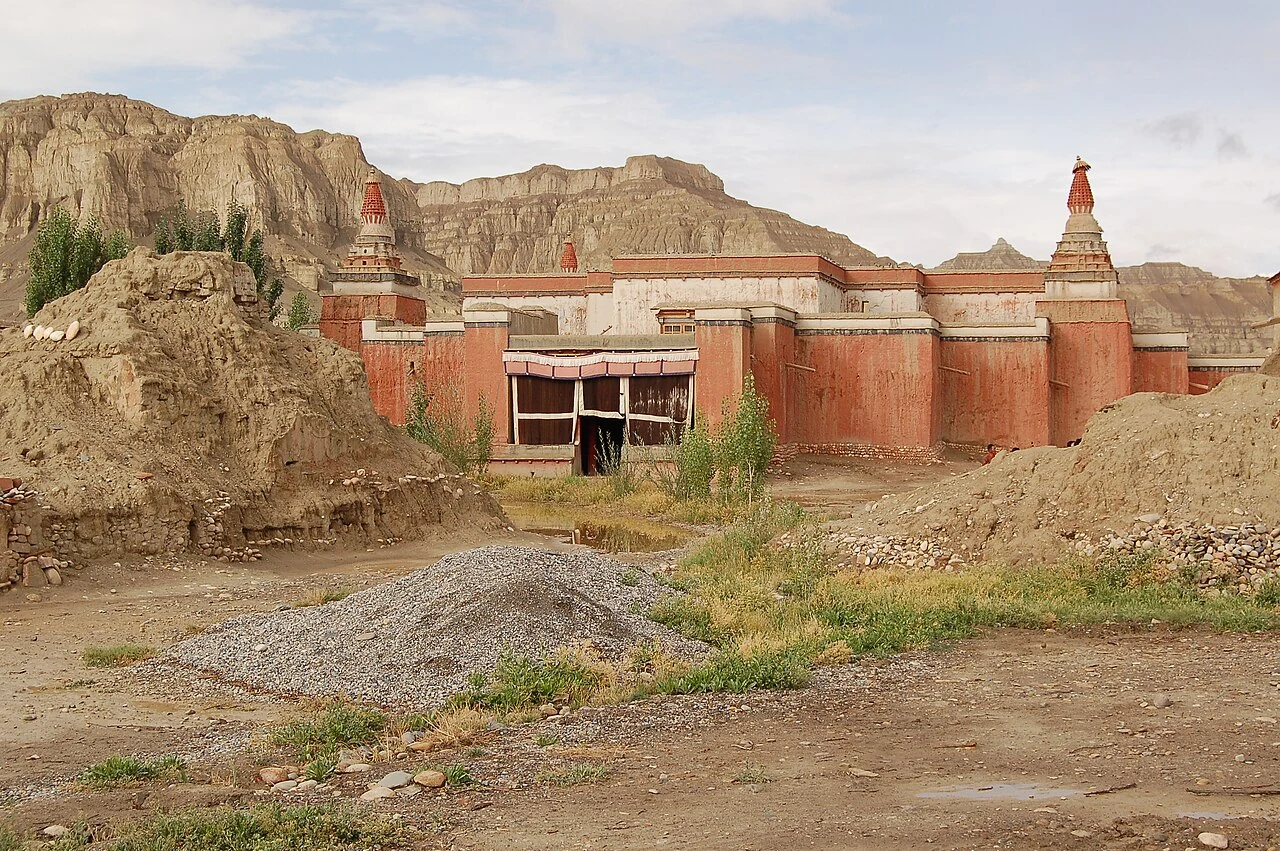
A chronicle discovered near Tholing
Reading the language of kingship
Pritzker’s study attends to the manuscript’s archaic script, binding, spelling, vocabulary, prose, and narrative turns. These are not incidental features around the story; they help scholars identify how the text differs from religious histories known as chöchung. The distinction is one of subject and genre, not a separation between politics and religion in the lives of people who made or read such texts. The manuscript gives kings and rule the central narrative position, opening a specific window onto how Tibetan political history was written in the twelfth century.
A written source beside a painted monument
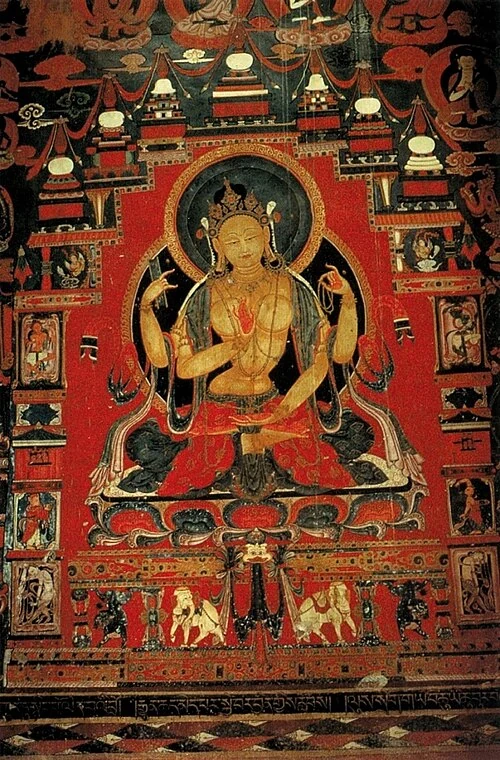
Tholing’s White Temple belongs to a later historical moment than the manuscript. A 2017 regional cultural report places its murals broadly in the fifteenth and sixteenth centuries. The manuscript and the wall should not be treated as records of the same event or period. Their proximity instead draws attention to different ways a place preserves its past: a historical narrative survives through its written language and material form, while murals remain part of a sacred architectural interior. Each asks readers to use different evidence and different methods of interpretation.
What a close reading makes possible
A manuscript discovered near a monastery and murals preserved inside it are not transparent windows onto history. Pritzker’s article shows how close attention to script, vocabulary, and narrative can distinguish the Tholing text from better-known Buddhist histories. The cultural department’s report situates the White Temple paintings within their own art-historical frame. Keeping these records separate makes their relationship more useful: they show that western Tibet’s past can be approached through political writing as well as religious art, without forcing both into one story of cultural movement.