The old Che Kung Temple in Sha Tin was built by villagers for worship of Che Kung, remembered in local tradition as a Southern Song general credited with suppressing rebellions and epidemics. The Antiquities Advisory Board appraisal says the Alliance of Nine villages managed it until the Chinese Temples Committee took over in 1936. Local memory links Che Kung’s blessing to an epidemic that struck the area.
From the journal
Che Kung Temple: Nine Villages, One Sha Tin Shrine
The old Che Kung Temple began as a shared place of worship for nine Sha Tin villages and later grew beside a much larger new temple.
In this district · Sha Tin ↗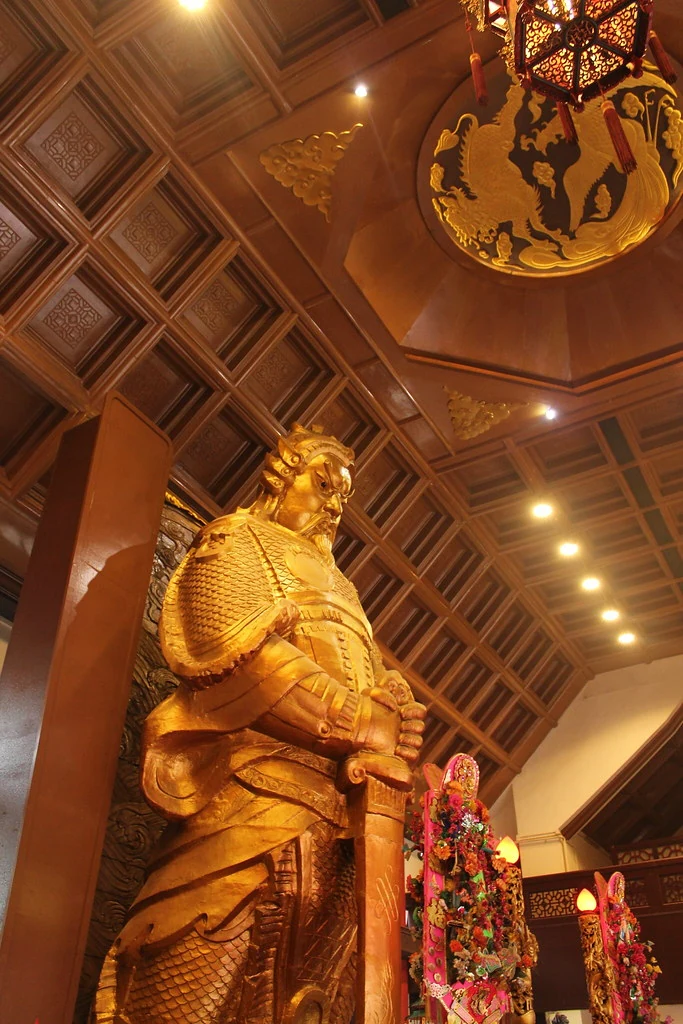
A shrine of nine villages
A larger temple for festival crowds
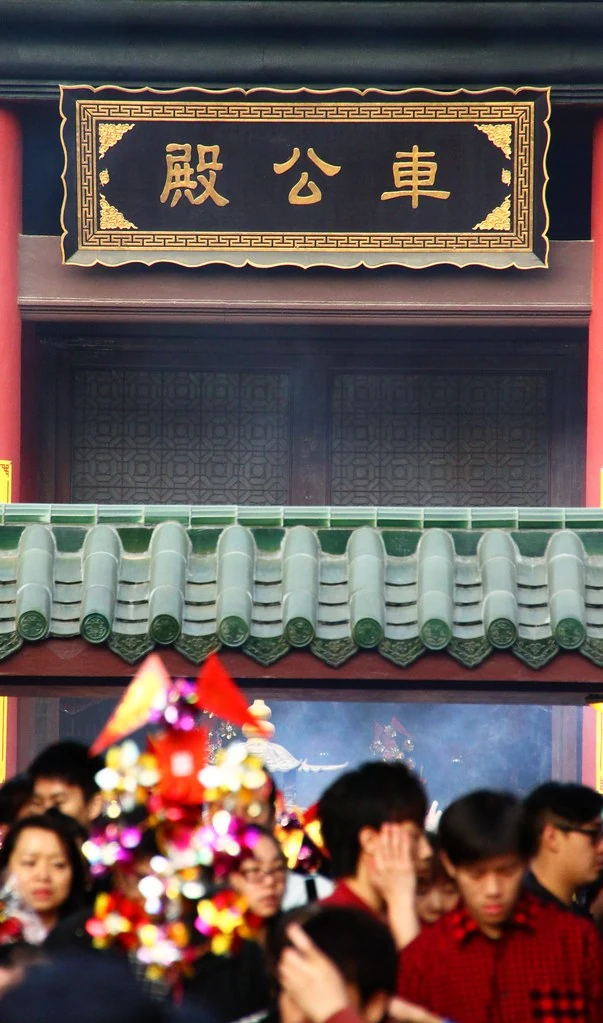
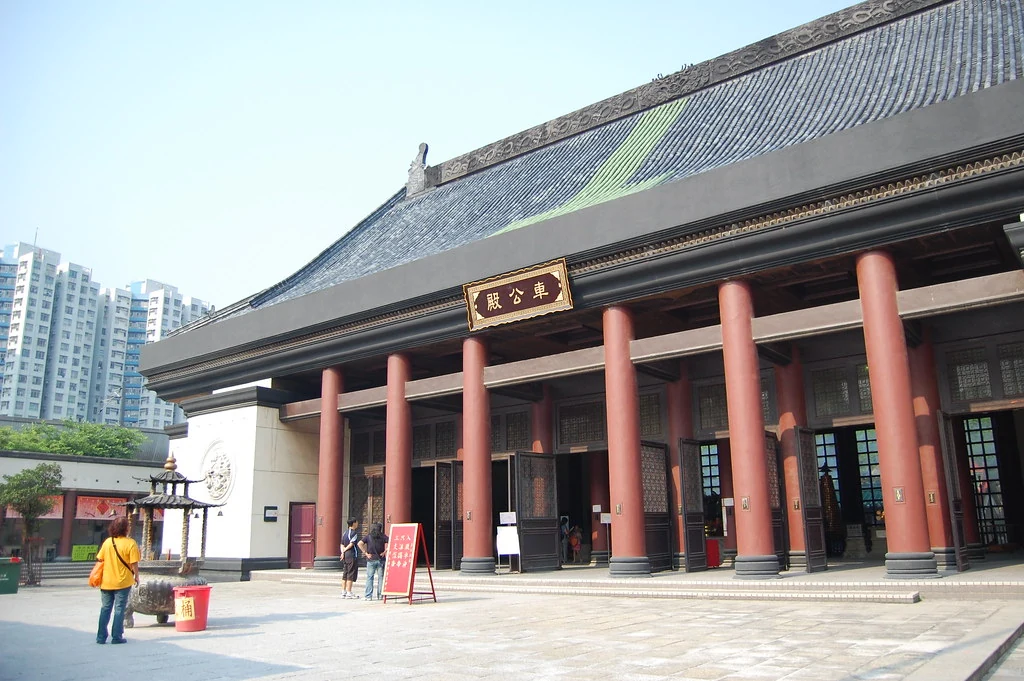
The old building has two halls, side chambers and a pitched roof in Qing vernacular style. In recent decades, its windmill—believed to bring good luck—drew worshippers, especially on the second day of the first lunar month. Crowds at the festival led to a new temple, eight times the size of the old one, and an enlarged compound in 1993. The old temple now opens to the public only occasionally.
What the old building retains
Repairs are recorded for 1890, 1993 and 2004. The old temple retains its granite door frame, lintel and base; the 2004 renovation added false-brick lines to the walls and green glazed tiles to the roof. The appraisal says the new materials diminished the building’s authenticity, while the old and new temples retain group value as two phases of Sha Tin worship.