From the journal

Lin Juemin and Bingxin: Two Lives in One Fuzhou House

A revolutionary’s farewell and a writer’s childhood meet in one Sanfang Qixiang residence, whose survival is a story of its own.

In the same city · Fuzhou ↗

Two names above one doorway

The paired name Lin Juemin–Bingxin Residence can suggest that two famous people once shared a home. The relationship is more poignant: they belonged to successive households, separated by a death and the sale of a house. One story is attached to the closing months of the Qing dynasty, China’s last imperial ruling house. The other belongs to the childhood of a writer who would help shape modern Chinese literature.

A building can preserve this kind of connection more directly than a chronological display. The rooms do not move when their inhabitants leave. Yet the meaning of a bedroom, hall or study changes with the family occupying it. Here, the passage from one household to another gives national history a domestic scale.
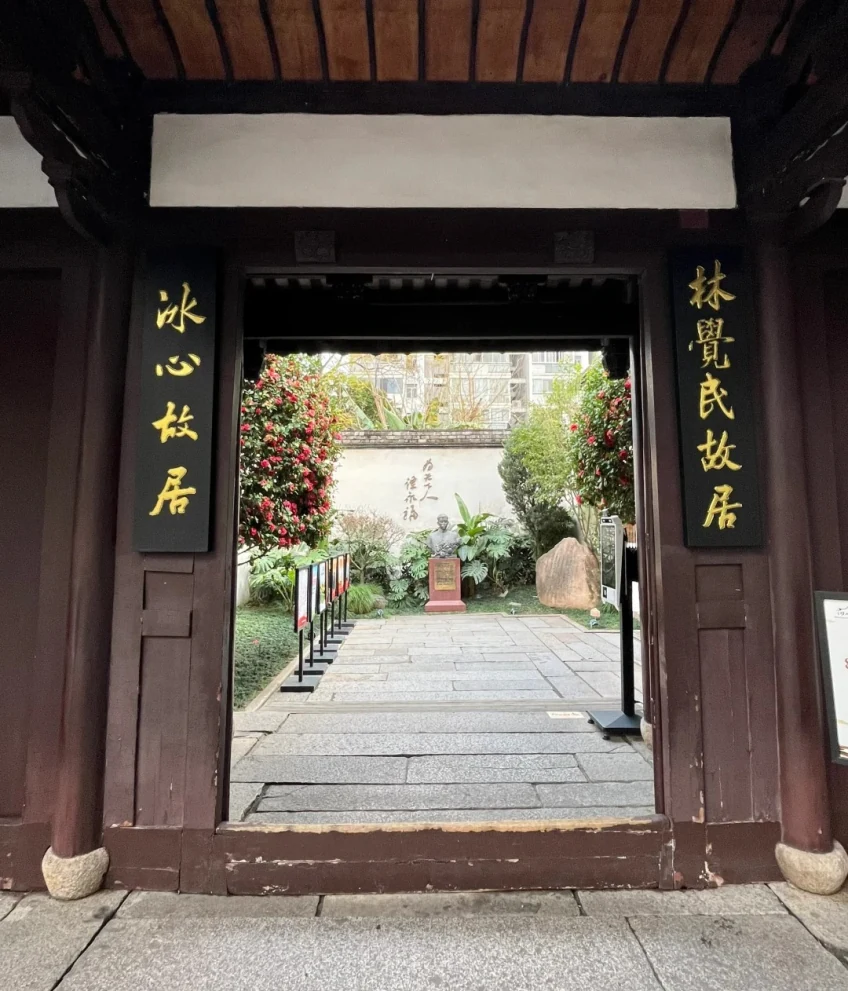
Paired plaques naming Lin Juemin and Bingxin flank a timber doorway into a planted courtyard.
The entrance to the Lin Juemin–Bingxin Residence in Fuzhou.

Lin Juemin’s unfinished future

Lin Juemin was a young revolutionary from Fuzhou. On 27 April 1911 he took part in the Guangzhou uprising against Qing rule. The attempt failed; he was captured and killed at twenty-four. His farewell letter to his wife, Chen Yiying, is remembered for bringing the demands of public commitment into painful contact with private affection.

The letter matters because it does not allow a comfortable distance between those two worlds. A decision made in pursuit of political change also meant separation from a person and a household. At the former residence, that loss has a place. The preserved memory of the couple’s room makes the event less abstract than a list of revolutionaries and dates. Chen belongs within the story as the person addressed, not merely as a name appended to her husband’s biography.

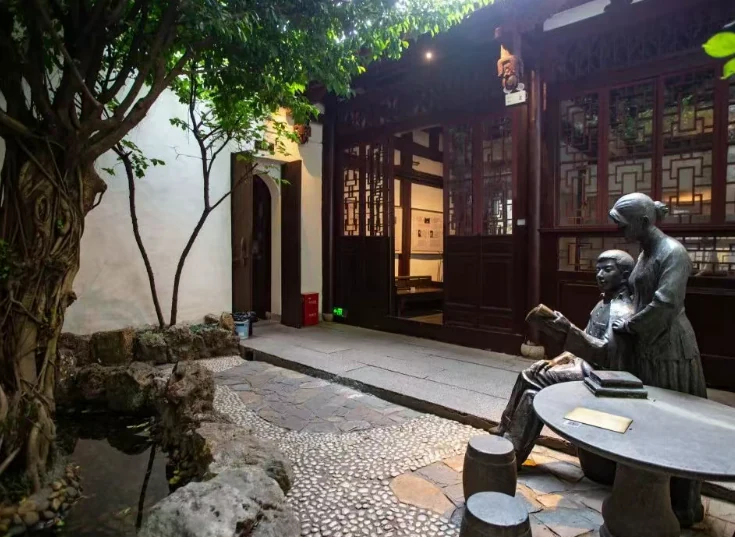
Sculptures of a seated man and standing woman beside a round table in a leafy courtyard.
A courtyard sculpture commemorates Lin Juemin and Chen Yiying at their former home.

Bingxin comes home

After Lin’s death, his family left to avoid danger and sold the property to Xie Luan’en, Bingxin’s grandfather. Bingxin, whose family name was Xie, lived there when she was about eleven or twelve. The provincial library’s account records her later memories of a large home filled with studies, guest rooms, calligraphy and paintings.

For a child, such a house was a world of adults, books and connected rooms. For a later reader, it supplies an early setting for a literary life. The pen name Bingxin became associated with poetry, prose and writing for young readers. Her presence in this residence does not soften Lin’s fate; it adds another life to the same address. History continued through reading, family routines and the growth of a child after one household’s catastrophe.

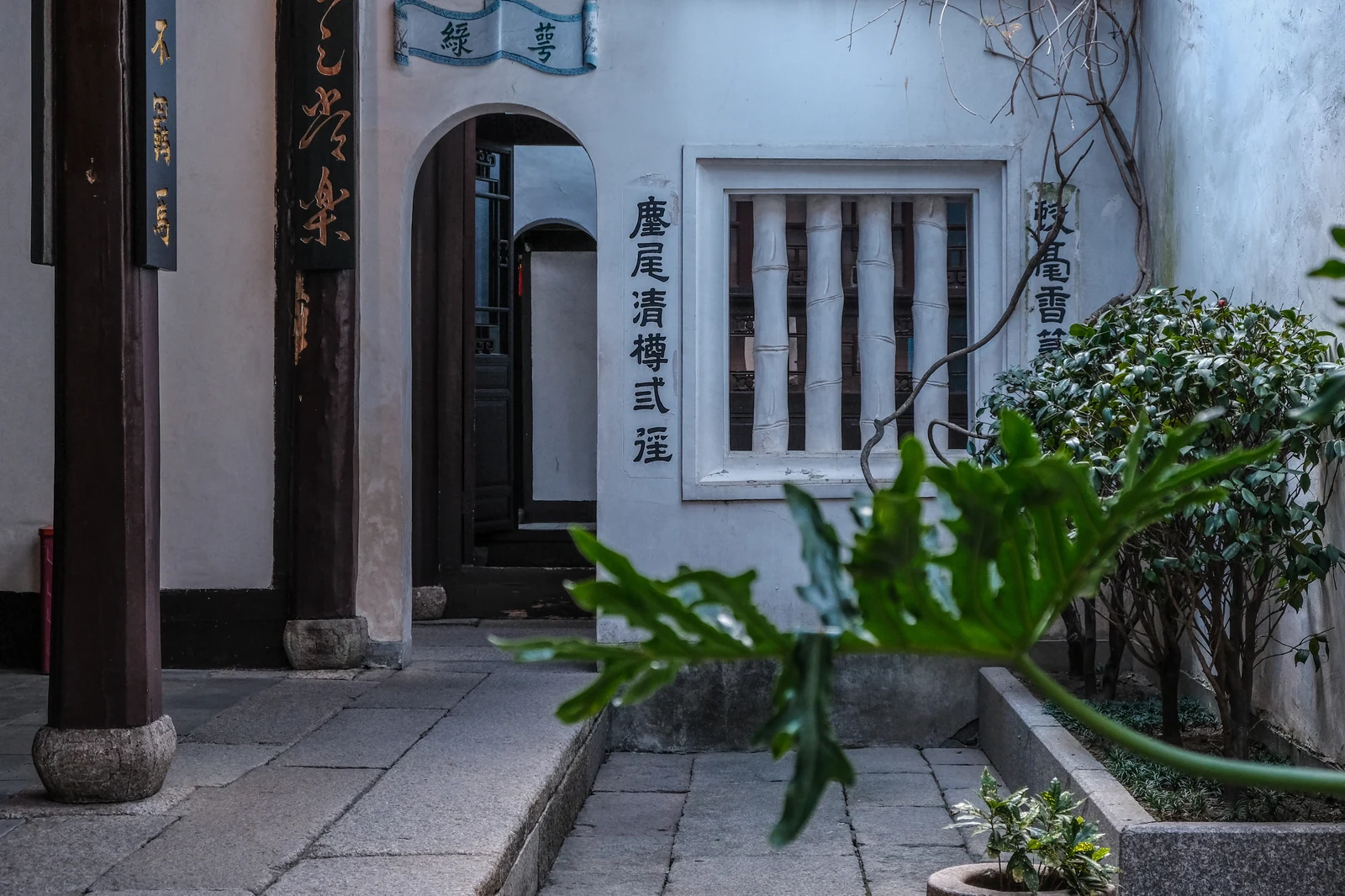
An arched doorway and barred window in a white courtyard wall, framed by timber columns and plants.
A planted courtyard and connecting doorway at the Lin Juemin–Bingxin Residence.

The house almost becomes a blank

The twentieth century brought a different threat. In 1989 a development plan involved demolishing parts of the residence. Preservation advocates including Li Houwei and Zhang Chuanxing publicly pressed for the building to be saved. Their campaign is part of the house’s history too: remembering a writer or a revolutionary still required people to argue for the survival of actual rooms.

What remains today is not the whole ancestral compound. Its altered boundaries make the act of preservation visible rather than effortless. The residence holds three linked stories: Lin’s departure, Bingxin’s arrival and the later struggle to keep a place where both could be remembered. Together they give the familiar phrase ‘former home’ its full weight. A home becomes historical because lives passed through it, and because someone later decided the address should not disappear.

Continue exploring · Sanfang Qixiang ↗
Photo credits and rights
  1. The entrance to the Lin Juemin–Bingxin Residence in Fuzhou.福州市鼓楼区旅发中心 / 福州市鼓楼区人民政府 · Rights status unspecified Photo source ↗ Original aspect ratio retained. Display copies resized only when needed; no enlargement, crop or retouching.
  2. A courtyard sculpture commemorates Lin Juemin and Chen Yiying at their former home.福州市鼓楼区旅发中心 / 福州市鼓楼区人民政府 · Rights status unspecified Photo source ↗ Original aspect ratio retained. Display copies resized only when needed; no enlargement, crop or retouching.
  3. A planted courtyard and connecting doorway at the Lin Juemin–Bingxin Residence.福州市鼓楼区旅发中心 / 福州市鼓楼区人民政府 · Rights status unspecified Photo source ↗ Original aspect ratio retained. Display copies resized only when needed; no enlargement, crop or retouching.