Tsui Sing Lau stands north of Sheung Cheung Wai, one of Ping Shan's Three Wais and Six Tsuens. The Tang genealogy attributes the pagoda to Tang Yin-tung, a seventh-generation ancestor, more than six centuries ago. Its name, Pagoda of Gathering Stars, points toward what the structure came to signify: a landmark at the village edge associated with learning and good fortune.
From the journal
Tsui Sing Lau: A Pagoda for Scholarly Fortune
The six-sided pagoda north of Sheung Cheung Wai combines a Tang lineage account with local feng shui beliefs about protection and success in examinations.
In this district · Yuen Long ↗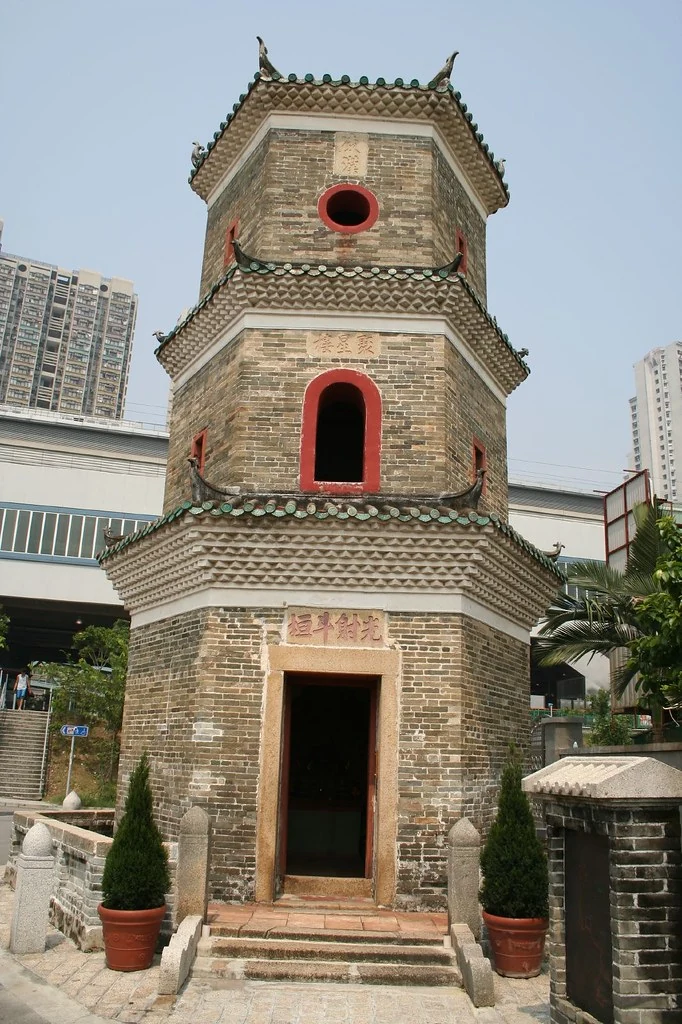
A pagoda at the village edge
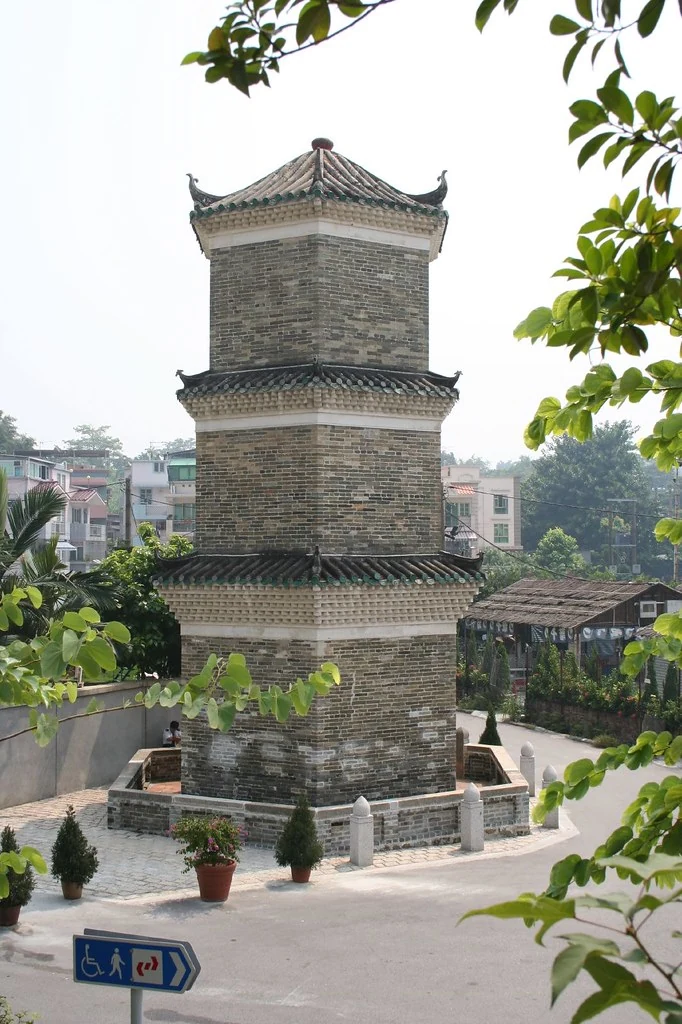
Three storeys of grey brick
The hexagonal, three-storey grey-brick tower stands about thirteen metres high. Zigzag-shaped brick eaves mark each level. The Antiquities and Monuments Office describes it as the only ancient pagoda found in Hong Kong. A statue of Fui Shing, the Champion Star, occupies the upper floor; the office says this deity is believed to govern success in examinations.
Feng shui and scholarly hopes
Village elders described the pagoda as standing at an old river mouth facing Deep Bay, where it was intended to ward off harmful forces from the north and prevent flooding. They also said its alignment with Castle Peak would help clan members succeed in imperial examinations. The Antiquities and Monuments Office records these as local feng shui beliefs. The tower brings protection and scholarly fortune together in one village landmark.