From the journal

Red Salt, White Salt: The Timber Tables of Mangkang

On the Lancang’s banks at Yanjing, wooden supports, plants, earth and carried brine become a working landscape of salt pans.

In the same city · Chamdo ↗
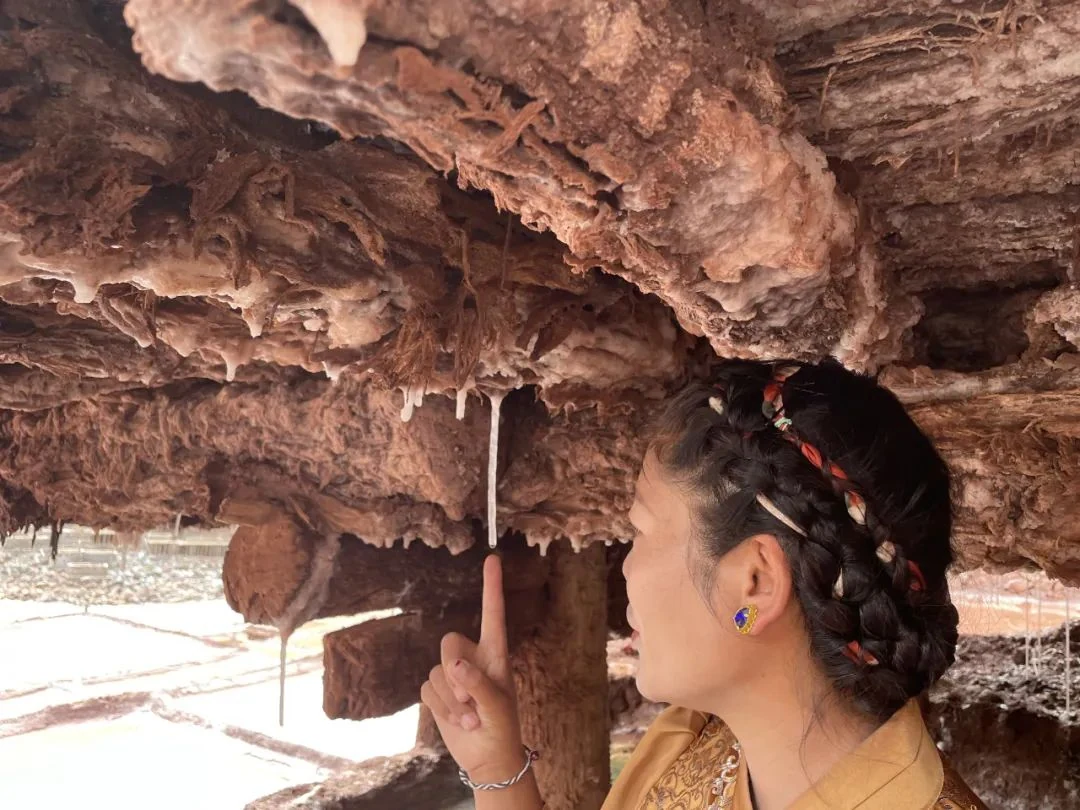
Guide Tashi Lhamo pointing to salt crystals below a timber roof
Guide Tashi Lhamo shows salt crystals beneath the timber salt pans. Photograph: Zhang Jianlin, Beijing News, 2024.

Salt fields have a timber structure

At Jiada village in Mangkang’s Naxi Township, salt pans occupy a narrow stretch beside the Lancang. Their appearance is architectural as well as agricultural: wooden posts hold up flat surfaces, with individual square or rectangular pans set at different levels.

A September 2024 report describes how makers prepare these tables. Plant material is laid over the wooden surface, then covered with earth taken from older salt pans. A small working area is built from several layers. The wood supports it, the plants form part of the covering, and the earth gives the brine a prepared surface.
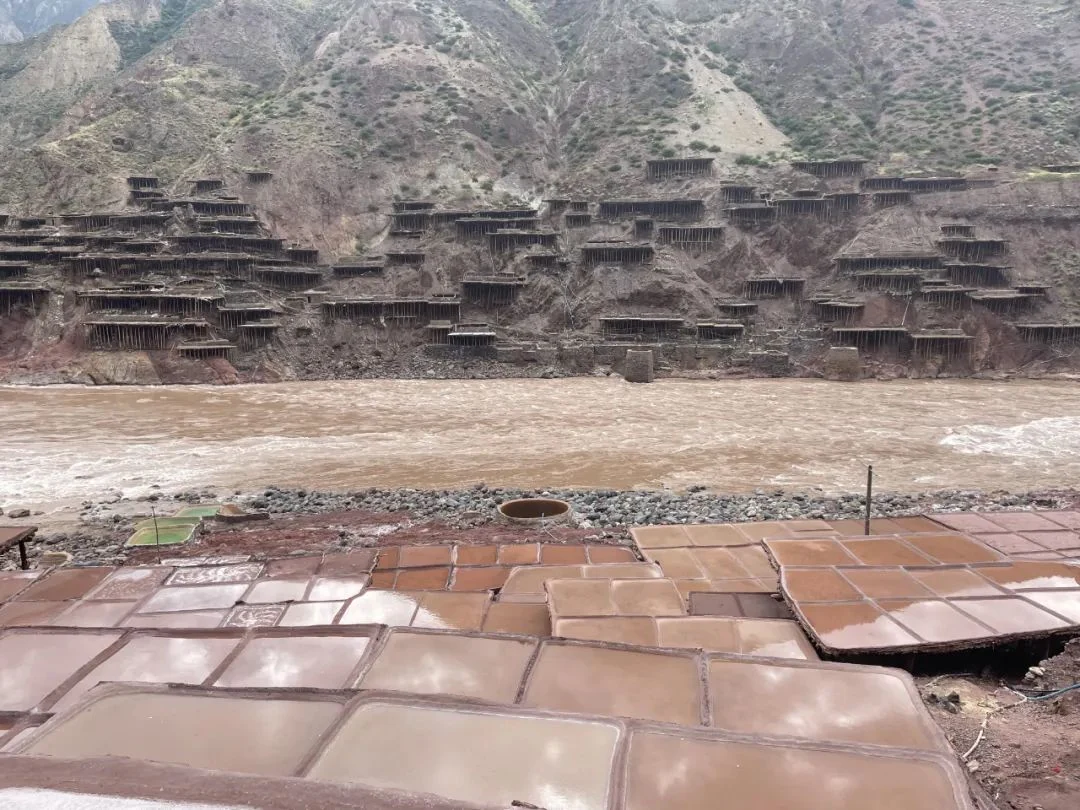
Timber salt pans above the Lancang at Jiada
Jiada salt terraces above the Lancang, in the September 2024 report. Photograph: Zhang Jianlin, Beijing News.

Carrying and concentrating the water

Local guide Tashi Lhamo described brine being carried from the wells in wooden containers and poured into pools for initial concentration. It is then transferred to the salt pans. Water gradually leaves the brine and salt crystallises, making the weather part of the work’s timing.

The report gives different intervals between harvests under favourable and poor conditions. The important relationship is the sequence: carry, concentrate, spread and collect. A finished quantity of salt gathers the effects of repeated labour and the time spent waiting for water to evaporate.

The banks produce different appearances

The report contrasts pale red salt from the western bank with white salt from the eastern side and relates the difference to the soil. The western product is also called peach-blossom salt, associated locally with the spring production season. Colour connects a market name with the particular surface on which the salt forms.

Yanjing’s cultural memory also includes stories of rulers competing for its salt, told as legends. Their subject reflects the value attached to a material needed beyond the place that makes it. The visible salt fields offer a more immediate history of that value: timber, earth, brine and the labour required to turn water into a tradable solid.

Continue exploring · Yanjing Salt Terraces ↗
Photo credits and rights
  1. Guide Tashi Lhamo points to salt crystals beneath a wooden roof in Yanjing, in a September 2024 report. Photograph by Zhang Jianlin for Beijing News.张建林/新京报 · No independent image licence established; private editorial research only Photo source ↗ Rights information ↗
  2. Jiada salt terraces above the Lancang, in the September 2024 report. Photograph: Zhang Jianlin, Beijing News.张建林/新京报 · No independent image licence established; private editorial research only Photo source ↗ Rights information ↗