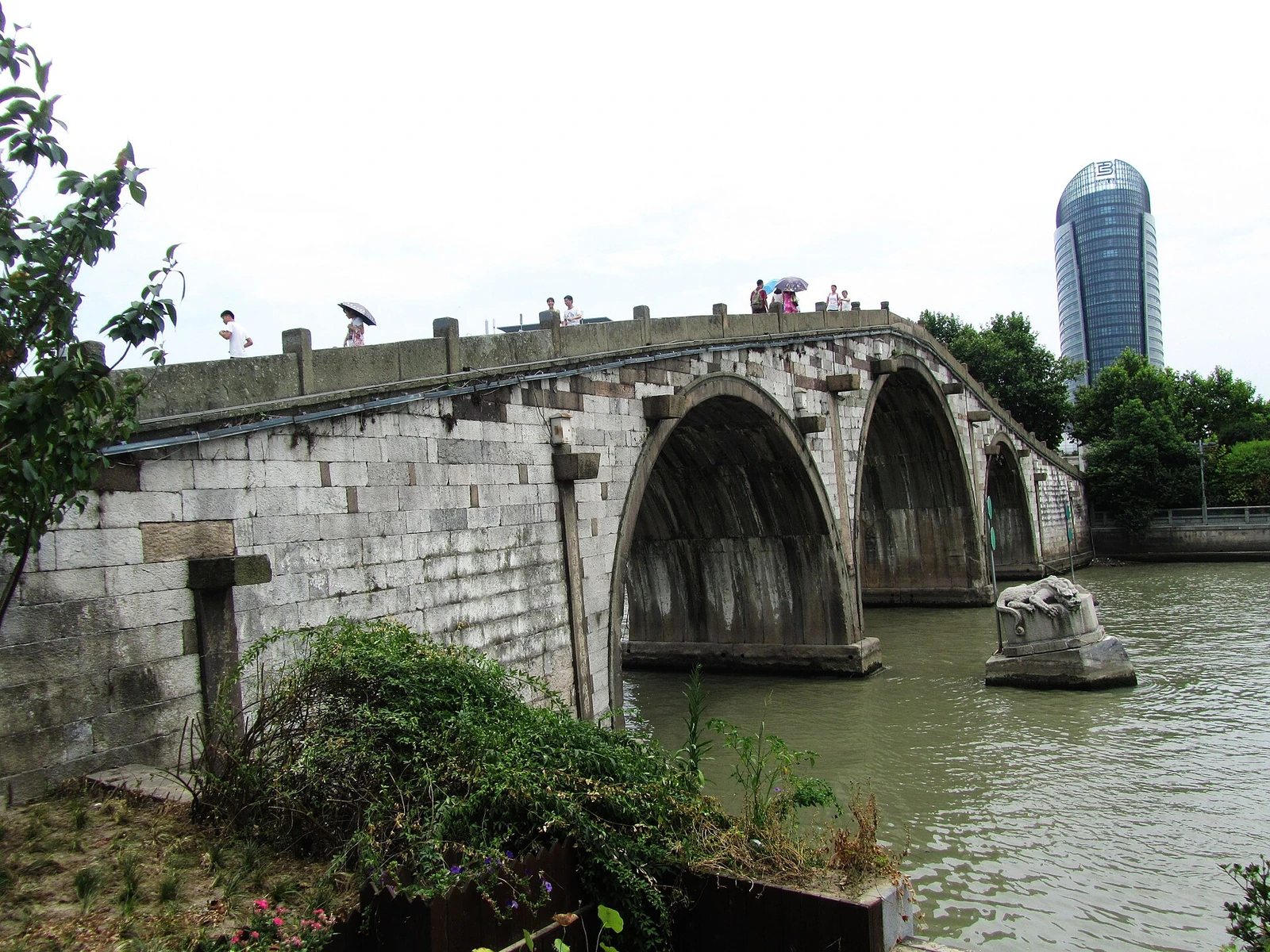
The three arches of Gongchen Bridge carry the eye across the Grand Canal. First built in 1631 and repaired over the centuries, the bridge belongs to a waterway that connected Hangzhou with places far to the north. Boats, cargo and the people who worked along the banks helped shape these neighbourhoods. From above, the bridge is a small line across a long ribbon of water. At street level, stone steps make that long history feel close enough to touch.
A city, many lives
Along the canal, the city keeps its layers
A stone bridge, waterside houses and a former oil depot hold different chapters of the same city.
The bridge above the working water
A street with water at its side
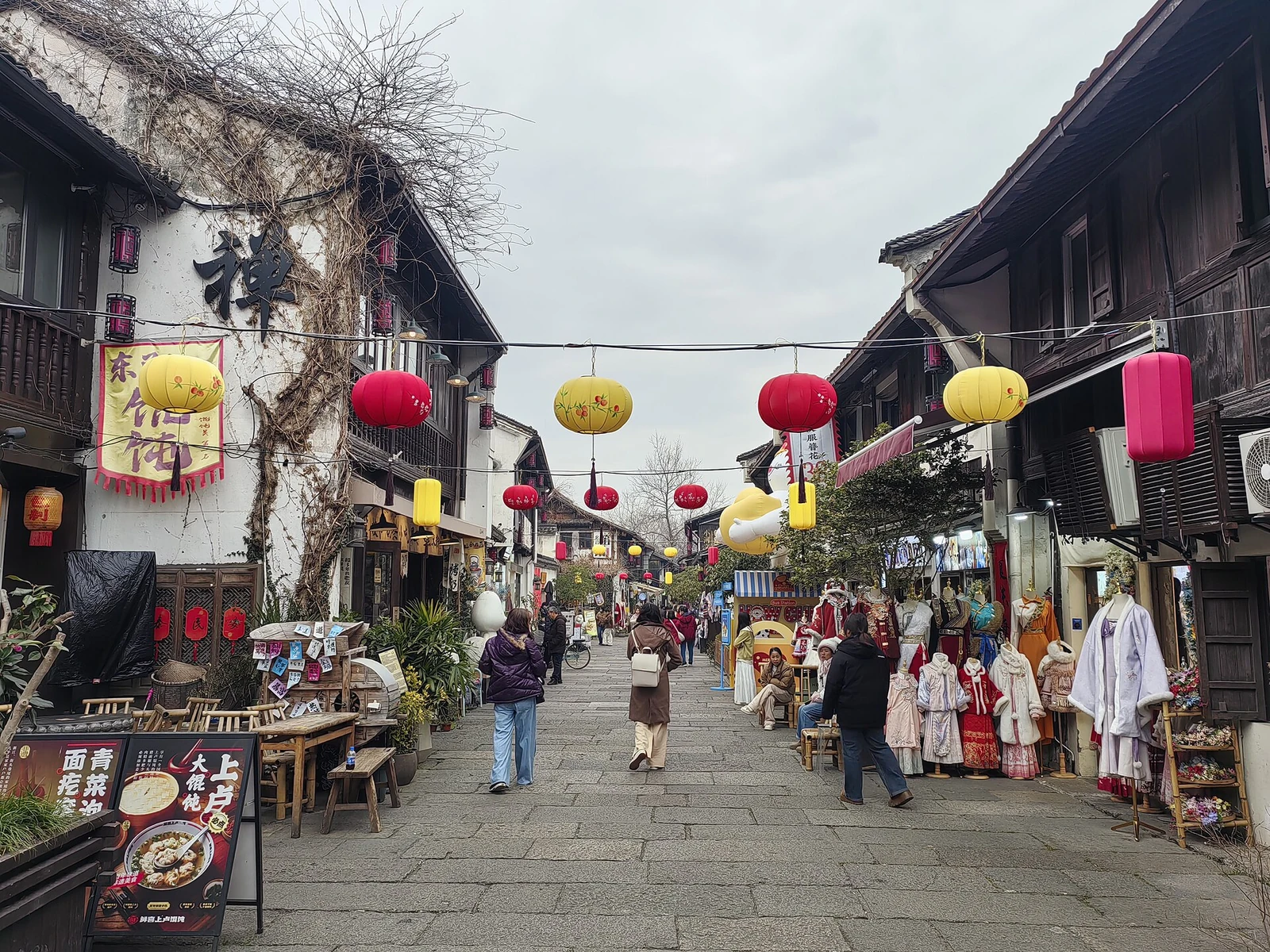
At Xiaohe Straight Street, tiled roofs and pale walls follow a smaller waterway near its meeting with the Grand Canal and Yuhangtang River. The old arrangement of shops below and living rooms above makes sense beside a trading river: earning a living and keeping a home occupied the same narrow buildings. Today, cafés, small shops and workshops add new uses to the street. A table by a doorway brings the scale of the city back to a single conversation.
An oil depot learns a new life
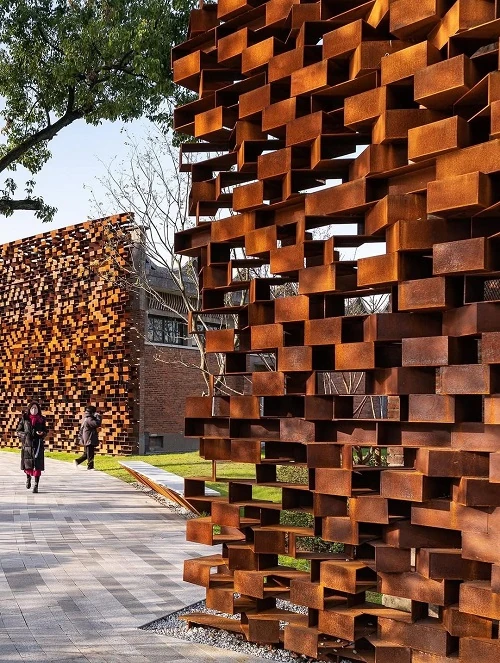
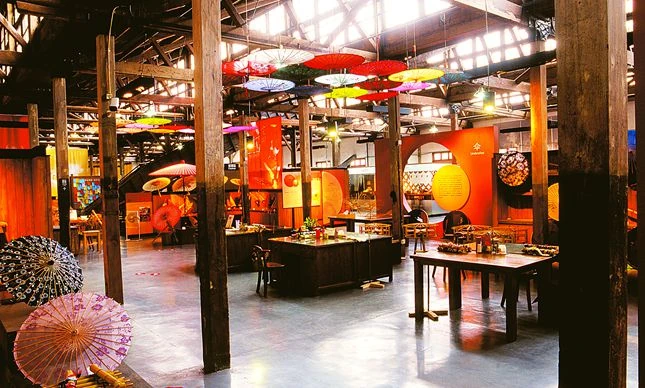
Nearby Xiaohe Park keeps a more recent memory. Former oil-storage buildings and tanks have been reworked into a public landscape. Rust-coloured steel, openings in the tanks and a light canopy give industrial forms a different kind of presence. Warehouses once belonged to the movement of goods; their surroundings now make room for walking, gathering and cultural activity. The canal neighbourhoods hold several Hangzhous together: the trading city, the industrial city, and the city finding new uses for what remains.