From the journal

Inside Barkhor’s Courtyard Life: Old Objects, New Uses

A reported café in Gungsangzi courtyard shows how a former resident’s household objects can become part of an old building’s new public life.

In the same city · Lhasa ↗
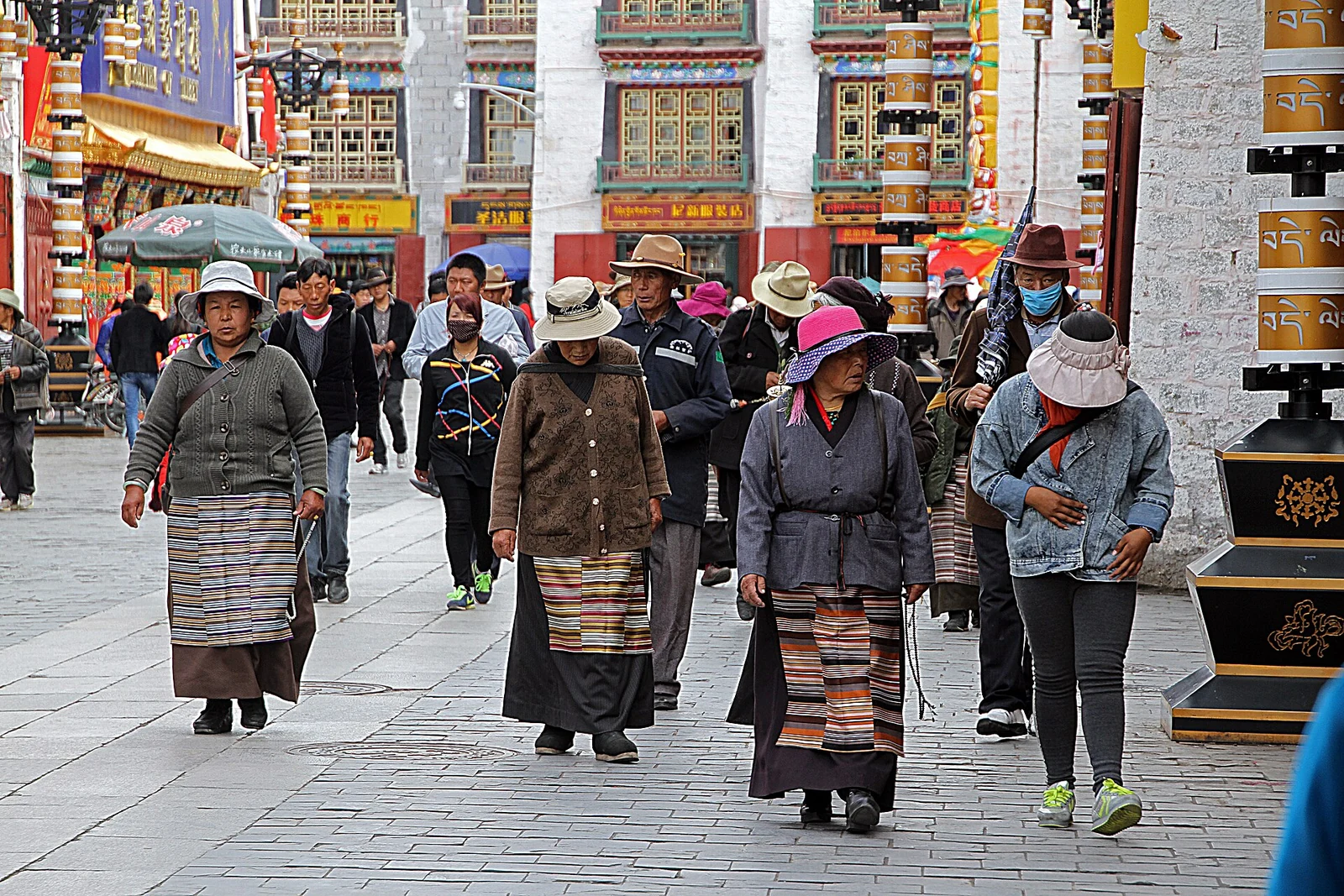
A street scene in the wider Barkhor district.
Barkhor’s street network forms the setting for its many historic courtyards.

An old city has spaces behind its frontages

Barkhor’s streets surround Jokhang, but much of the district’s life unfolds behind their edges. A July 2024 Xinhua report counted fifty-six historic courtyards in the area. These buildings hold histories of residence as well as newer uses, including cafés, lodging and cultural shops.

Gungsangzi courtyard on Barkhor South Street provides a particularly personal example. The report describes an older Tibetan-style building with a café in a ground-floor corner. Its story begins with a change of use, then becomes more specific through the objects and people who give that use a character.

The café contains a childhood

The café’s operator, Tenzin Techo, grew up in the courtyard. When he furnished the business, he brought old cups, a television and other objects from his family home. They were possessions with a connection to this place, rather than a collection assembled only to suggest an old-fashioned atmosphere.

The report also records an older woman giving the café a copper basin from her home. Such objects make memory tangible without requiring a whole building to remain fixed in one period. A cup or basin is small enough to move, yet it can retain an association with a household and the life that once surrounded it.

A familiar place gathers different people

Zedun, an English teacher interviewed for the report, sometimes taught students in the café. The business thus became a meeting place where language learning joined the ordinary activities of serving drinks and talking. Unlike the operator, he had not grown up in a courtyard, and the setting prompted him to consider writing about it.

Their different relationships to Gungsangzi help explain the courtyard’s new life. One person returns with objects from childhood; another forms an attachment through work and conversation. A building remains old while the uses and memories around it continue to accumulate. The courtyard’s importance lies in that ongoing relationship between space and people.

Continue exploring · Barkhor ↗
Photo credits and rights
  1. Barkhor’s street network forms the setting for its many historic courtyards.Gerd Eichmann · CC BY-SA 4.0 Photo source ↗ Rights information ↗