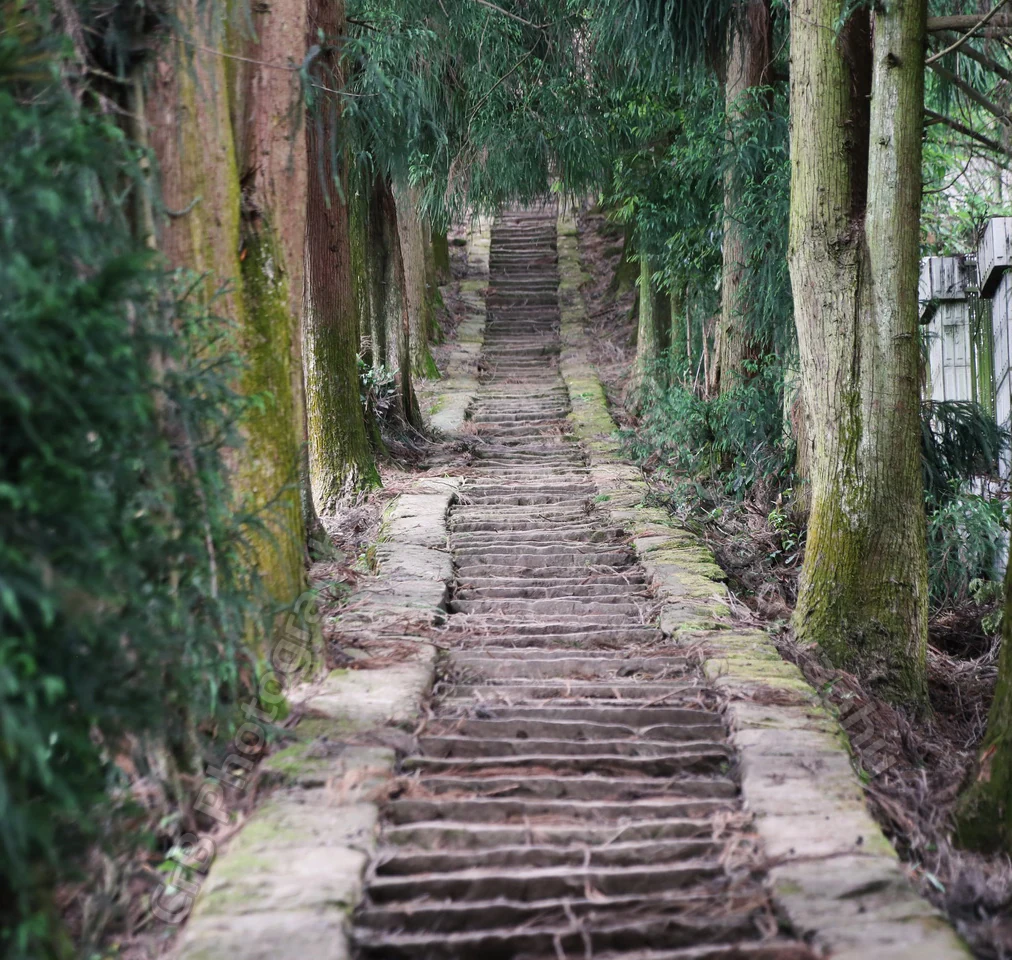
Wet leaves before the sun
Before the sun clears the ridge the leaves are wet, and the wet is the first problem. Water on a leaf bruises in the basket, and a hand that grips too hard leaves a mark that shows up later in the pan. The pickers work up the terrace with a basket at the hip, taking the shoot between thumb and forefinger and snapping it rather than pulling. The slope is steep enough that the body is never quite upright. Below the garden the valley is still in shadow, and the terraces step down into it in narrow bands that the eye can follow one by one. Mist sits in the valley and climbs as the morning warms. Nobody talks much. The sound is stems breaking and feet on wet stone.
One bud, and a slope
Mengding is one of the earliest recorded tea-growing places in China, and the tea made here, mengding ganlu, is still picked as an early bud in spring. Machines exist for tea, but not for this ground: the terraces are narrow, the bushes uneven, and the standard is a shoot of a particular size rather than a volume. The bushes are not a lawn; each one is a different age and a different shape, and a machine would take leaf along with the bud. The picker's hand is the gauge. A good picker reads a bush the way a cook reads a pan, by look and touch, and the difference between the top grade and the rest is decided at this height, by fingers, in weather that changes before noon.
The first firing
By mid-morning the leaves are in the workshop and the smell has moved from green to something closer to chestnut. Processing runs through withering, pan-firing, rolling and drying, though the order and the handling change with the tea being made: ganlu and the mountain's yellow tea are not one leaf treated one way. Withering is judged by feel: how much water has left the leaf before the pan decides what the firing can do. The room is warm and the windows are small. The pan is hot enough that the hands have to keep moving. Someone turns the leaves with bare fingers, shakes them out, turns again. The first firing decides whether a morning's picking holds its shape, and nothing done afterwards will put it back.
The name, and the day
The mountain has monuments, temples and the old imperial tea garden, and the story of the seven trees on the highest peak is told at all of them. That story is about a name. The work is about a day: a basket, a slope, a pan, a grade. Both are true, and they are not the same truth. The stone steps are the old tea horse road, and they still climb through the terraces rather than around them. A visitor who walks them in the afternoon sees terraces, sheds and wet stone, and may hear the name of the tea before hearing how it was picked. The pickers are back on the slope tomorrow, which is the part the name does not describe.