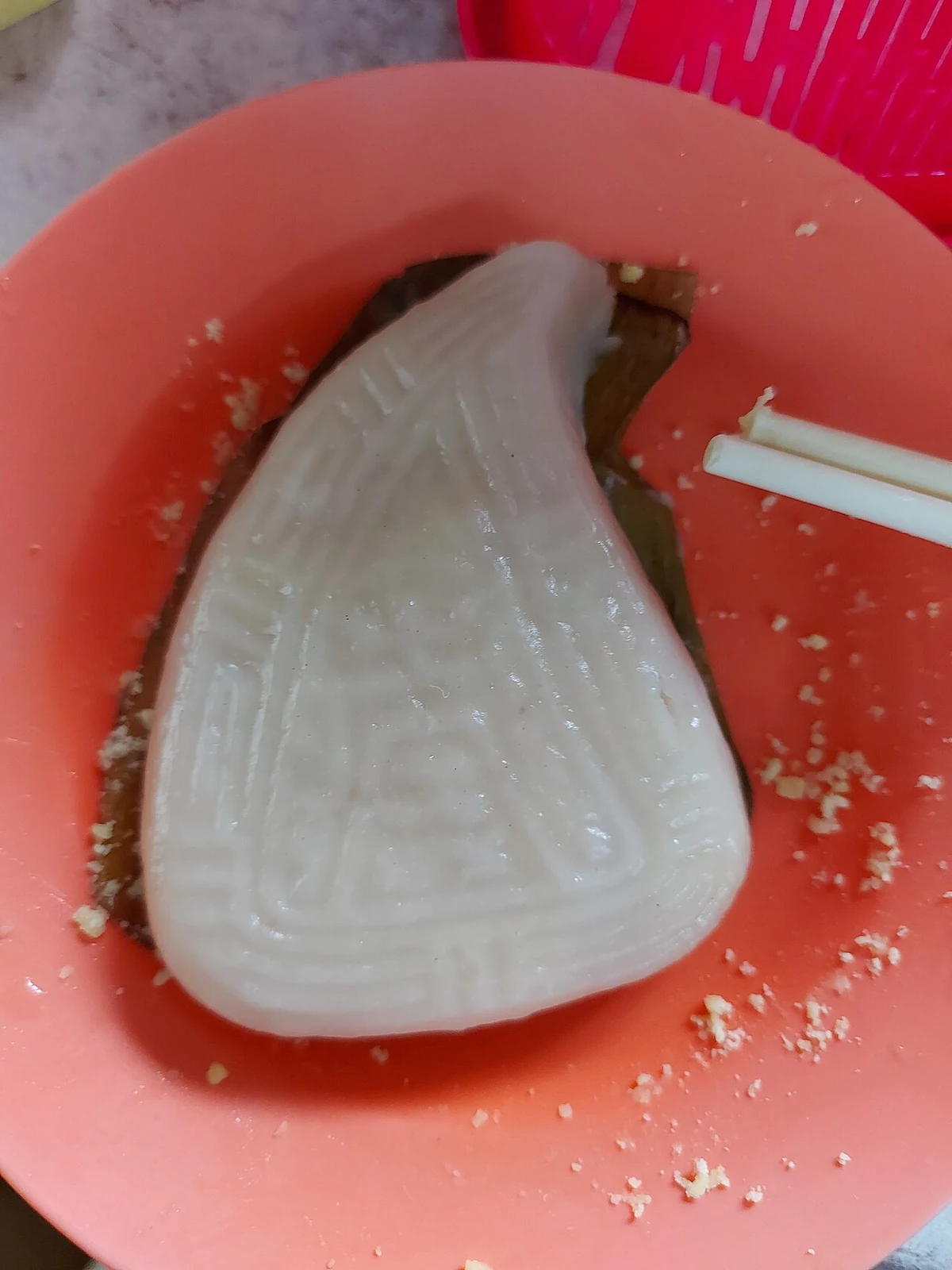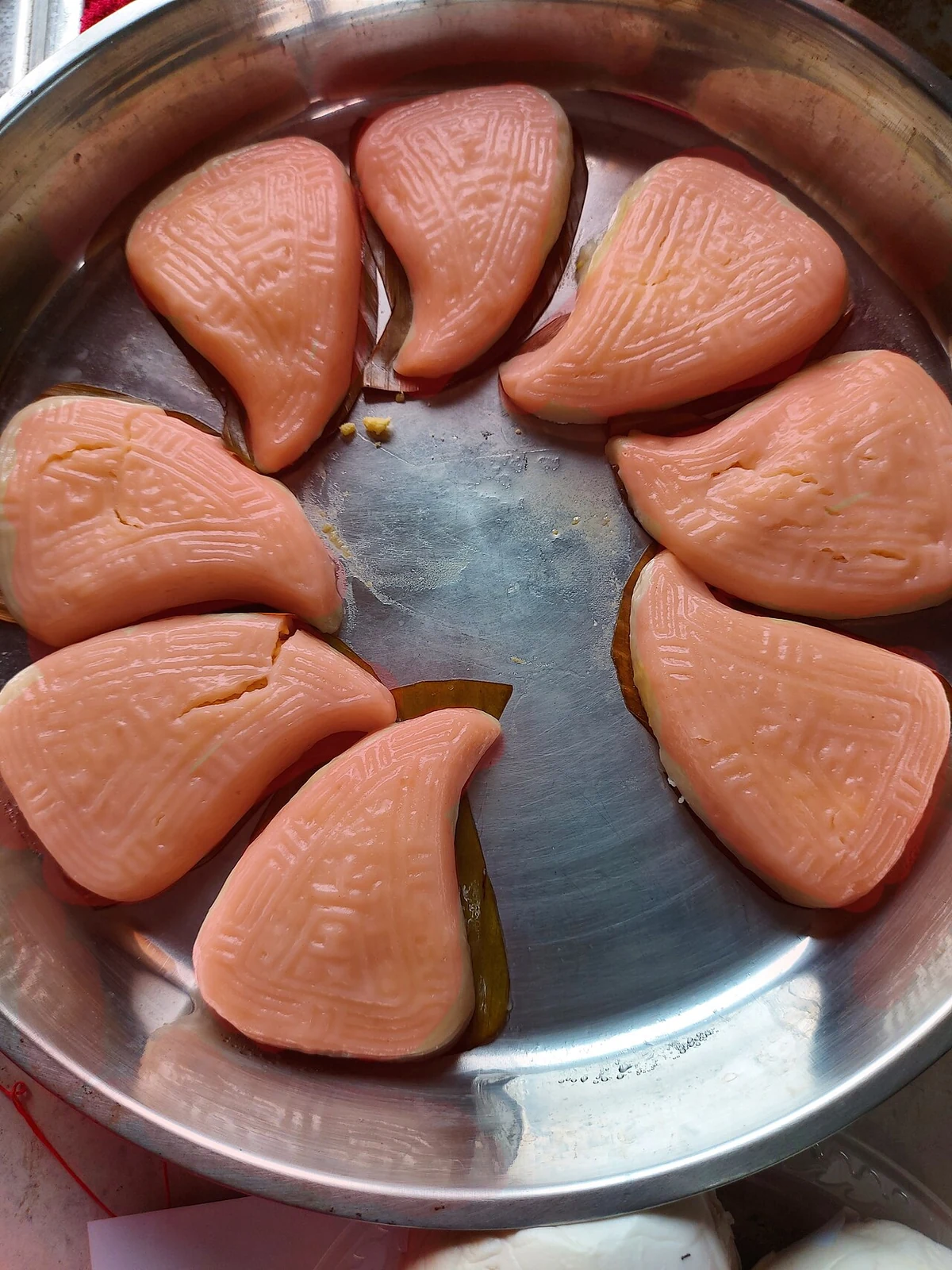
A peach shape pressed into red dough
Red peach kuih is named for the peach-shaped mold that gives the filled rice cake its outline. A Shantou municipal account describes a vermilion wrapper and a filling based mainly on cooked glutinous rice, often mixed with mushrooms, dried shrimp, peanuts or pork. The red skin signals celebration; the peach shape evokes longevity and good fortune. During the Spring Festival and other festive occasions, the cake can be set out for family gatherings and offerings to ancestors or deities.
The making is visible in the finished surface. A maker forms a thin wrapper, gathers it around the savory rice filling, seals the seam and presses the parcel into a carved mold. When released, the pattern sits in relief across the red dough. It is both a practical shape and a recognizable sign of a festive food.
Two seasonal kuih, two different characters
Chaoshan uses the word kuih for a broad family of foods made with rice, wheat or starches. Red peach kuih is a savory, stuffed rice cake whose red color and peach outline suit celebratory tables. Mouse-ear kuih, a Spring Festival specialty described in the same Shantou account, takes its name from the herb used in its wrapper: mouse-ear herb is simmered into the dough, which is filled with sweet mung-bean paste, shaped in a mold and steamed on banana leaves. Its greenish skin and herbal scent set it apart from the red peach cake’s glutinous-rice center.
The contrast is not a single recipe against another. Each name points to a different combination of wrapper, filling, aroma and occasion. A table of kuih can therefore mark the calendar through several foods rather than one all-purpose festival cake.
A hand-sized piece of shared knowledge
A wooden mold makes a repeated pattern possible, but the dough still has to be portioned and filled so the seam stays closed. Shantou’s municipal heritage list recognizes the making technique for Dahao squid-roe kuih, another local specialty with a different filling and identity. Public demonstrations and family workshops also bring red peach kuih making into view beyond home kitchens.
These foods carry knowledge in forms that can be handled: a mold worn smooth by use, a wrapper stretched thin enough to close around rice, and a leaf or steamer chosen for cooking. Red peach kuih holds a place on festive tables because its color, shape and filling come together in a single small parcel. Mouse-ear kuih offers a contrasting seasonal expression, its herb-infused wrapper announcing another point in the year.