From the journal

When a Village Is Part of a Museum

Sanjiang’s museum-village network changes the scale of heritage from an isolated object to places where people continue to live.

In the same city · Liuzhou ↗
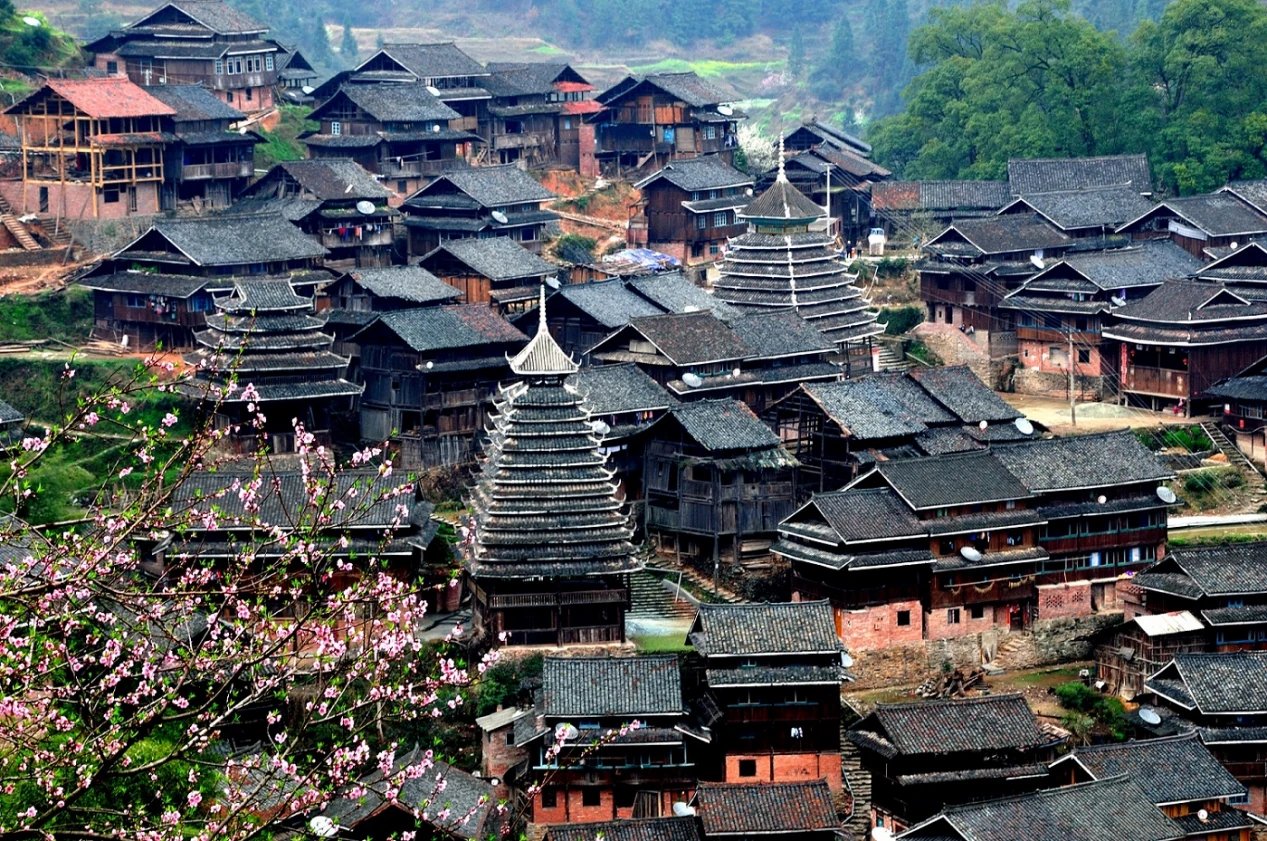
Pink blossoms frame drum towers and wooden houses with tiled roofs.
Gaoding village in the Dudong area of Sanjiang, with drum towers set among village homes.

A centre and a village network

A 2022 institutional museum directory describes the Sanjiang Dong ecomuseum through the relationship between an information centre and a village network along the Miaojiang. Historical fieldwork locates this network in the Dudong area, distinct from Chengyang's familiar bridge and village cluster.

The museum's subject extends beyond an exhibition building. Houses, tools, textiles and the knowledge of their users belong to a wider inhabited setting. The centre gathers information; the villages give that information a relationship with places and people.
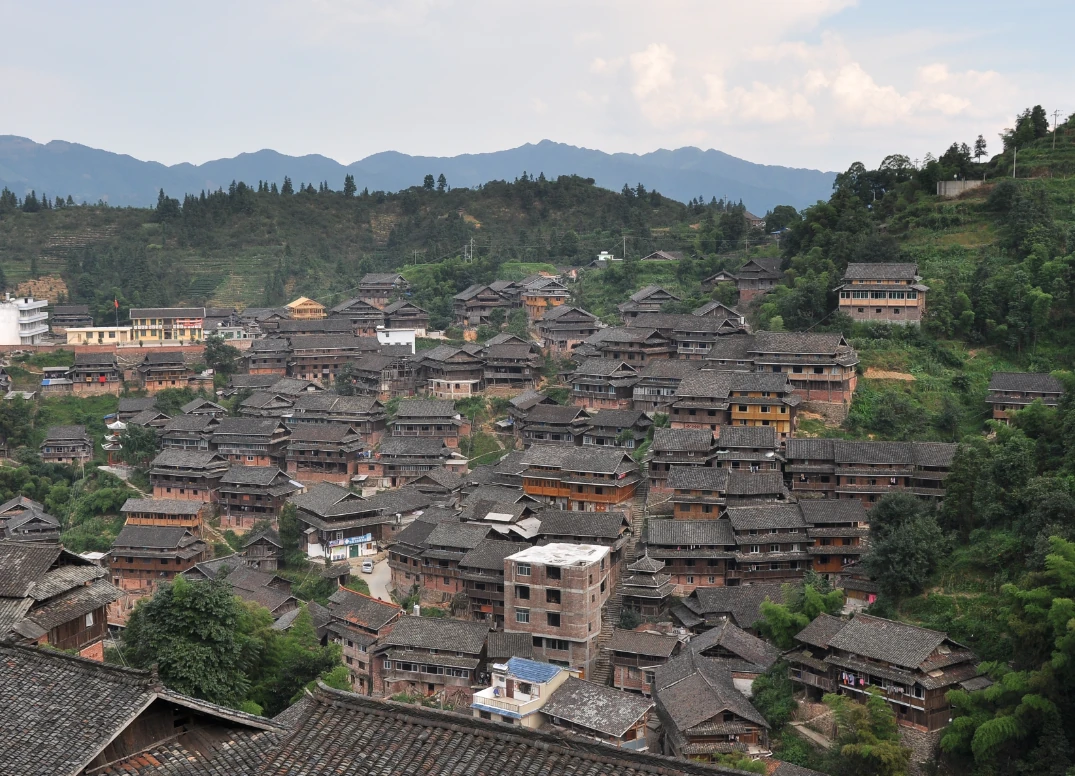
Wooden houses and tiled roofs cover the slopes of a mountain village.
Gaoding village in the Dudong area of Sanjiang, with drum towers set among village homes.

Objects within an inhabited landscape

A research report held by Japan's National Museum of Ethnology documents the Sanjiang project's museum-village approach in 2004. It describes the county museum as an exhibition and information centre linked with villages along the Miaojiang. The account records the project's arrangement at that time.

A collection brings objects together for close comparison. Within a village, the same kinds of objects remain connected with work, buildings and landscape. A textile has a maker and a use; a tool belongs to a sequence of tasks. The museum-village approach holds those relationships within its field of attention, alongside the objects themselves.

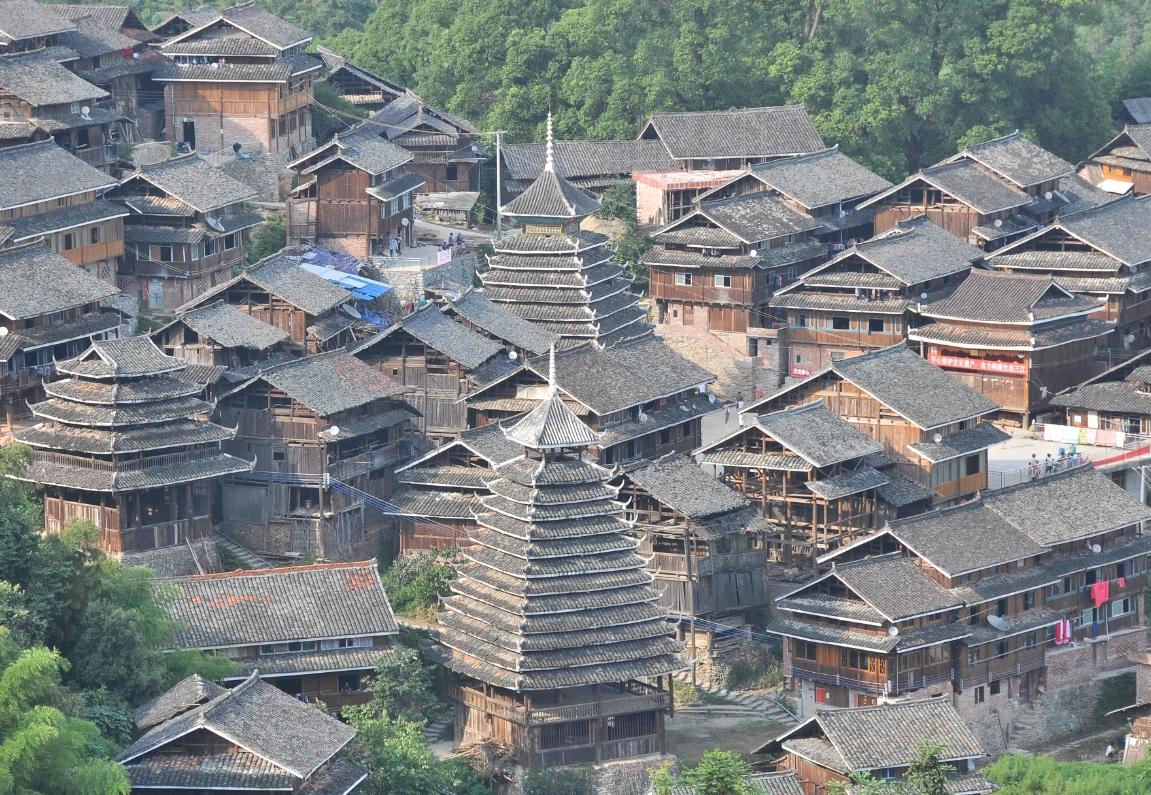
Tiered drum towers rise among closely spaced wooden village houses.
Gaoding village in the Dudong area of Sanjiang, with drum towers set among village homes.

Residents behind the camera

In an official interview, the director of the Guangxi Museum of Nationalities described village image-making groups in the wider regional ecomuseum programme. Residents used cameras to document their own lives.

This work gives the people in a place a role in choosing what is recorded. A visitor's picture and a resident's record may show the same building while preserving different occasions and concerns. The resulting images form another part of the museum's subject: daily life narrated by people who live it.

A bridge becomes a place to learn

On 13 June 2025, the Sanjiang Dong ecomuseum and county museum organised a tie-dye learning event at the wind-and-rain bridge in Batuan village, Dudong. A Guangxi Nationalities News report records more than twenty village women learning from practitioner Yang Yujie.

The bridge accommodated a teacher, learners and the handling of cloth and dye. Its covered space supported an activity as well as preserving an architectural form. In that gathering, the museum-village relationship took a tangible shape: knowledge passed between people in a building already part of their surroundings.

Continue exploring · Sanjiang Dong Ecomuseum Network ↗
Photo credits and rights
  1. Gaoding village in the Dudong area of Sanjiang, with drum towers set among village homes.Sanjiang County Culture and Tourism Information Service website; photographer not stated · Rights information Photo source ↗ Resized and converted to WebP; full composition retained.
  2. Gaoding village in the Dudong area of Sanjiang, with drum towers set among village homes.Sanjiang County Culture and Tourism Information Service website; photographer not stated · Rights information Photo source ↗ Resized and converted to WebP; full composition retained.
  3. Gaoding village in the Dudong area of Sanjiang, with drum towers set among village homes.Sanjiang County Culture and Tourism Information Service website; photographer not stated · Rights information Photo source ↗ Resized and converted to WebP; full composition retained.