From the journal

Nianbaoyuze in Story: A Mountain and the Three Golok Ancestors

The national heritage record presents Nianbaoyuze legends as stories of the Three Golok peoples’ origins, with the mountain personified as ancestor and protector.

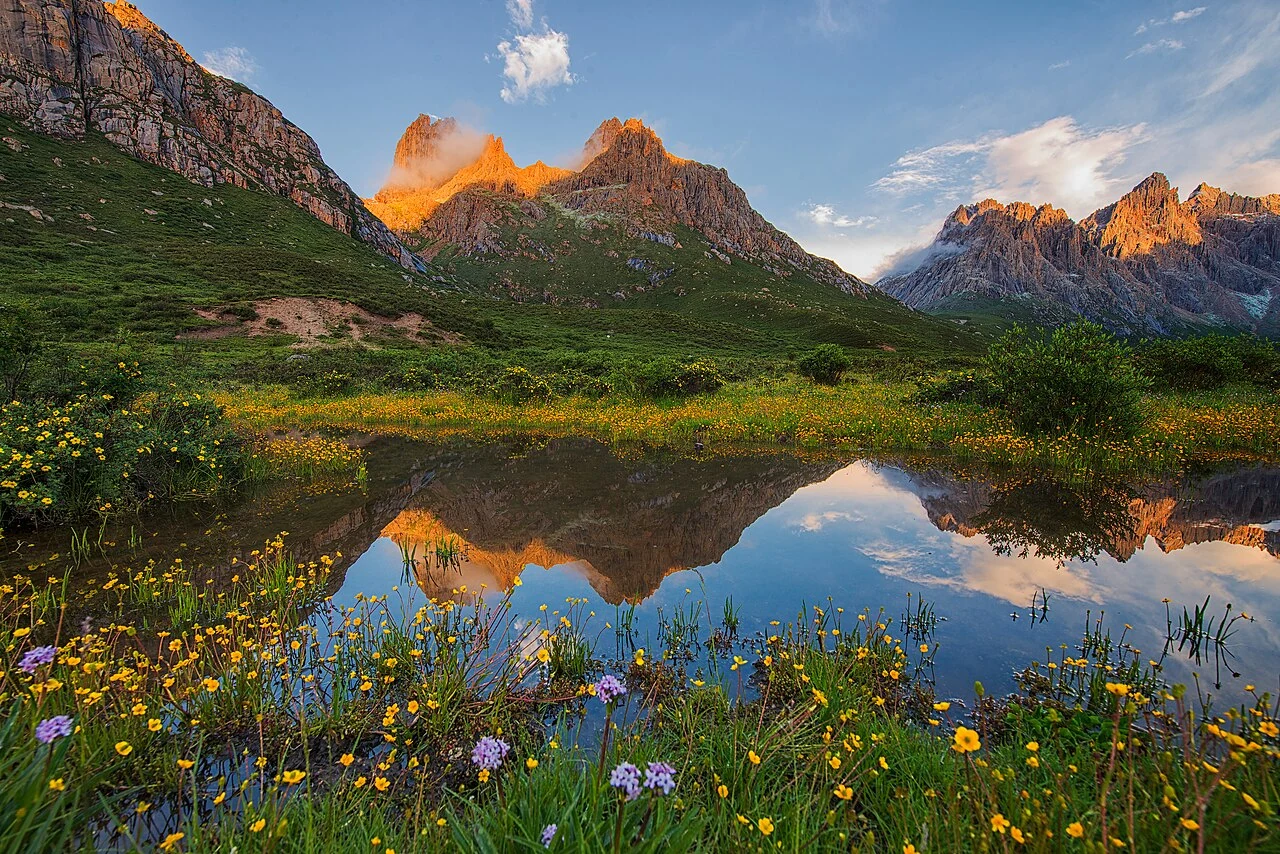
Nianbaoyuze’s mountains and lake in July 2015; this archival image does not indicate present access.

A mountain inside an origin story

In the Nianbaoyuze legend, a hunter rescues a small white snake from a black eagle. The snake is the mountain deity’s son. The hunter later kills a demon ox occupying the sacred mountain; in gratitude, the deity gives him a daughter in marriage. Their three sons become the ancestors of the Three Golok peoples in the story.

The national heritage catalogue presents the episode as part of a series about the origin and development of the Three Golok groups. Nianbaoyuze—also called Golok Mountain in the record—stands in the tale as an ancestral spirit and protector.
A story told in several forms

The heritage record places the mountain in Jiuzhi County and traces the legends across Golok and neighboring Tibetan-speaking regions, including parts of Sichuan, Gansu and other Qinghai prefectures. The story has been told orally, performed in Tibetan opera and folk recitation, and preserved in written accounts. Its circulation reaches beyond the mountain’s immediate landscape.

Different versions and performance styles carry the same broad origin theme through distinct forms. Across oral storytelling, Tibetan opera, folk recitation and written accounts, the mountain becomes part of stories about lineage, protection and the beginnings of a people.

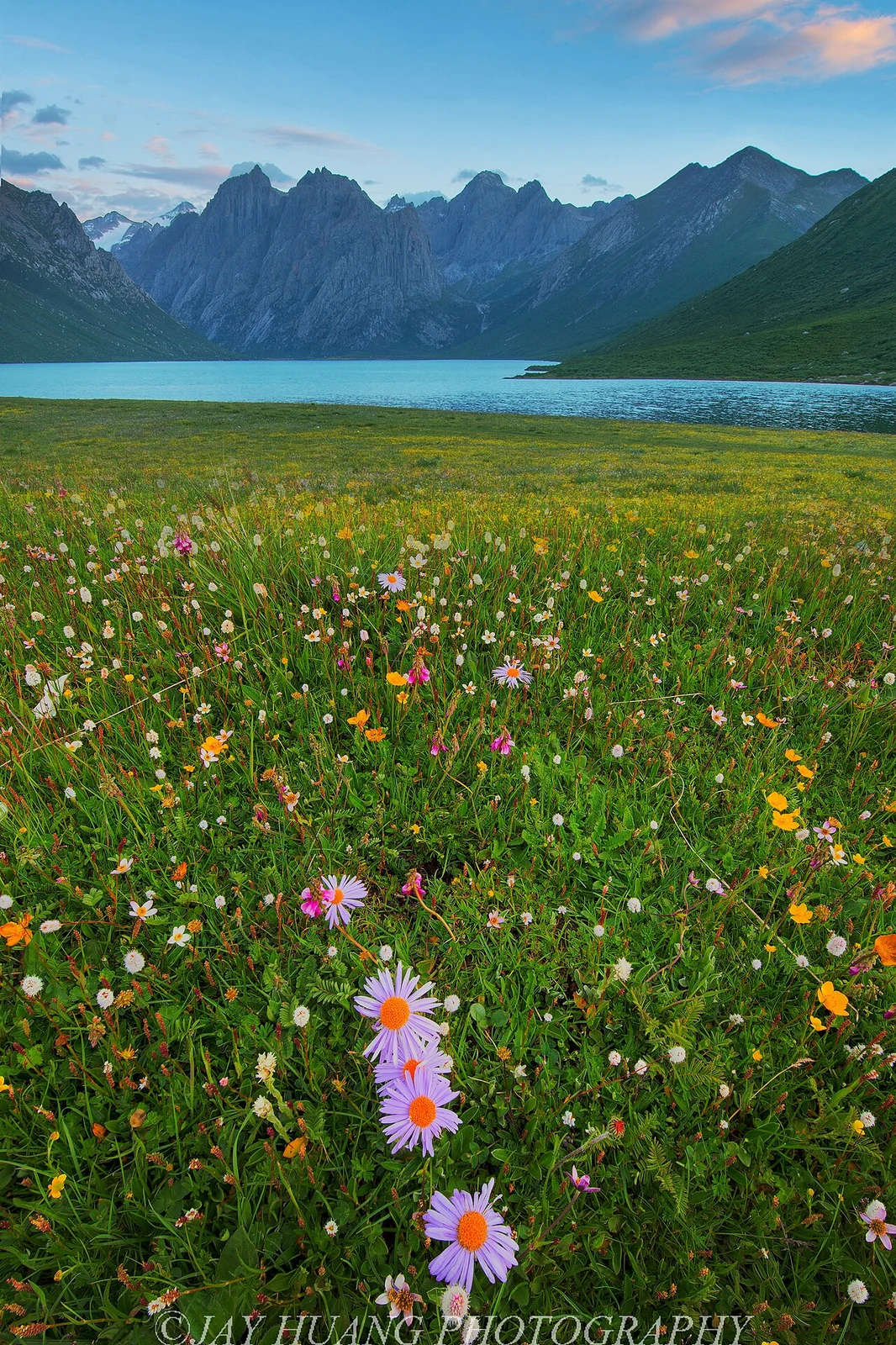
Flowers and a mountain lake at Nianbaoyuze in July 2015, before the closure described in the article.
Continue exploring · Golog ↗
Photo credits and rights
  1. Nianbaoyuze’s mountains and lake in July 2015; this archival image does not indicate present access.Jay Huang from Pleasanton, USA · CC BY 2.0 Photo source ↗ Rights information ↗ Proportionally resized and converted to WebP without cropping. No objects were added, removed or reconstructed.
  2. Flowers and a mountain lake at Nianbaoyuze in July 2015, before the closure described in the article.Jay Huang from Pleasanton, USA · CC BY 2.0 Photo source ↗ Rights information ↗ Proportionally resized and converted to WebP without cropping. No objects were added, removed or reconstructed.