In 2006, the Palace Museum formed a project group to study Shalu Monastery’s buildings and murals. The work brought together the Dunhuang Academy, a traditional architecture institute in Henan and heritage specialists from Tibet. Their program combined survey, design and research with emergency repairs. That combination matters at Shalu: painted walls belong to rooms and corridors whose timber, roofs and circulation shape how the images are experienced. The project treated architecture and mural art as parts of one historic environment, linking on-site care with close study.
From the journal
Murals and Conservation at Shalu
A Palace Museum project connected Shalu Monastery’s painted corridors with architectural study, emergency repairs and a digital record of three mural groups.
In the same city · Shigatse ↗
A conservation project takes shape
Three painted spaces, three visual worlds
A Palace Museum account published in 2012 describes digital recording in three areas. The circumambulatory passage around the main assembly hall held about 580 square metres of paintings, including 101 large scenes from the Buddha’s life and a four-armed Avalokiteshvara. The Kangyur Hall’s south wall showed the Five Buddhas; its north wall brought together Shakyamuni, bodhisattvas, protectors and mandalas across roughly 20 square metres. A second circumambulatory passage, around the Prajnaparamita Chapel, contained about 170 square metres of scenes from the Buddha’s life, Buddhas and bodhisattvas. The figures suggest not isolated panels but long painted routes encountered while moving through the monastery.
A building shaped around its chapels
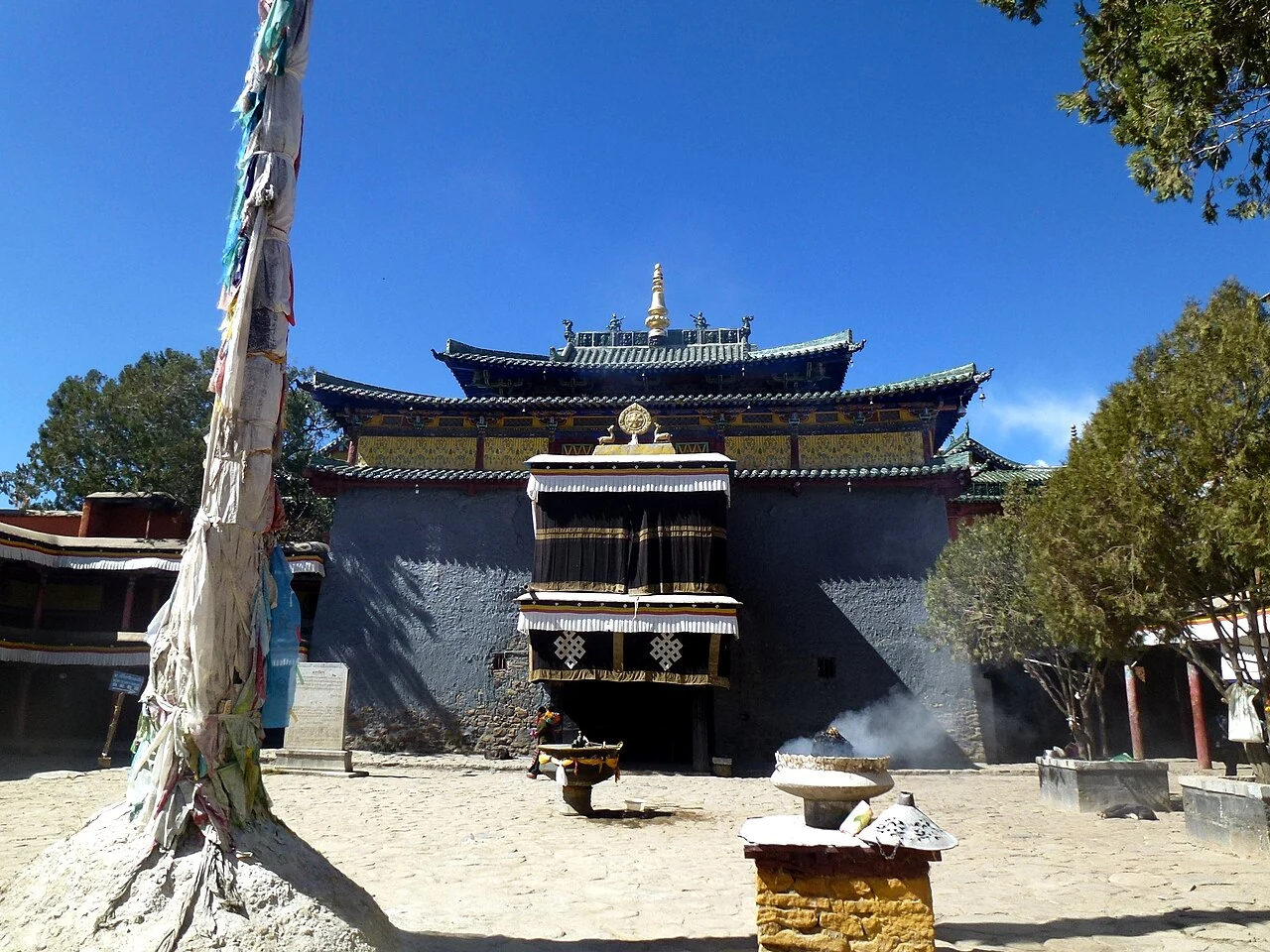
Shalu’s main complex faces west and has an overall plan compared in the Palace Museum account to a projecting Chinese character. Its central ground-floor assembly hall is surrounded by more than ten chapels. A three-storey eastern wing rises above the predominantly two-storey structure, placing the Prajnaparamita Chapel and other shrine rooms within a distinctive vertical profile. The architecture also combines Tibetan forms with elements associated with Chinese building practice, including bracket sets and glazed components. This layered plan helps explain why the murals are organized by room and passage: each painted cycle belongs to a particular devotional setting.
Digital images extend a close encounter
From 2009, the Palace Museum and Tibet heritage agencies worked with the Dunhuang Academy’s Digital Center to photograph the murals, join the images into continuous views and build virtual tours. By the 2012 project announcement, the three named areas had been recorded in this way. The photographs preserve broad sequences that a visitor sees while walking around a hall, while joined images let researchers examine visual relationships across a wall. The project placed digital documentation alongside physical care, giving Shalu’s mural cycles another form in which to be studied and shared.