In 2018, astronomers began a site search in Lenghu, then tested the mountain air rather than relying on maps alone. Their instruments measured the steadiness of the atmosphere, cloud cover and water vapour, all of which affect how sharply a telescope can see. Saishiteng Mountain rises to about 4,200 metres. At that height, the thinner air and reduced dust can limit some disturbances between telescope and star.
From the journal
Why the Telescopes Came to Lenghu
Three years of measurements on Saishiteng Mountain showed why an isolated desert ridge could serve an observatory.
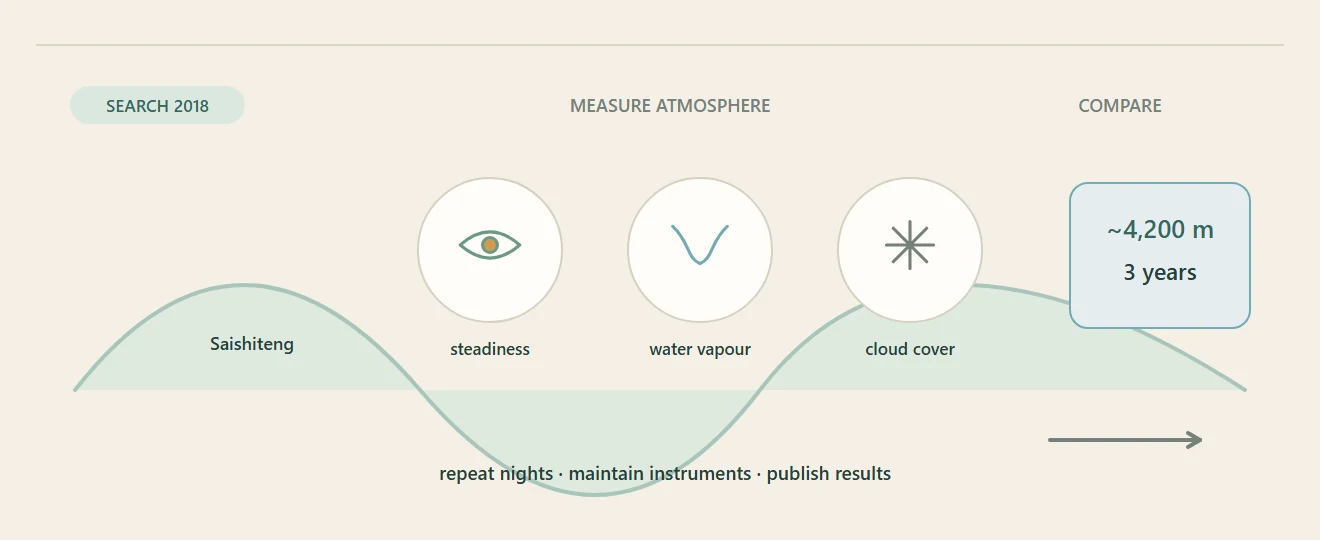
A search for clear, steady skies
From survey platform to observatory
A measurement platform gave researchers a way to compare nights across seasons. After three years, the team published results that placed the site among strong optical observing locations. The search was patient field science: instruments gathered data, researchers returned for maintenance, and readings travelled back to Beijing for analysis. The observatory’s story began with a question about night sky quality, answered through repeated measurements on a remote ridge.