From the journal

Who Keeps a Terrace Landscape Alive?

Dazhai’s experience reveals why conserving Longji requires viable farming, fair tourism benefits and continuing negotiation.

In the same city · Guilin ↗
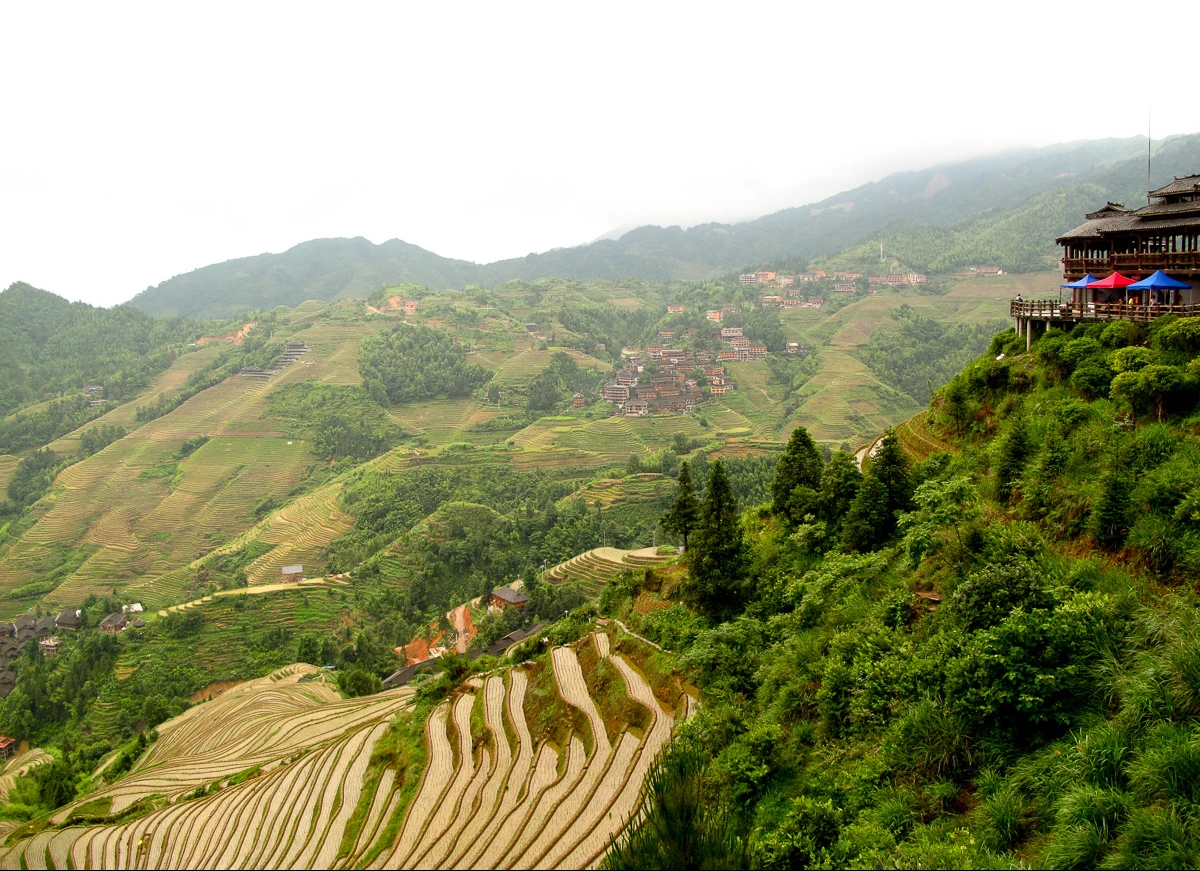
Rice terraces curve around a hillside beside a multi-storey visitor building.
Longji terraces beside visitor accommodation, illustrating the proximity of agriculture and tourism infrastructure. Source-reported photograph date: 2017-06-23.

The landscape has to be made again

A stone monument can sometimes be conserved by stabilizing its surviving fabric. An agricultural landscape has a different requirement: people must continue using it. Rice does not replant itself to preserve a view, and an irrigation edge does not repair itself because the surrounding hillside has heritage status. The attractive surface is the outcome of recurring work.

FAO recognized Longji within the southern Chinese rice-terrace GIAHS system in 2018. That designation concerns agricultural heritage, not an inscription on UNESCO’s World Heritage List. The subject includes knowledge, land use and livelihoods. Retaining a picturesque outline while removing the circumstances that make cultivation worthwhile would preserve only a small part of what is important here.

A stone footpath runs beside high terrace banks and young rice plants at Longji.
A path and retaining banks within Longji’s cultivated terraces, photographed on 23 June 2017.

Dazhai makes the economics visible

A 2019 conservation study identified several components of Dazhai household income: farming, compensation for maintaining terraces, tourism dividends and local non-farm work.

These activities supported cultivation through different channels. A household could grow rice while also working in accommodation or other services. Maintaining the shared landscape was connected with the broader economy around it.

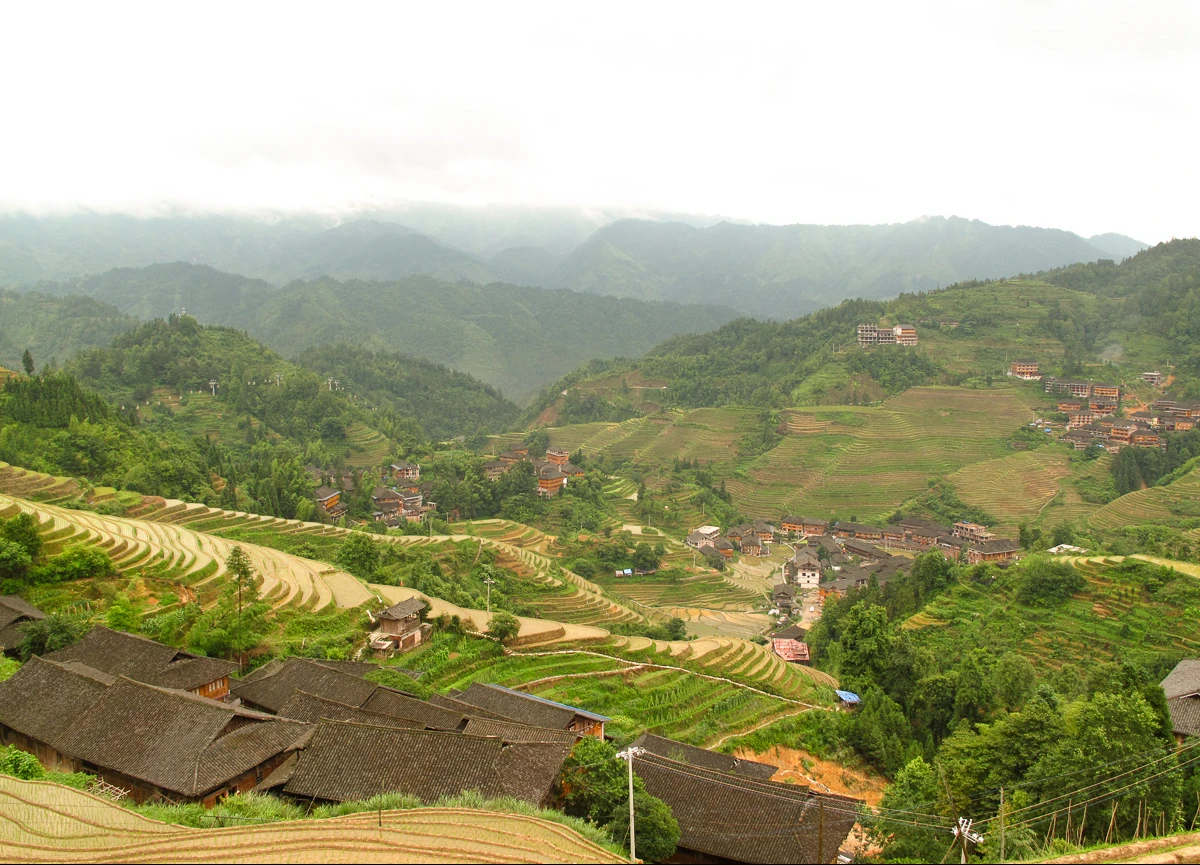
Village roofs fill the foreground beneath curving Longji rice terraces.
Village buildings and fields at Longji, photographed on 23 June 2017.

Revenue Sharing Requires Ongoing Arrangements

Guannan Zhu, Xiande Li and Yongxun Zhang’s 2021 Dazhai study combined interviews and historical information to examine tourism governance. It emphasized communication, changing benefit-distribution arrangements, local coordination and oversight. Higher income mattered, but so did the means by which households and organizations negotiated the relationship between tourism and cultivation.

The case shows that cooperation depends on arrangements that can respond as tourism, labor costs and opportunities change. Heritage conservation therefore involves local coordination alongside soil and water management.

Benefits and pressures extend beyond one viewpoint

A Guangxi natural-resources case study reported that nine villages participated in Longji tourism dividends in 2023. The figure extends the picture beyond a single village, while remaining a dated count of participating villages.

There are pressures on the agricultural side too. Research on changing cultivation timing has examined how demand for a prolonged golden season can influence farming decisions. A view that sells well may encourage preservation, but it can also encourage rearranging work for the visitor’s calendar.

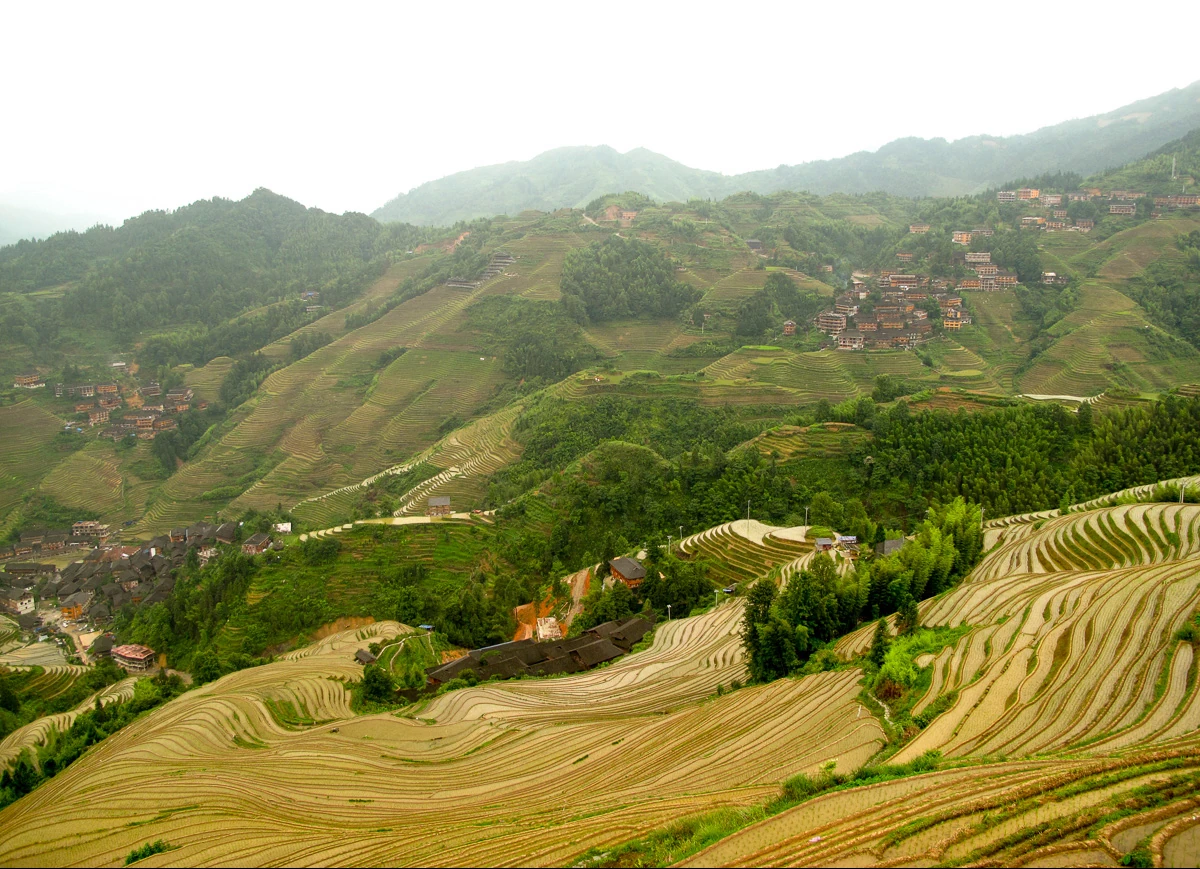
Layered rice terraces cover a Longji valley beneath scattered houses.
A broad view across Longji’s terraced agricultural landscape. Source-reported photograph date: 2017-06-23.

The shared view has a collective scale

Guangxi's natural-resources department reported that Dazhai's tourism distribution involved 282 households and 1,318 people in 2023. The scale brings many households into the relationship between the landscape and its visitor economy.

Cultivation, meals and accommodation can contribute to these household livelihoods. Sharing benefits gives the upkeep of a collective landscape an economic arrangement extending beyond a single business or one especially visible plot.

Continue exploring · Longji Rice Terraces ↗
Photo credits and rights
  1. Longji terraces beside visitor accommodation, illustrating the proximity of agriculture and tourism infrastructure. Source-reported photograph date: 2017-06-23.Rutger van der Maar · CC BY 2.0 Photo source ↗ Rights information ↗ Resized and converted to WebP; full composition retained.
  2. A path and retaining banks within Longji’s cultivated terraces, photographed on 23 June 2017.Rutger van der Maar · CC BY 2.0 Photo source ↗ Rights information ↗ Resized and converted to WebP; full composition retained.
  3. Village buildings and fields at Longji, photographed on 23 June 2017.Rutger van der Maar · CC BY 2.0 Photo source ↗ Rights information ↗ Resized and converted to WebP; full composition retained.
  4. A broad view across Longji’s terraced agricultural landscape. Source-reported photograph date: 2017-06-23.Rutger van der Maar · CC BY 2.0 Photo source ↗ Rights information ↗ Resized and converted to WebP; full composition retained.