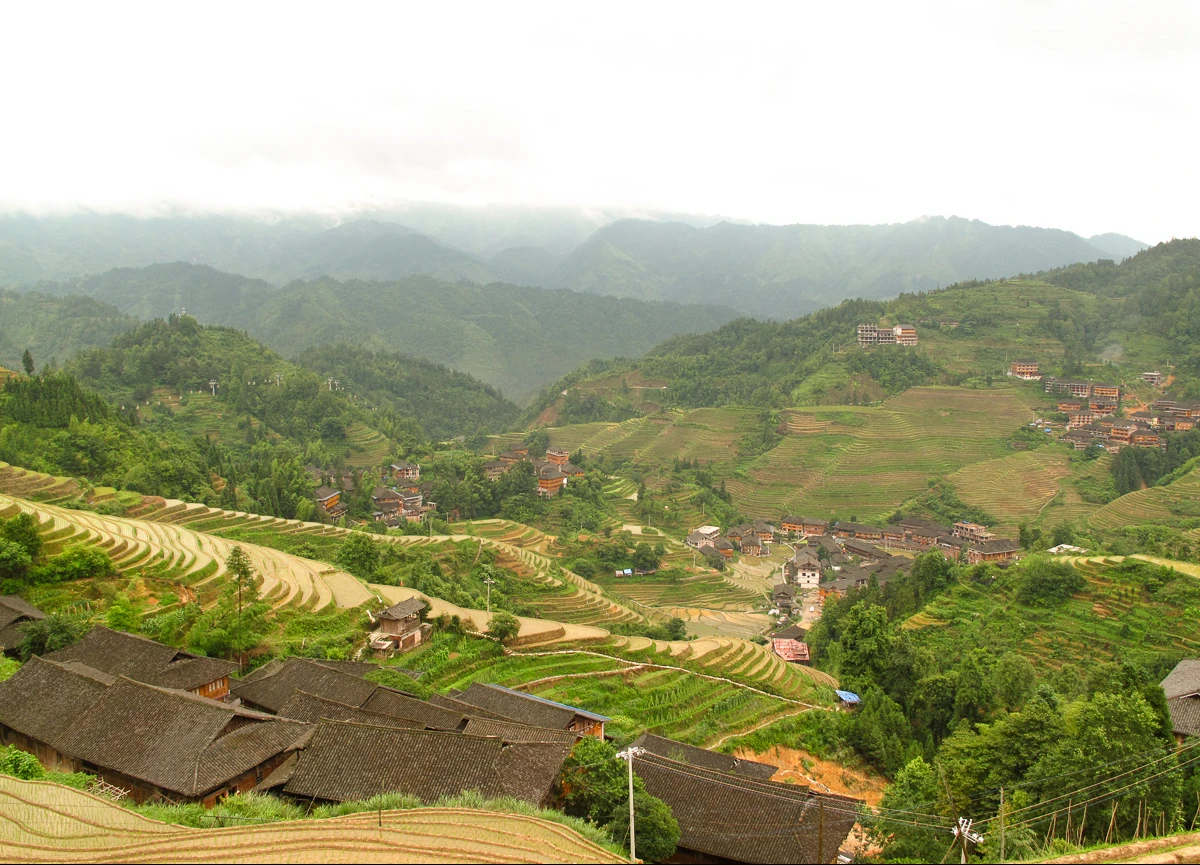
Longji’s reflective water, green rice and golden grain mark different stages of agricultural work. FAO’s account of rice-terrace heritage places seed selection, seedling cultivation, soil preparation, transplanting, management and harvest within one continuous cycle. Weather, elevation, rice variety and water decisions affect when those stages appear, so nearby fields may change at different times.
From the journal
What the Terraces Are Doing Through the Year
Longji’s seasonal surfaces reflect the farming cycle, from wet soil and young plants to grain, harvest and field maintenance.
In the same city · Guilin ↗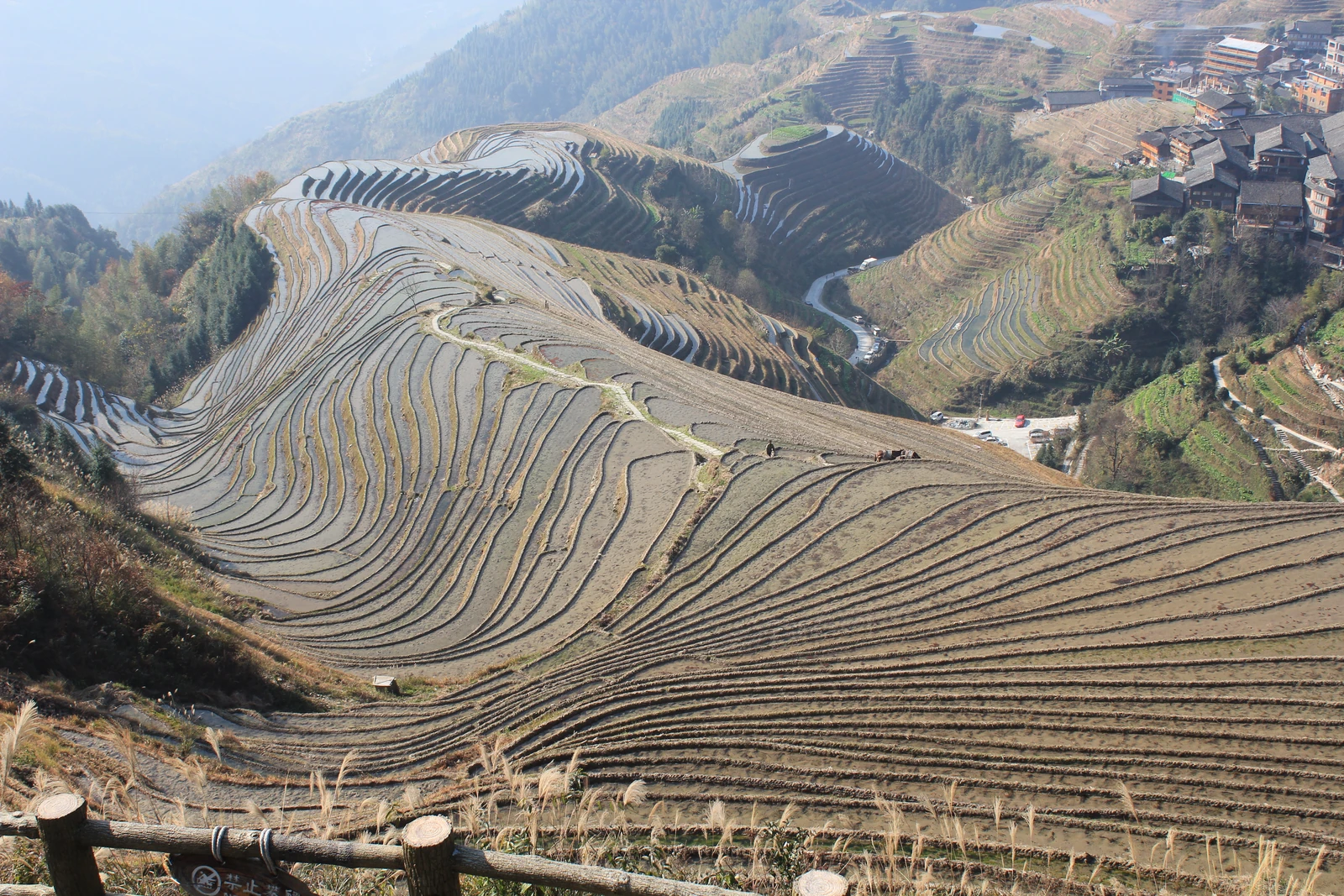
A Crop Cycle Across the Seasons
Water makes a field ready for planting
General FAO guidance on paddy cultivation distinguishes a seedling nursery from the larger field into which young plants may be transplanted. Preparing the main field includes working and leveling the wet soil. A flooded surface can indicate soil preparation before transplanting.
The Longji heritage dossier records paired manual ploughing as a local technique suited to difficult terrain and small plots. The narrow cultivated strips and their edges reflect practical limits on a steep slope, where modern equipment and inherited knowledge can coexist.
A green hillside contains many decisions
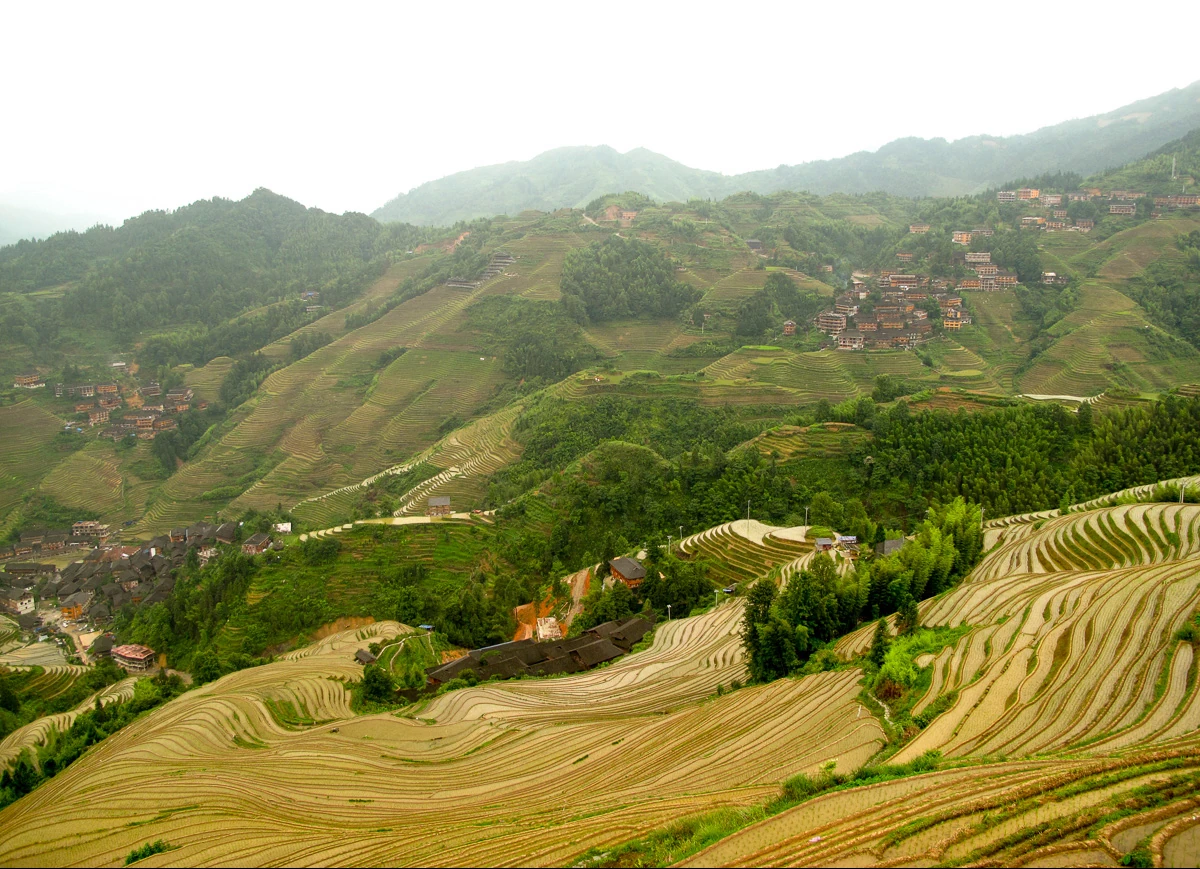
As plants develop, their leaves increasingly conceal water and soil. Open, recently planted fields gradually become a more continuous canopy, shifting the terraces from reflective surfaces to green slopes.
A 2025 report quoted Dazhai’s village leader on coordinated seed purchasing since 2022, with attention to drought and wind resistance, growth period and yield. These choices show how farmers select varieties in response to local conditions. The arrangement gives Dazhai’s crop cycle a history of collective decisions.

Golden fields have an agricultural deadline
Reporting on Dazhai describes cutting followed by threshing, drying and storing grain. The golden field gives way to the handling of the food produced through months of cultivation.
A 2025 study in Geographical Sciences examined how tourism incentives can affect agricultural timing, including pressure to prolong a golden display or stagger cultivation between communities. Farm work and the visitor season meet in decisions about the crop calendar.
The field after harvest
After harvest, exposed edges, stubble and water-management features reveal the shape of a plot and how cultivated strips follow the slope and access paths. Conditions differ between Ping’an, Dazhai and other areas; “Longji” therefore does not correspond to one crop calendar.