The Ma Tau Kok Animal Quarantine Depot was built in 1908 for the inspection and handling of cattle entering Hong Kong. Its purpose was practical and tightly managed: animals arriving in the city needed to be checked and kept apart before they entered wider circulation. The compound’s sheds, pens and service spaces formed a workplace whose routine linked public health, food supply and the movement of livestock.
From the journal
From Quarantine Pens to an Arts Village
The former Ma Tau Kok animal quarantine depot moved from slaughter and inspection work to studios, exhibitions and a public arts park.
In this district · Kowloon City ↗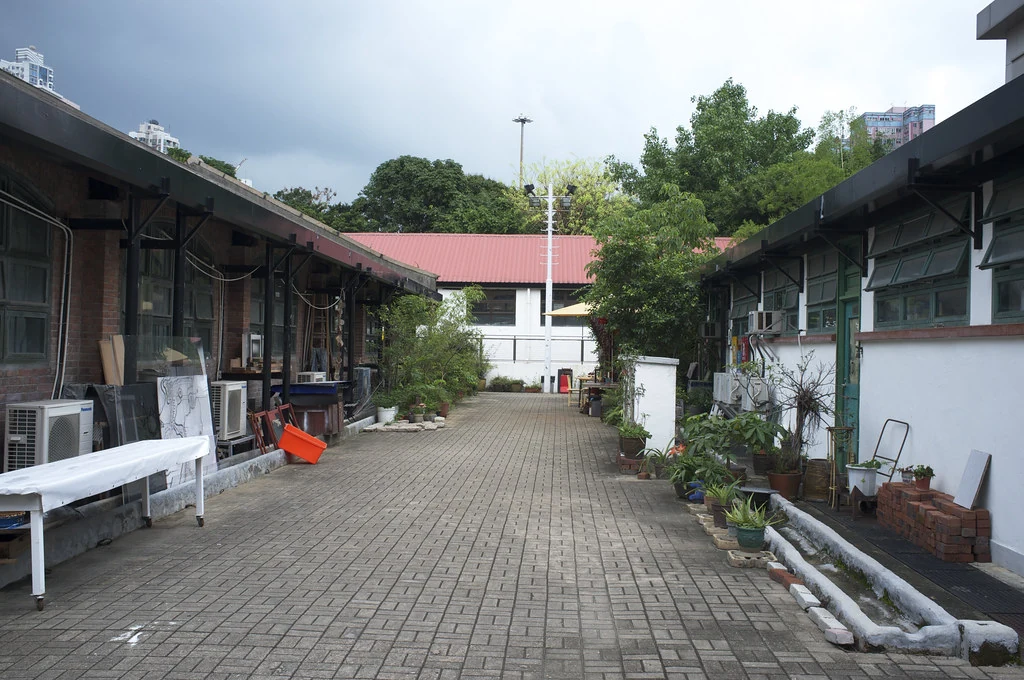
A working depot opens
A century of changing use
Slaughterhouse and quarantine functions continued until the middle of 1999. By then, the city around the depot had changed, and the former working compound faced a new question: what could its buildings become once their original role ended? The sturdy low-rise structures and enclosed yards could accommodate activities that needed flexible rooms and outdoor gathering space. Their industrial character gave the site a strong identity of its own.
A place for making art
The front part of the depot was converted into an arts village in 2001. Artists and cultural groups began using former work spaces as studios, exhibition rooms and places for events. The conversion changed the daily rhythm of the compound: animal handling and inspection gave way to creative work and public visits. Retaining the old buildings allows their working scale and layout to remain present inside a new cultural use.
From compound to public park
The courtyards make that transition visible: spaces once organized around animal handling now support public cultural use.