From the journal

Xiapu Photography: A Landscape That Changes with the Tide

Understand Xiapu’s tidal-flat photographs through water level, reflective mud, aquaculture structures and the difference between a view and a working coast.

In the same city · Ningde ↗

The sea is only part of the picture

A Xiapu tidal-flat photograph can contain surprisingly little open sea. Wet mud may carry the light, while channels, poles and narrow strips of water arrange the image. As the tide changes, the proportions change with it. A broad reflective surface can become a network of exposed ground and channels, then disappear beneath water again.

Xiapu is a county within Ningde, not a single beach with one dependable appearance. Its coastal villages face different bays and stretches of shore. Beiqi, Huazhu and Dongbi appear in provincial tourism planning as photography locations, but their names refer to places within a varied coast. Understanding that variety is more useful than imagining one perfect scene waiting unchanged for every visitor.

Light and water keep different time

Tides are long-period movements of ocean water driven principally by the gravitational effects of the Moon and Sun. At the shore they appear as a rise and fall of water level. Daylight follows another rhythm. Sunrise can return at roughly the expected hour while the tidal state at that hour has shifted.

That difference explains why repeating a viewpoint does not repeat a photograph. Low light passing across wet ground emphasises shallow ridges and channels; a higher water level can simplify the same composition. Cloud, haze and wind add further changes. A photograph is an encounter between these conditions rather than evidence that the location always looks that way. No general description of Xiapu can substitute for the conditions of a particular morning.

Three people carry green nets across reflective tidal flats while white birds fly overhead.
Evening reflections on a tidal shore in a feature about Dongbi, Xiapu.

The poles have a purpose

The dark verticals and repeating lines in many coastal pictures belong partly to aquaculture. A documentary photograph made at Beiqi in October 2018, for example, identifies a worker maintaining supports used in laver cultivation. The geometry is a trace of production, not merely an arrangement invented for the camera.

That context makes a picture richer. The isolated figure gives a sense of scale, but the person is also maintaining something that must continue functioning after the photographer leaves. A caption should distinguish such documented work from an arranged demonstration or posed scene. Both can be photographed, but they tell different stories. Nets, clothing or a picturesque gesture alone cannot establish which kind of scene has been recorded.

A coast beyond the frame

Xiapu’s photographic reputation has its own history. In 2018 the county museum hosted a major coastal photography exhibition organised with the provincial fisheries bureau and China Photography News. The collaboration is revealing: pictures of the sea and the economy of the sea were being presented together.

A good image can make the landscape look almost abstract, yet a wider view restores its connections. Villages need landing places, aquaculture needs service access, and the exposed shore changes as water returns. Viewing from authorised land or established platforms respects those uses and avoids treating a tidal flat as an ordinary walking surface. The lasting interest of Xiapu lies in this double vision. It offers patterns beautiful enough to stand alone, and a working environment whose meaning becomes clearer when the photograph is allowed to lead beyond itself.

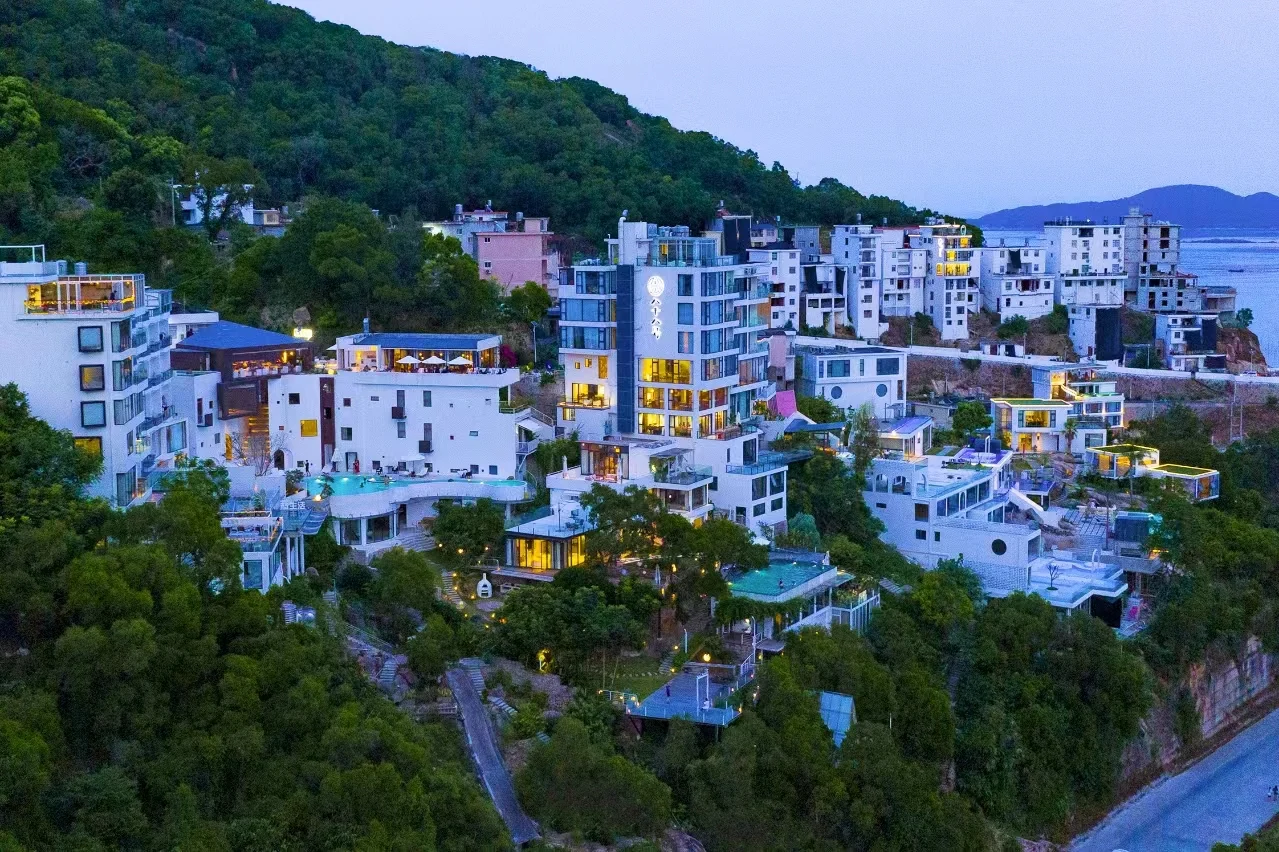
White waterfront buildings and terraces cluster below a wooded slope beside the sea at dusk.
Coastal buildings in Dongbi village, Xiapu.
Continue exploring · Xiapu County ↗
Photo credits and rights
  1. Evening reflections on a tidal shore in a feature about Dongbi, Xiapu.福建省农业农村厅 · Rights status unspecified Photo source ↗ Original aspect ratio retained. Display copies resized only when needed; no enlargement, crop or retouching.
  2. Coastal buildings in Dongbi village, Xiapu.福建省农业农村厅 · Rights status unspecified Photo source ↗ Original aspect ratio retained. Display copies resized only when needed; no enlargement, crop or retouching.