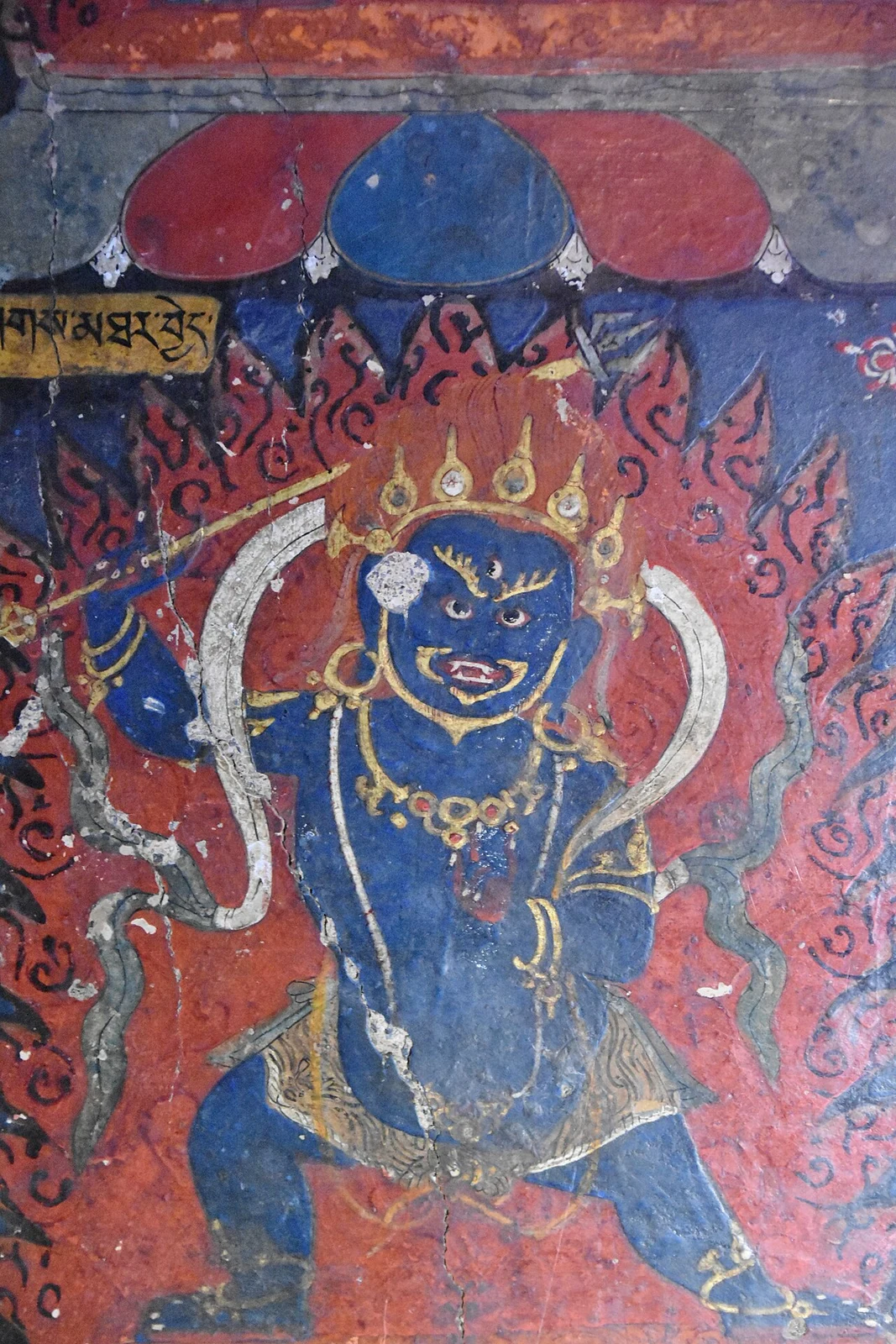
From outside, the Kumbum reads as a single, stepped monument within Pelkor Chöde. Shengnan Dong’s study for the Rubin Museum of Himalayan Art describes something more intricate inside: seventy-three chapels distributed across eight stories. A visitor moving through the building encounters not one shrine repeated, but a carefully ordered series of sacred rooms. The name Kumbum is often rendered as “a hundred thousand images”; the building’s actual count of chapels is smaller, yet the phrase points toward its ambition to make sacred imagery feel abundant and encompassing. Dong notes that the chapels are not interchangeable containers. Together they form an ordered iconographic program associated with tantric Buddhist knowledge. A careful reader therefore has two scales to keep in view: the whole tower, which gives the complex a recognizable silhouette, and each chapel, where a distinct set of images occupies its own space. The architecture makes those scales meet.
From the journal
The Kumbum as a World of Many Rooms
At Gyantse’s Pelkor Chöde, the Kumbum turns a stupa into an eight-storey sequence of chapels, painted programs and paths for circumambulation.
In the same city · Shigatse ↗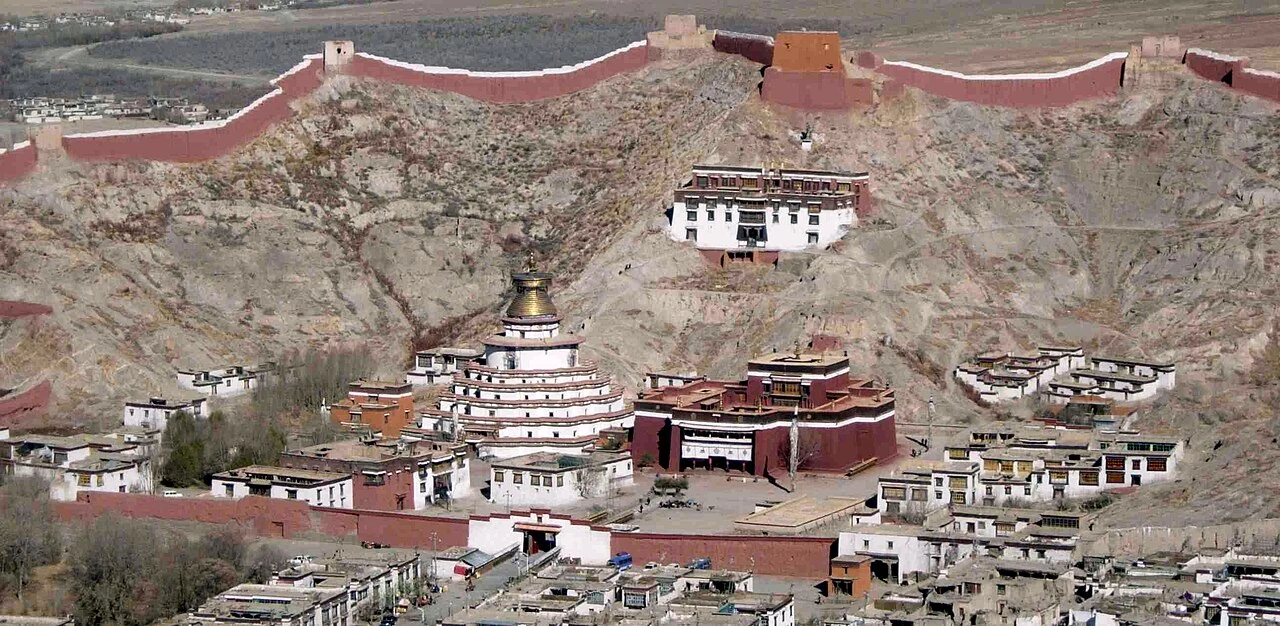
A tower that opens into rooms
A route of circling
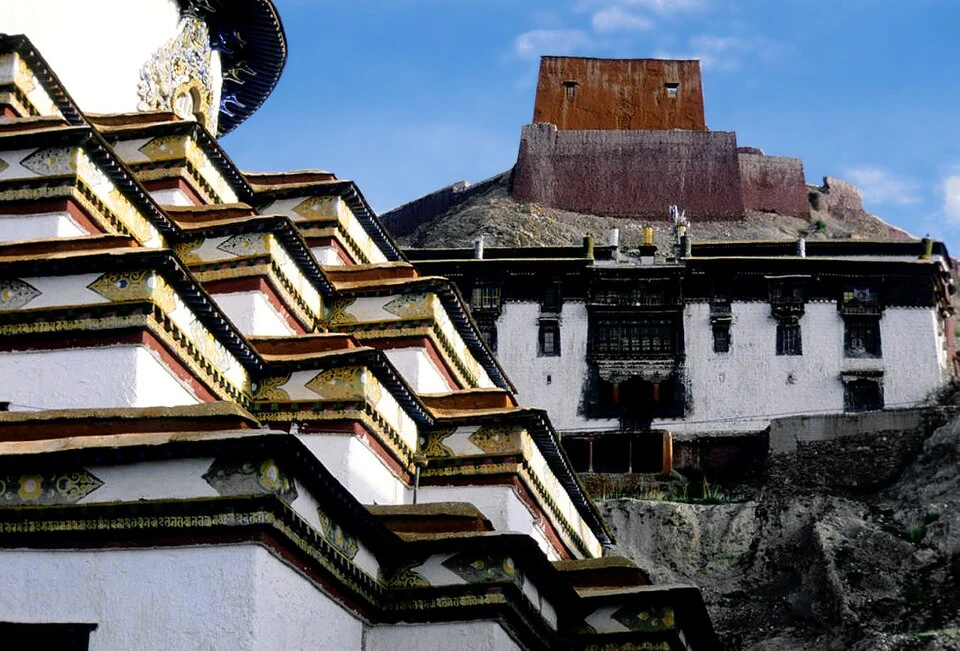
The Kumbum’s architecture guides movement as well as sight. Its four-tiered terrace is laid out on a twenty-corner plan, with doors opening into chapels along the outer route. Higher up, a circular stupa form and internal passages connect the monument’s levels. Circumambulation—walking clockwise around a sacred object or building—is thus folded into the structure itself. Each turn offers another threshold and another painted interior, making the climb a sequence of encounters rather than a direct ascent to a single viewpoint. On the lower levels, visitors encounter a progression of doorways around the terraced exterior; farther up, the internal route changes the relationship between enclosure and open air. The essay describes an upper circular stupa component with four principal temples and an internal two-storey passage in the harmika. These shifts matter because “climbing the Kumbum” is not one uninterrupted stair. The monument alternates terraces, chapel thresholds and enclosed circulation, turning movement into a way of reading its spatial plan.
A building made by many hands
The rooms also preserve evidence of the people who made them. Inscriptions recorded in different chapels name at least thirty-nine painters from the Tsang region. The study describes artists working in teams, with experienced masters joined by students. It identifies Rabten Kunzang, the prince of Gyantse, as the principal donor and the abbot Rinchen Peldrub as the project’s overseer. Those names turn a vast religious program into a local undertaking: patronage, monastic authority and workshop practice met inside one architectural commission. Looking at the Kumbum as a collection of rooms therefore reveals not only images, but a network of makers and sponsors. The study also notes a formal dialogue in the building’s design: painted eyes associated with Nepalese stupa traditions appear alongside Chinese-style bracket sets. That combination belongs to the Kumbum’s built form, not to a vague claim that every detail is a blend. It is a specific architectural choice within a monument sponsored and staffed in Gyantse. The inscriptions preserve the names of painters who might otherwise disappear behind the scale of the commission; read closely, they show that this “world of many rooms” was also a world of workshops.