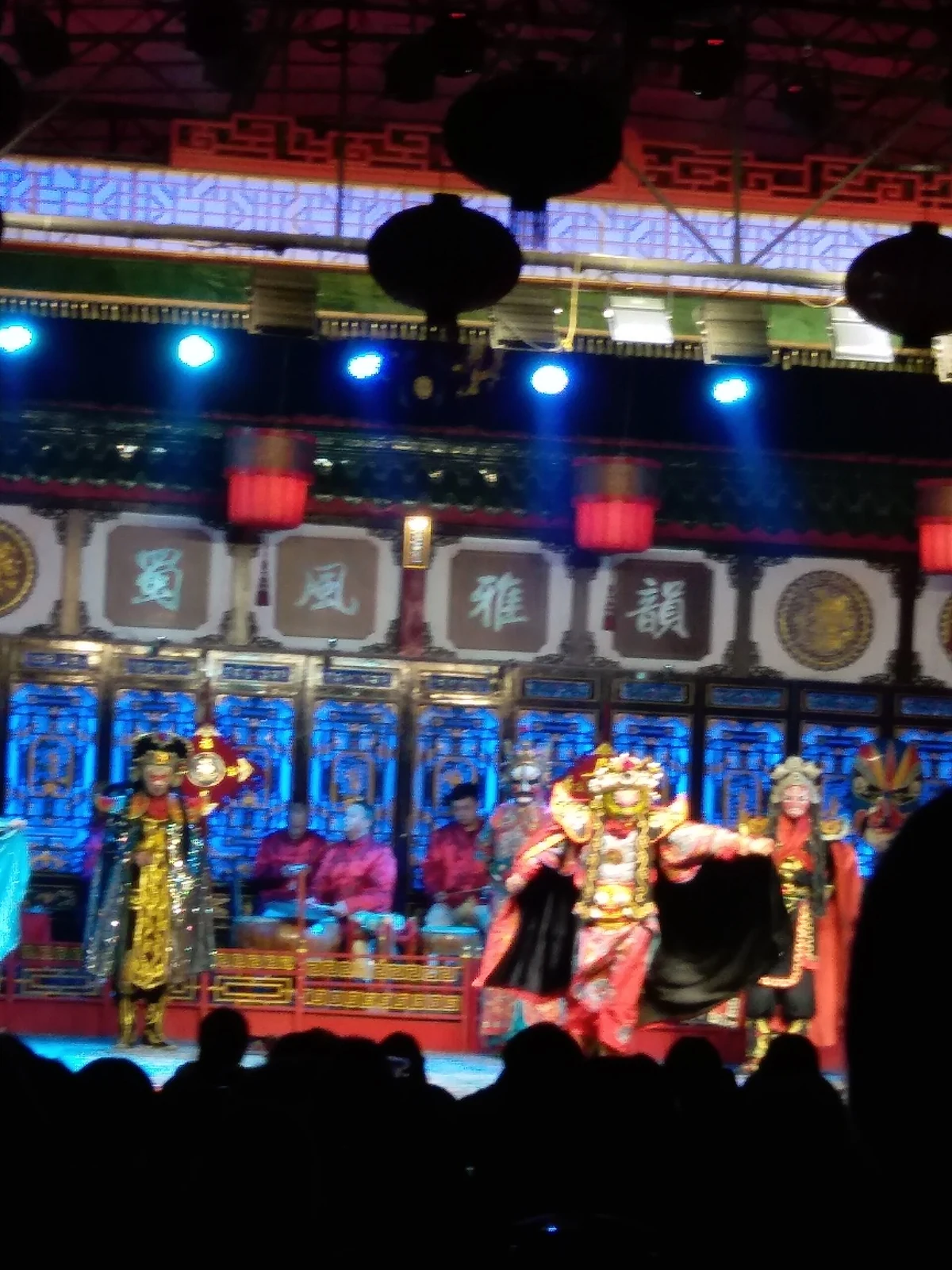
Five styles in one form
Sichuan opera is a late composite. High-pitched gaoqiang, huqin, tanxi, kunqu and the local dengdiao lantern style came from different places and different periods. By the early twentieth century they were performed on the same stage, and the combination became known as the five styles in one. The repertoire is usually described as more than six thousand traditional and newly written plays. The five roles are young man, woman, older man, painted face and clown, each with its own movement and voice.
One technique among many
Face-changing is quick and visual, which is why it travels so well in short videos. It is also only one of the form's techniques, alongside hidden knives, fire hoops and the opening of the painted eye. A former director of the Sichuan Opera Theatre warned that treating face-changing as a synonym for the whole opera misleads audiences and can hurt the art. The method is partly guarded, not because the trick is magic, but because it has been copied and sold by people with no interest in the theatre.
The room is part of it
A Sichuan opera evening often happens in a small theatre with tea tables, not a silent auditorium. The gong and drum sit at the side; the audience talks, drinks and watches. A sleeve, a turn and a change of face can carry a scene without scenery. The form's humour is local and verbal, which is why surtitles help. Go for the movement first, then stay for the song: the high-pitched voice is the part that most rewards a longer listen.