From the journal

When Sanjiang’s Building Craft Travels

Named builders, hybrid bridges and new commissions show how timber knowledge can move beyond a village without losing its practitioners.

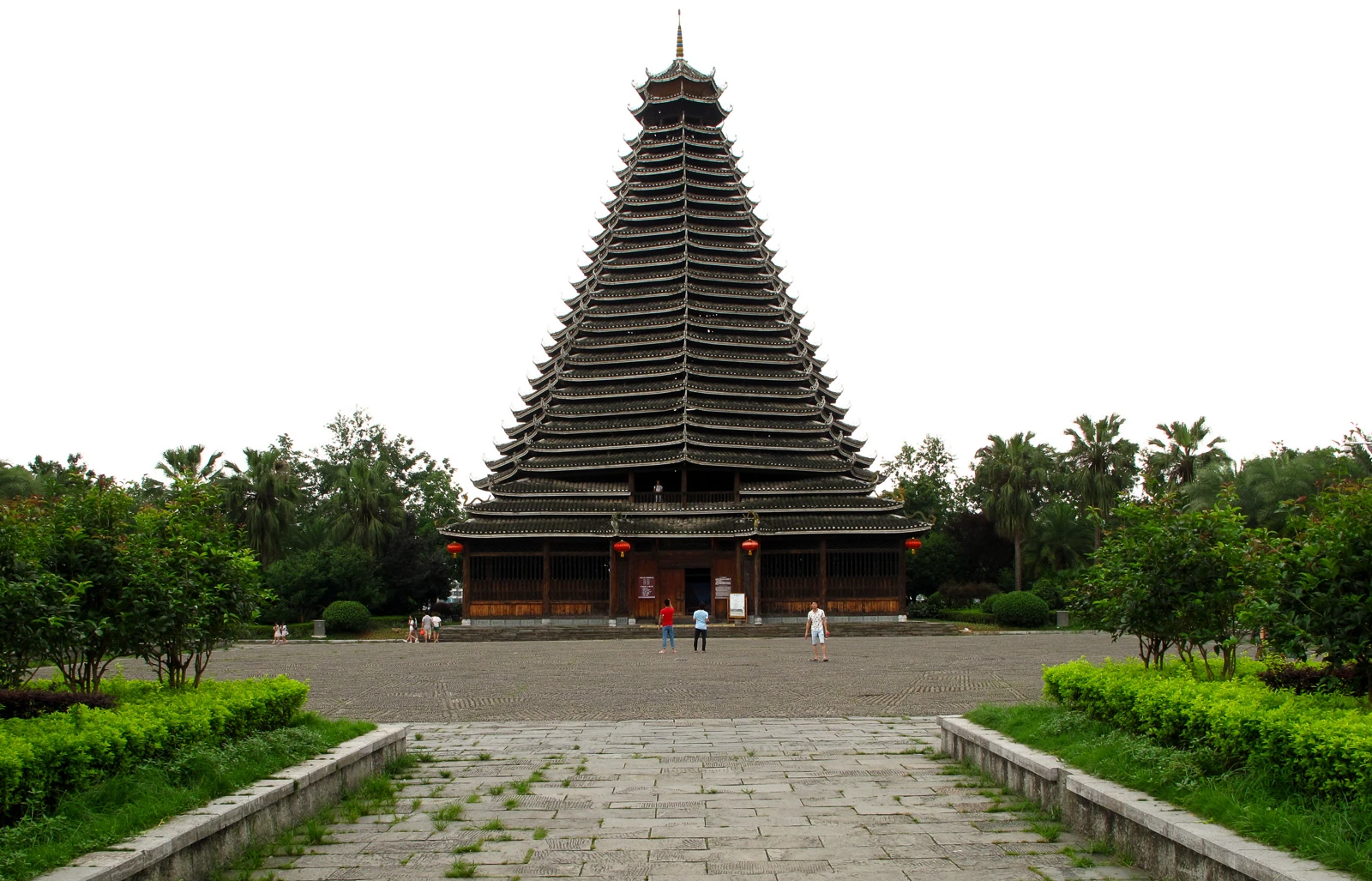
A tall, many-tiered drum tower rises above a paved square in Sanjiang.
The modern drum tower in Sanjiang’s county town, in an undated photograph.

Builders carry their knowledge to new places

A tradition associated with a place can travel with its practitioners. Researcher Liu Mengying records that, after work repairing Chengyang Yongji Bridge, Yang Shanren and fellow master builders went to Nanning in 1986 to construct the Guangxi Museum's ethnic-relics garden project. Conservation work in Sanjiang led to a new commission in the regional capital.

The destination was Guangxi Museum, a separate institution from the Guangxi Museum of Nationalities. Behind the architectural forms were builders taking their knowledge to another setting, with a different audience and purpose. The public presentation of the craft became another chapter in its working history.
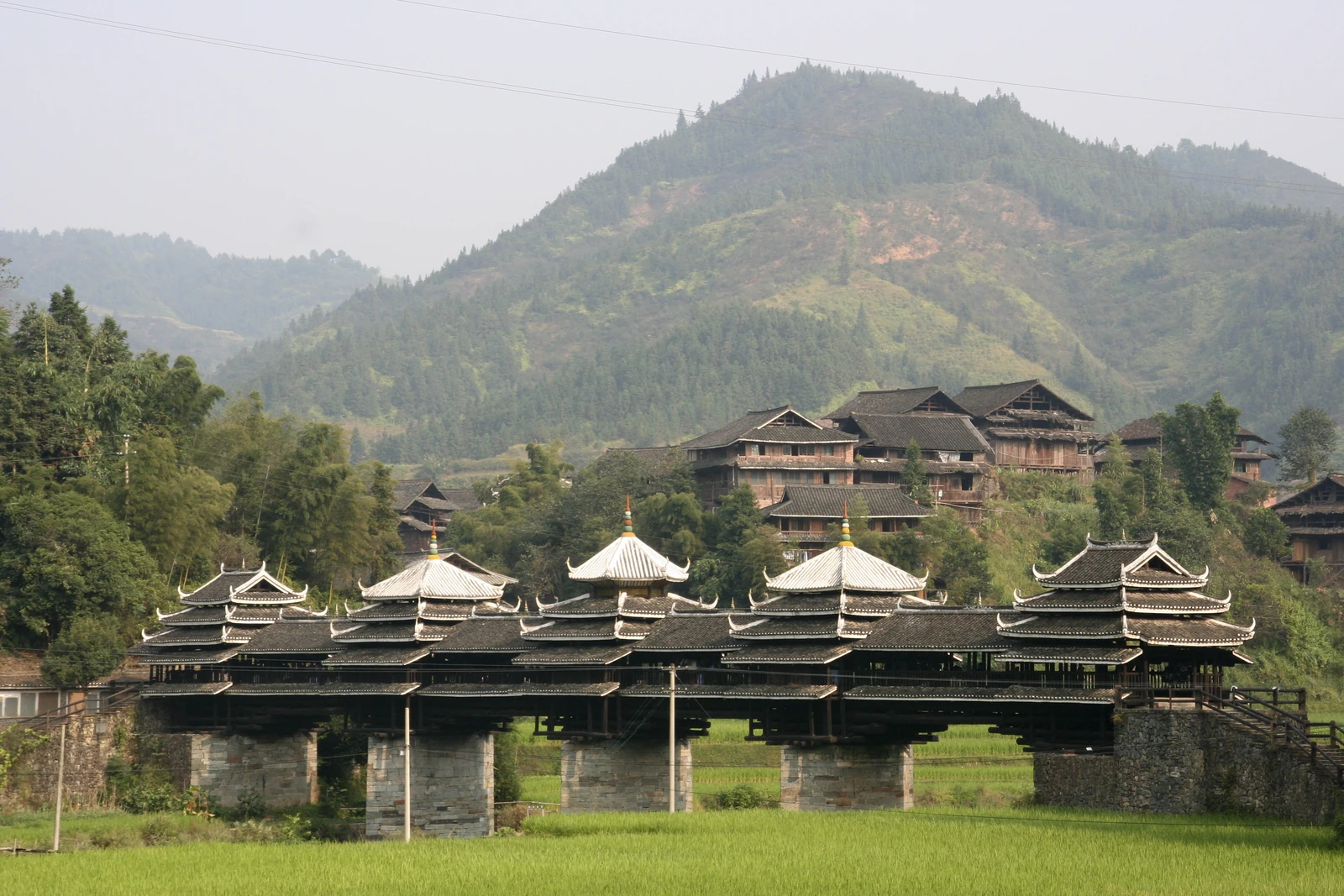
Chengyang’s covered bridge stretches across fields below village houses and a wooded hillside.
Chengyang Yongji wind-and-rain bridge, Sanjiang, in a photograph dated 23 September 2006.

A new setting changes a building's purpose

A bridge repaired within an inhabited landscape sustains an existing crossing. A building commissioned for a museum project presents architecture in a new setting. Related skills serve different surroundings: daily movement in one case, interpretation and display in another.

A familiar roof outside a village can therefore belong to a newly commissioned work. Shelter, education and civic identity give architecture new roles as it moves. Its continuity lies partly in the people able to design and build it, as well as in the forms they use.

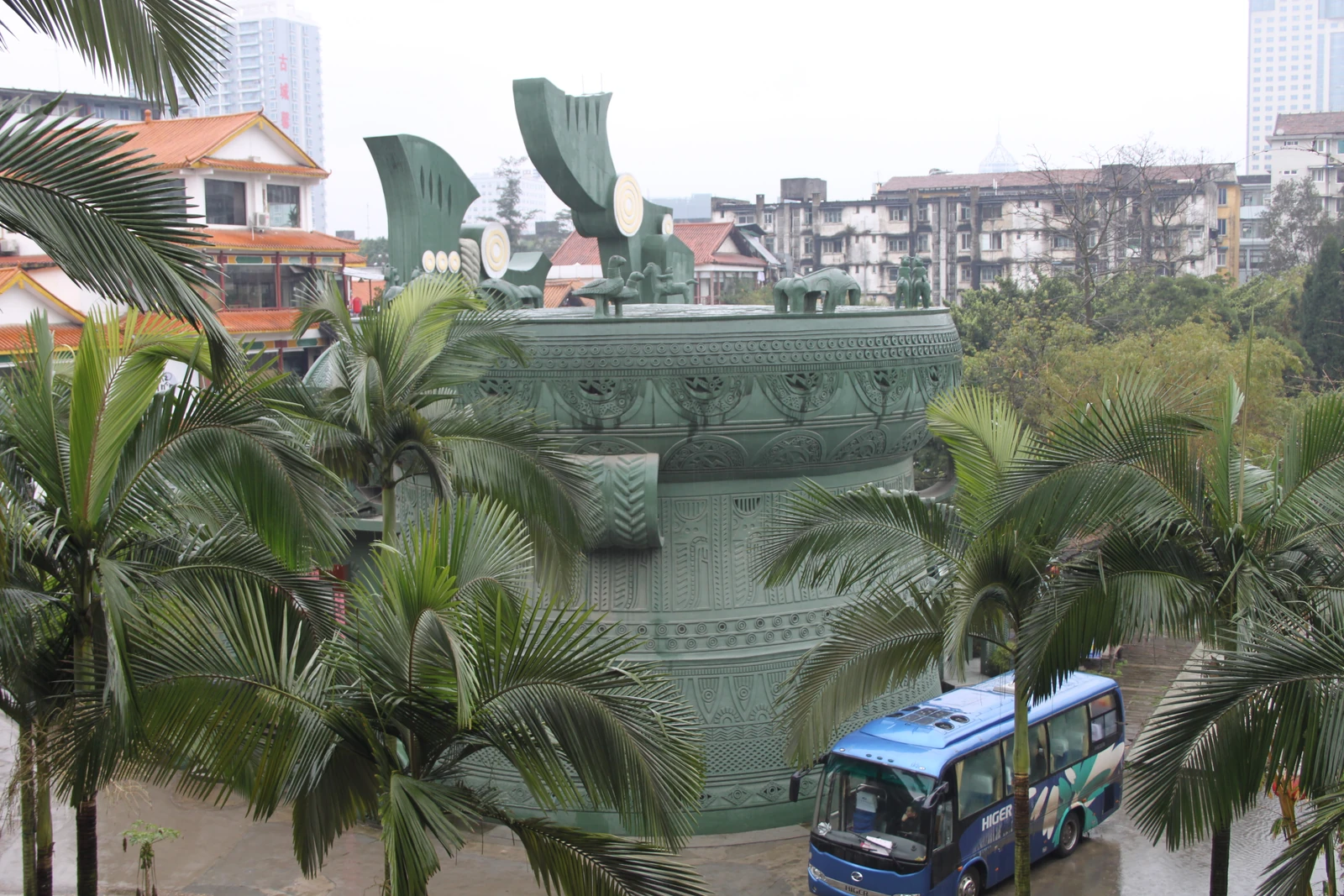
A giant drum-shaped outdoor structure stands among palms at a museum display in Nanning.
A modern drum-shaped outdoor interpretation at Guangxi Museum in Nanning, photographed on 17 March 2011.

Timber roofs above modern engineering

Guangxi heritage institutions' 2021 exhibition on innovation describes modern wind-and-rain bridges combining reinforced-concrete engineering with timber pavilions and covered passages. Its Sanjiang urban-bridge example makes the combination explicit: the span and the sheltered upper structure use different materials for different tasks.

The concrete carries the crossing; the timber structures provide covered space and a visible landmark. Alongside Chengyang Yongji Bridge, the modern work shows another way of bringing engineering and architecture together. The roof is one part of a much larger structure.

Studying an earlier form can produce a new building

The same exhibition identifies Pingzhai's single-column drum tower as a work in which Yang Qiushi studied earlier tower structures and incorporated new design. It also documents craft entering urban parks and an educational setting at Liuzhou City Vocational College.

The age of a building and the age of its craft knowledge can differ. A newly completed structure can embody years of learned skill, while an older one may depend on newly made elements for repair. Practitioners investigate earlier forms, accept commissions and make choices within changing circumstances. Models and construction drawings help that knowledge move from one work to the next.

Names make adaptation visible

Yang Shanren's journey to Nanning and Yang Qiushi's work on a new drum tower give this movement individual names. The 2021 exhibition's photographs of builders using models and structural drawings show expertise being organised and communicated. Sanjiang's timber tradition continues through careers, commissions and design decisions, as well as through the buildings that remain in its villages.

Continue exploring · Liuzhou ↗
Photo credits and rights
  1. The modern drum tower in Sanjiang’s county town. This urban landmark is distinct from the older village towers discussed in the articles. Photograph date unconfirmed.Rutger van der Maar · CC BY 2.0 Photo source ↗ Rights information ↗ Resized and converted to WebP; full composition retained.
  2. Chengyang Yongji wind-and-rain bridge, Sanjiang, in a photograph dated 23 September 2006.Anja Disseldorp · CC BY 2.0 Photo source ↗ Rights information ↗ Resized and converted to WebP; full composition retained.
  3. A modern drum-shaped outdoor interpretation at Guangxi Museum in Nanning, photographed on 17 March 2011.Gary Todd · CC0 1.0 Photo source ↗ Rights information ↗ Resized and converted to WebP; full composition retained.