From the journal

Chengyang Yongji Bridge: Timber Pavilions Above the Water

Chengyang Yongji Bridge joins a river crossing to a sheltered passage and five timber pavilions in Sanjiang.

In the same city · Liuzhou ↗
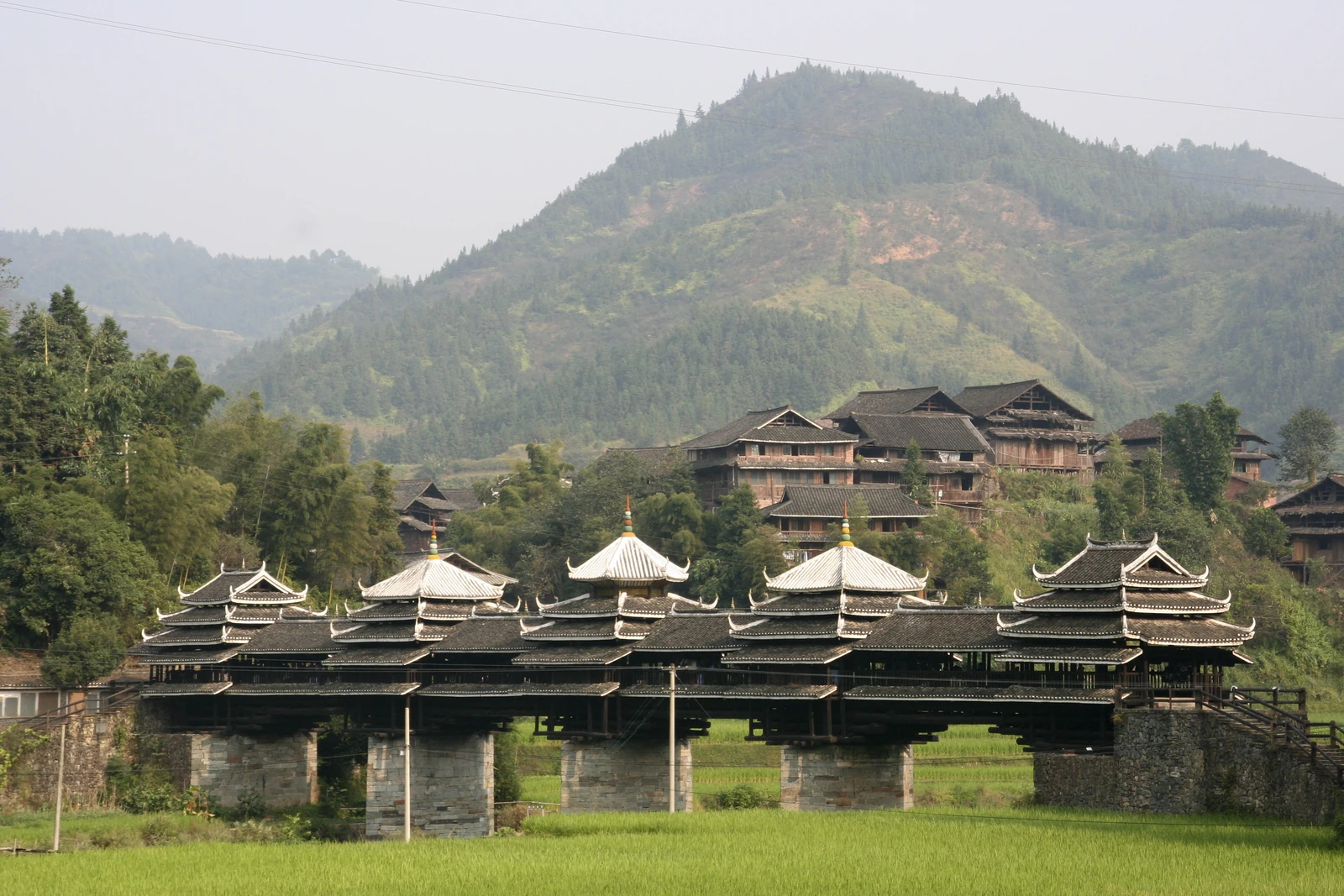
Chengyang’s covered bridge stretches across fields below village houses and a wooded hillside.
Chengyang Yongji wind-and-rain bridge, Sanjiang, in a photograph dated 23 September 2006.

A passage between two banks

Chengyang Yongji Bridge turns a line between two banks into an architectural space. Water passes below, a route crosses it, and a covered corridor with pavilions provides shelter above. Together, these elements make the bridge more than a means of reaching the opposite bank.

Chengyang is in Sanjiang Dong Autonomous County, within Liuzhou's wider jurisdiction. Yongji Bridge is distinct from Liuzhou’s central-city waterfront and from other covered bridges in the county. Its name matters in a region where bridge building and rebuilding remain part of local architectural practice.
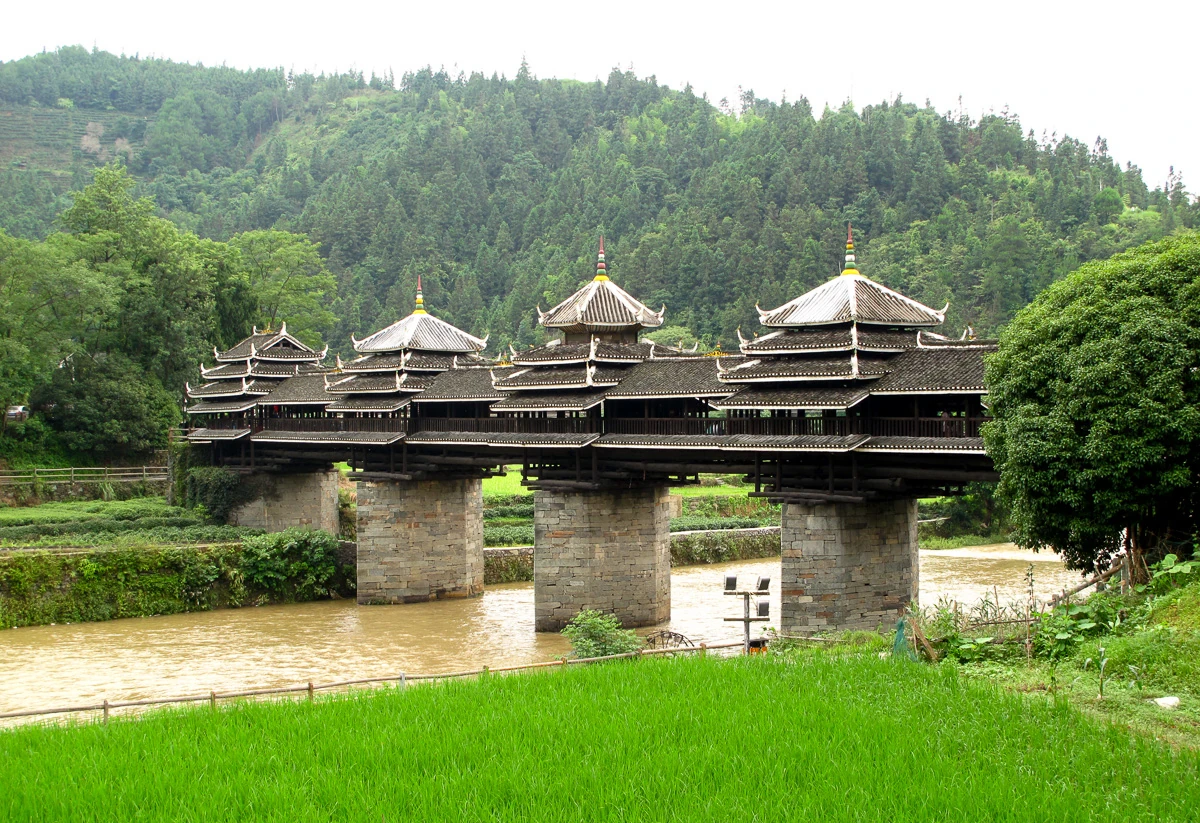
Chengyang Yongji Bridge crosses a muddy river beside green fields and village buildings.
Chengyang Yongji wind-and-rain bridge viewed from the riverbank, Sanjiang. Source-reported photograph date: 2017-06-24.

A roofline with several centres

A 2023 account in Guangxi Nationalities News describes five bridge pavilions linked by covered bays. The long, relatively low connections are interrupted by taller roof forms, creating several centres along a continuous crossing. From the side the bridge has rhythm; along its length it becomes a sequence of spaces.

A broad photograph clarifies the composition but compresses the passage into a thin band. An interior view reveals support spacing while hiding the silhouette. Together, they show how the bridge makes places along the distance it crosses.

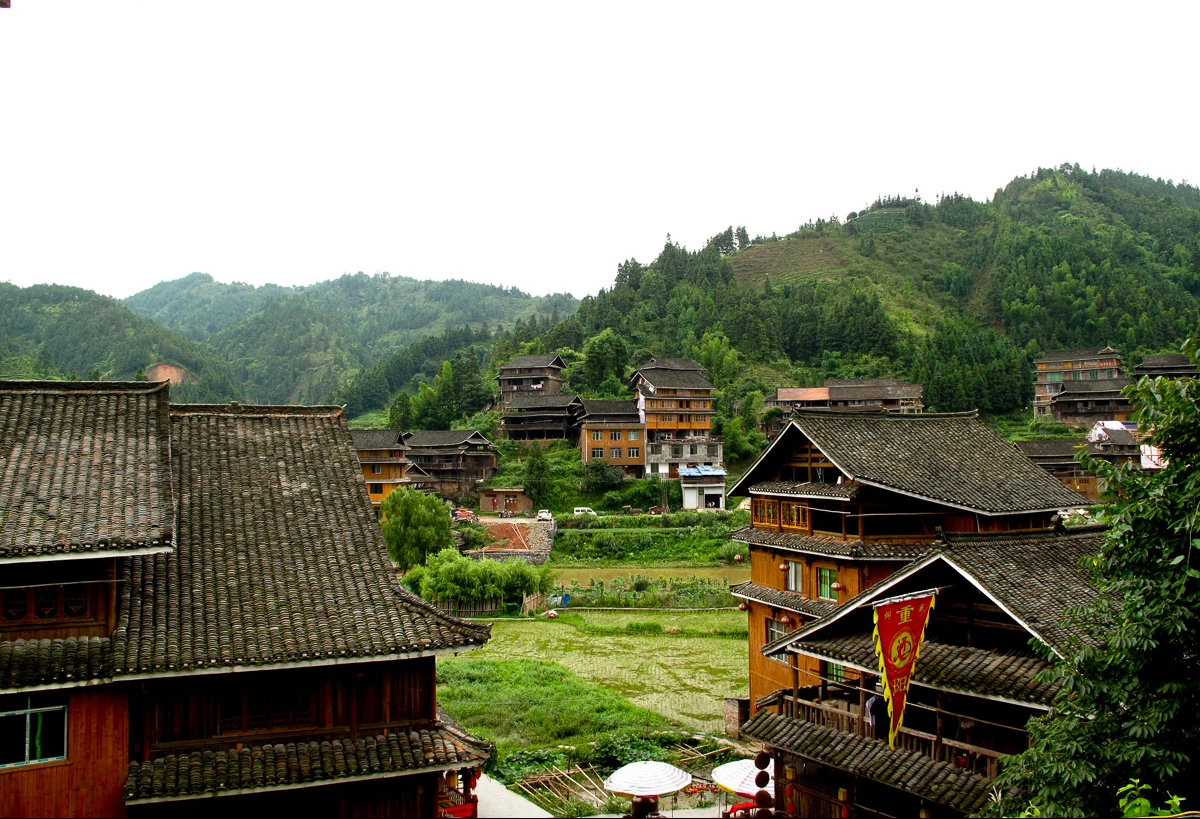
Timber village houses cluster beside cultivated fields in Chengyang.
Chengyang’s houses and fields, Sanjiang. The view places its landmark buildings within a lived-in agricultural settlement. Source-reported photograph date: 2017-06-24.

Shelter changes the meaning of a crossing

The same regional account explains wind-and-rain bridges as places for resting and conversation as well as movement. That functional combination is more revealing than treating the roof as decoration. A covered crossing can accommodate a pause; a bare line of movement is given an interior edge. The name describes a practical architectural ambition.

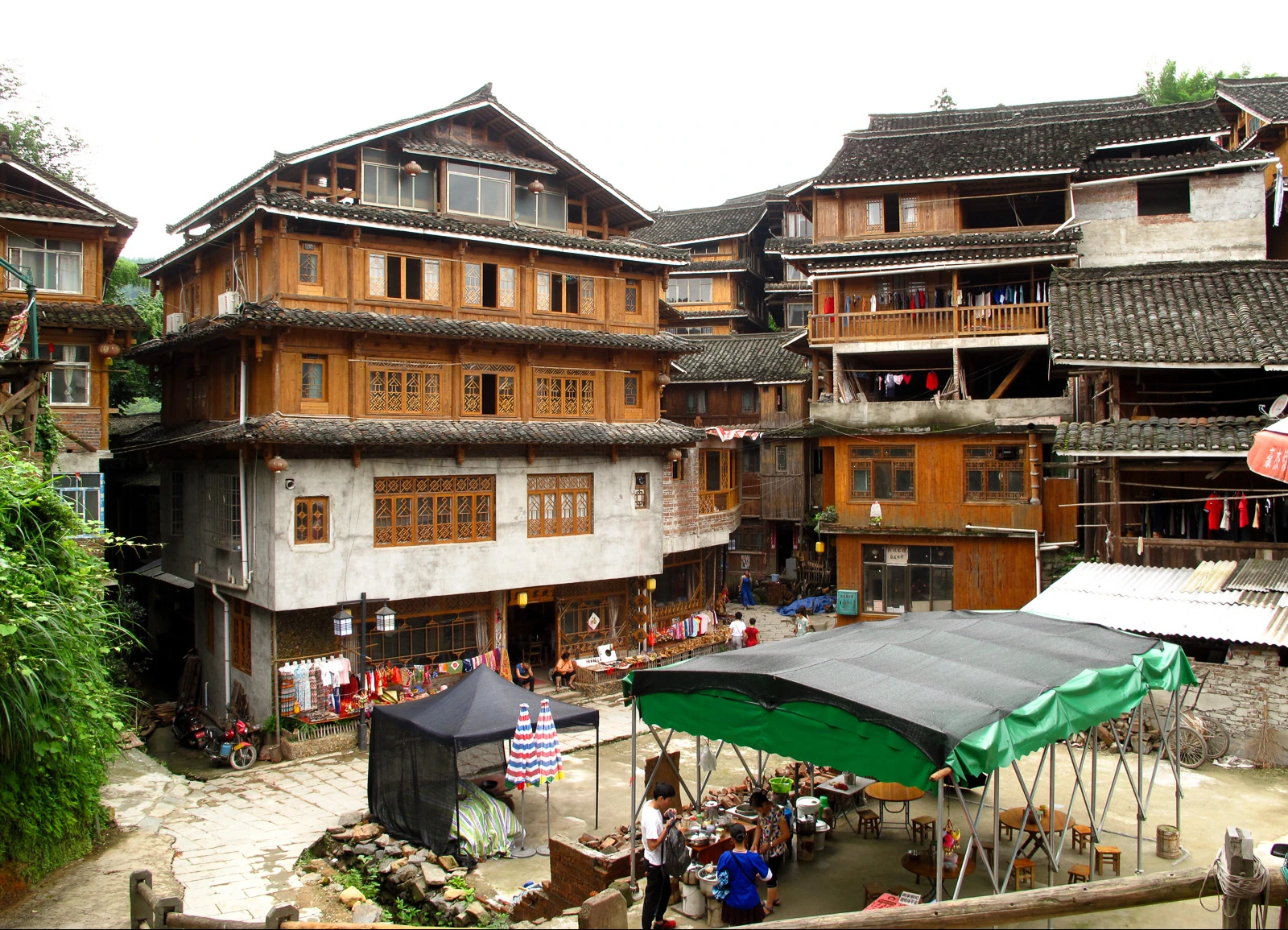
Timber and masonry buildings surround a Chengyang courtyard with a green canopy.
Village courtyard and shopfronts in Chengyang, Sanjiang, photographed on 24 June 2017.

An early twentieth-century bridge

The Guangxi CPPCC's cultural-history account dates construction to 1912–1924. A Sanjiang local-history reminiscence records an initiative in 1911 and completion in 1924. Initiative, construction and completion describe stages in a communal project.

The bridge belongs to the early twentieth century, within a much older building tradition. Later repairs continue its working life, joining the history of the timber structure to the knowledge needed to maintain it.

Timber joints and structural decisions

The regional heritage register identifies mortise-and-tenon timber construction as a defining feature. Horizontal and vertical members meet through fitted connections, and their repetition supports the long roof. The apparent lightness of the structure depends on these deliberate relationships.

Continue exploring · Chengyang Yongji Bridge ↗
Photo credits and rights
  1. Chengyang Yongji wind-and-rain bridge, Sanjiang, in a photograph dated 23 September 2006.Anja Disseldorp · CC BY 2.0 Photo source ↗ Rights information ↗ Resized and converted to WebP; full composition retained.
  2. Chengyang Yongji wind-and-rain bridge viewed from the riverbank, Sanjiang. Source-reported photograph date: 2017-06-24.Rutger van der Maar · CC BY 2.0 Photo source ↗ Rights information ↗ Resized and converted to WebP; full composition retained.
  3. Chengyang’s houses and fields, Sanjiang. The view places its landmark buildings within a lived-in agricultural settlement. Source-reported photograph date: 2017-06-24.Rutger van der Maar · CC BY 2.0 Photo source ↗ Rights information ↗ Resized and converted to WebP; full composition retained.
  4. Village courtyard and shopfronts in Chengyang, Sanjiang, photographed on 24 June 2017.Rutger van der Maar · CC BY 2.0 Photo source ↗ Rights information ↗ Resized and converted to WebP; full composition retained.