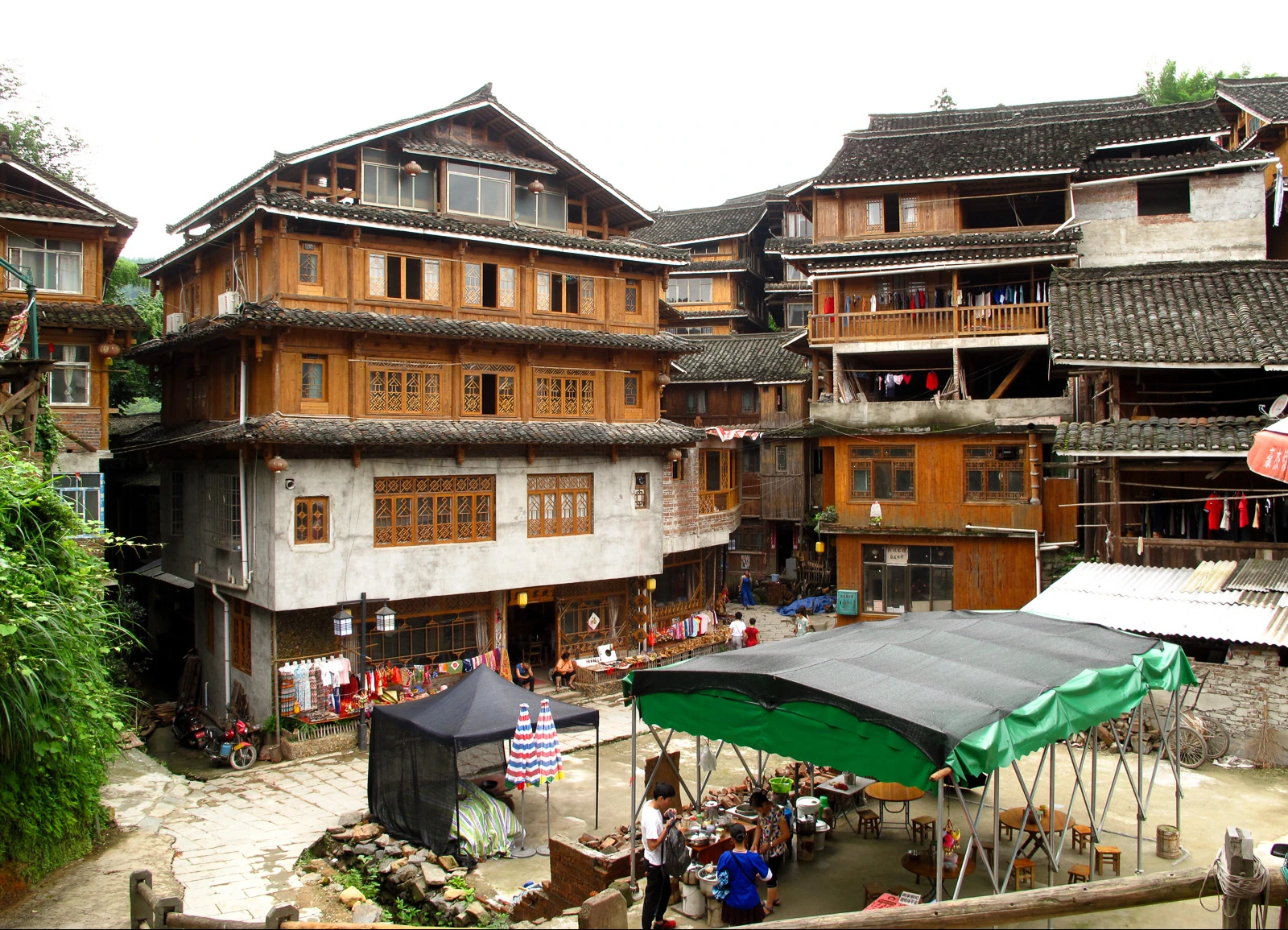
The layered roof of a drum tower is easy to recognise in a photograph. Its public meaning is harder to understand if the picture stops there. A landmark can gather attention from a distance, yet the social work of the building happens closer to the ground. The tower is both a settlement landmark and a space encountered at ground level.
From the journal
Under the Drum Tower
Sanjiang’s drum towers combine landmark rooflines with sheltered spaces for discussion, singing, ceremony and rest.
Life beneath the roofline
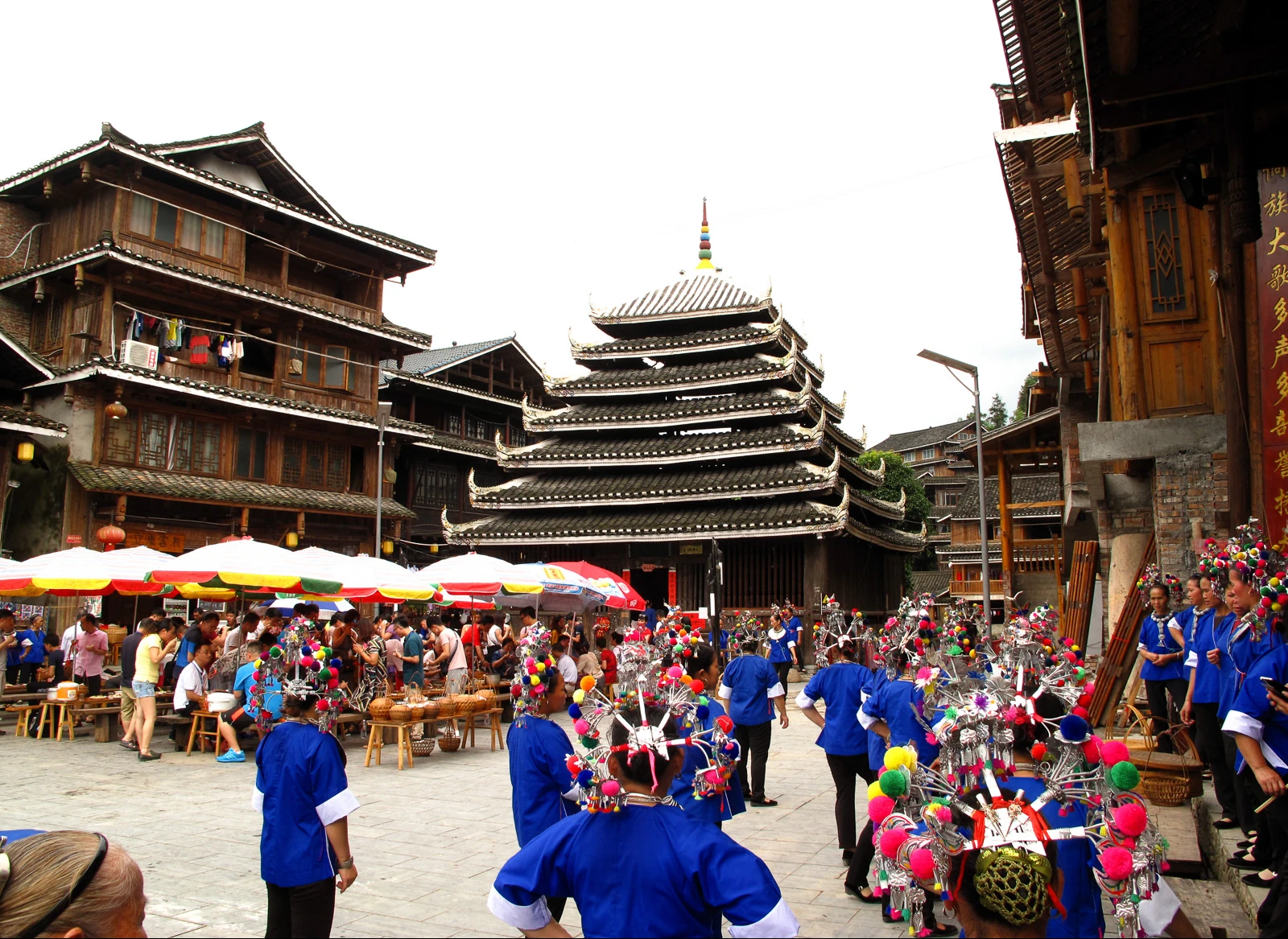
Several activities, one recognisable place
Regional reporting describes drum towers as settings for discussion, ceremony, gathering, entertainment and rest. UNESCO's account of Dong Grand Song likewise situates formal singing in drum towers while noting other performance settings. These descriptions suggest a building whose significance is not exhausted by one scheduled event.
The tower’s entrances, circulation and relationship to surrounding space remain legible even when no performance is taking place. A gathering is not necessarily open to outside participation; a building may serve public life while conversations remain local.
An old form can have a recent commission
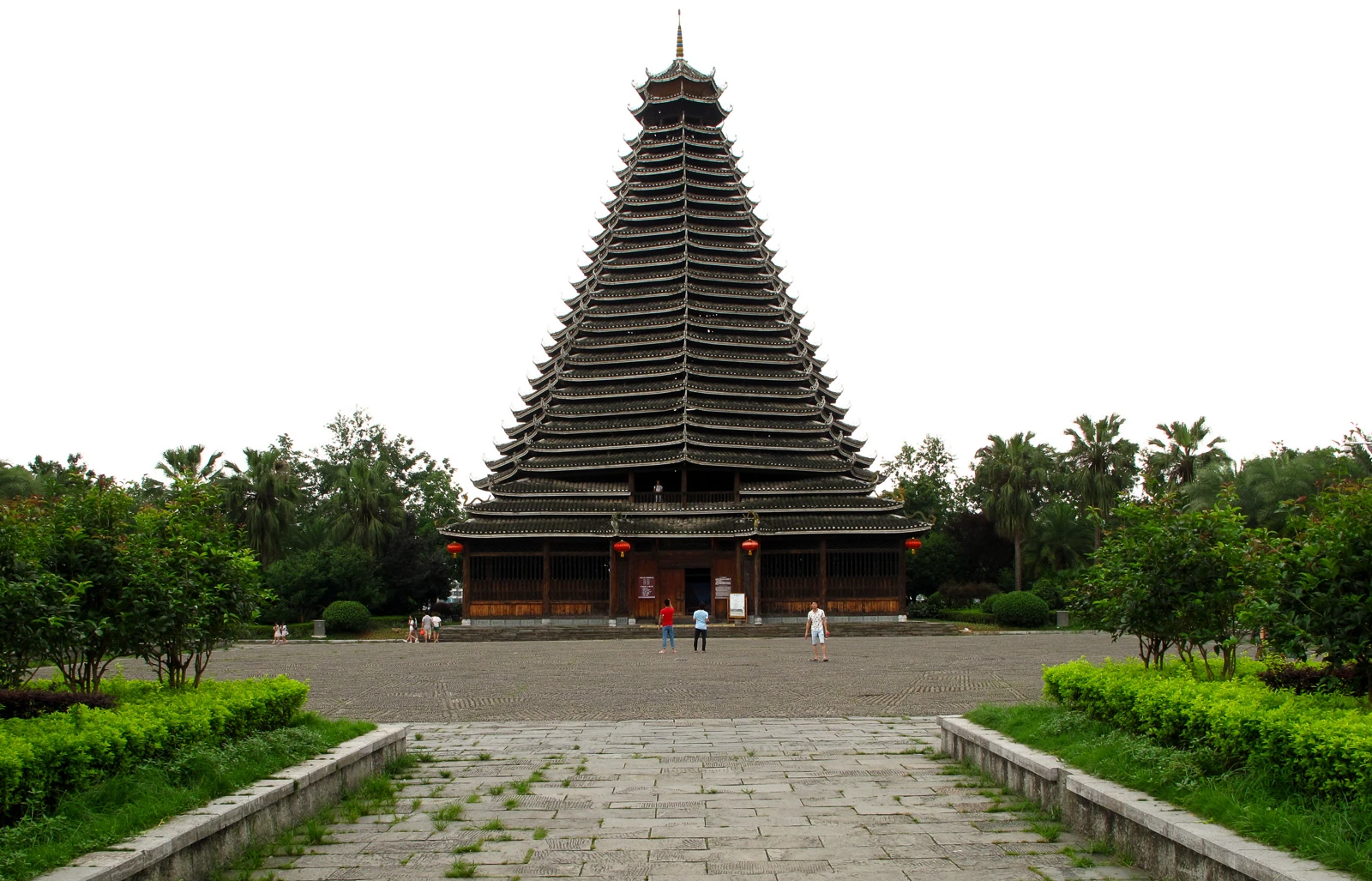
The 2021 heritage photographic exhibition identifies the Sanjiang drum tower at Duoye Square as an important work by master builder Yang Siyu, commissioned for the autonomous county's fiftieth-anniversary celebrations.
The tower uses a continuing architectural vocabulary for a modern civic purpose. Its commissioner, commemorative occasion, builder and scale distinguish it from older village structures.
A building and a musical tradition
UNESCO's 2009 inscription recognises Dong Grand Song as intangible heritage. Singers, teachers and shared occasions sustain the music, while drum towers offer one of its gathering spaces.
Maintaining a structure and passing on a repertoire involve different kinds of care. The tower gives a gathering shelter and a visible place within the settlement; teaching enables people to continue learning and singing together.
The tower within its settlement
A drum tower stands among the routes, homes and open spaces of its settlement. Its entrances and circulation connect the sheltered interior with the ground around it.
Discussion, ceremony, entertainment and rest give that ground different rhythms. The layered roof is visible from afar; the building's public role unfolds in the use of the space below.