From the journal

The Stone Scriptures of He-ri Temple

The He-ri Temple stone-carving record describes scripture lettering as part of a local tradition in Zeku. The carved text turns stone into a durable page.

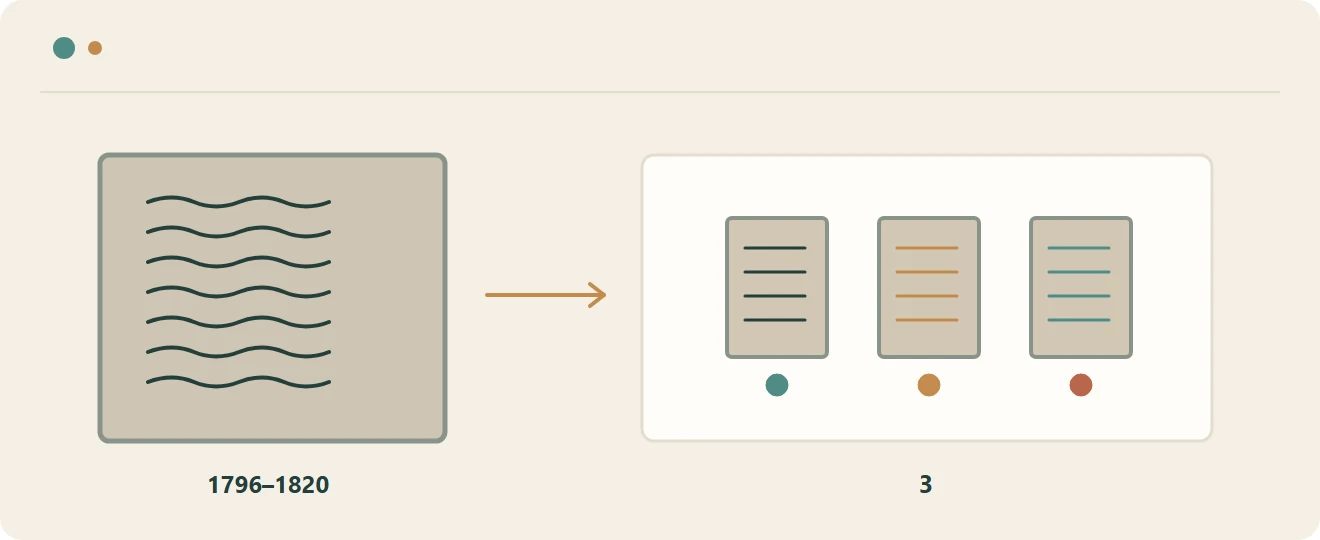
Original editorial diagram, not a photograph or measured plan: The account traces He-ri carving to Qing Jiaqing-period patronage and later generations; the diagram invents no scripture text.

A text carried by stone

At He-ri Temple and surrounding areas in Zeku, a national heritage record describes a Tibetan folk stone-carving tradition with two broad forms: scripture carving and Buddha images. The scripture stones invite a different kind of reading from a book page. Letters are cut into a lasting surface; their rhythm and spacing become visible across the stone, while the material itself gives the text weight and permanence.

The record traces the temple carving tradition to the Qing Jiaqing period, when the temple’s third abbot invited carvers to make scripture texts and Buddha figures. Later generations of monks and local carvers continued the work. That account places the stones within a history of religious patronage and community transmission, rather than treating them as isolated inscriptions.

Letterform and surface

The heritage description praises the scripture lettering for its clarity, regularity and strength. Those qualities matter when the page is a block of stone: a carved line must remain legible in the material’s grain and texture. The carvers used line engraving to give each letter a clean edge, while relief and rounded forms brought other parts of the stone tradition into sculptural depth.

A scripture carved into rock invites both devotion and close looking. The eye follows each line across the surface; light catches the cut edges and makes the writing legible through shadow as well as form.

Continue exploring · Huangnan ↗
Photo credits and rights
  1. Original editorial diagram, not a photograph or measured plan: The account traces He-ri carving to Qing Jiaqing-period patronage and later generations; the diagram invents no scripture text.© 2026 IFreeing · Rights information Photo source ↗ Proportionally resized and converted to WebP without cropping. No objects were added, removed or reconstructed.