Tea stays on the table
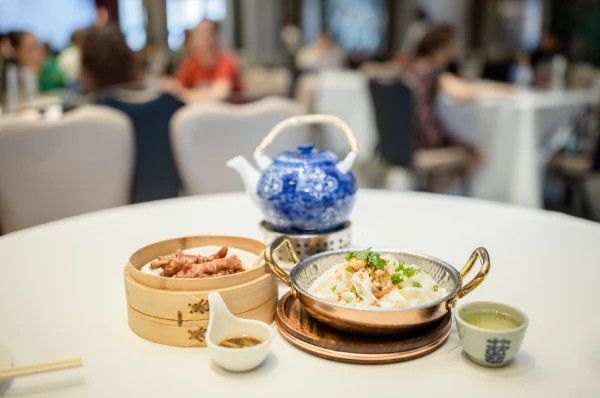
A pot of tea, shrimp dumplings, steamed pork buns and egg tarts bring different kinds of work to one Guangzhou table. Yum cha is the Cantonese expression for drinking tea, but food and company give the gathering much of its shape. Small portions allow several preparations to be shared.
The phrase yat jung leung gin—one pot and two pieces—pairs tea with dim sum. The table can grow well beyond that small number. A translucent dumpling wrapper, a soft bun and a flaky tart offer different textures, while tea remains between the dishes.
From a tea shelter to a tea house
Guangzhou's tea-house history includes simple refreshment shelters known as erliguan, named for their small tea charge. They provided places for workers to stop, drink and eat inexpensive food. More elaborate establishments developed alongside the city's commercial life, with rooms for longer gatherings and business hospitality.
The change was also a change of space: from a short pause for refreshment to a room where a group could stay. Tea houses and restaurants later combined their services, making tea and dim sum part of a broader dining day.
The work inside a small dumpling
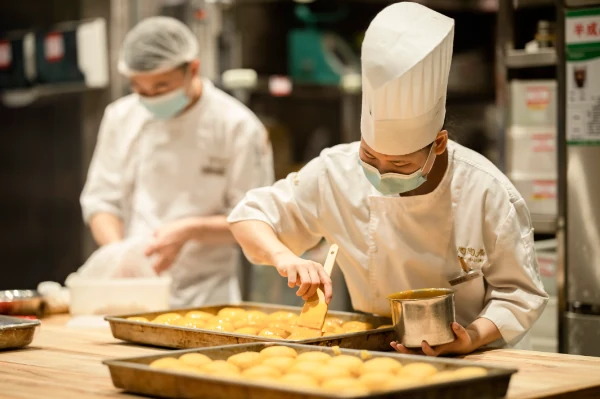
A har gow, or shrimp dumpling, keeps much of its filling visible through a thin wrapper. Its pleats require the maker to close that delicate skin around the shrimp. The small size leaves little room to hide the shaping. Other dim sum ask for other skills: a bun holds its filling in a soft dough, while an egg tart joins a pastry shell to a tender center.
There are small gestures at the table too. A light tap of the fingers can thank the person pouring tea; a lid left open on the pot can signal that more water is needed. Food-making and these everyday exchanges share the same table.